Key takeaways
- BCA stands for Bachelor of Computer Applications, a three-year undergraduate degree in programming and computer applications.
- MCA, Master of Computer Applications, is the two-year postgraduate follow-up many BCA graduates take.
- A BCA graduate can become a software engineer; projects, internships and skills matter more than the degree name.
- BTech CSE goes deeper into engineering maths and systems; BCA starts application development earlier and takes one year less.
- AI will not replace the degree, but it raises the bar: BCA students should learn to build with AI, not just use it.
BCA stands for Bachelor of Computer Applications, a three-year undergraduate degree in India that teaches programming, databases, networking, web development and software engineering. I did my BCA at Dr. Virendra Swarup Institute of Computer Studies from 2023 to 2026 and shipped production AI applications along the way, so this page answers the questions BCA students ask most from experience: what the course covers, what MCA is, which specialisation to choose, scope and jobs, BCA versus BTech CSE, becoming a software engineer, and preparing for an AI-driven job market.
What is the full form of BCA?
BCA stands for Bachelor of Computer Applications. It is an undergraduate degree, usually three years long, focused on computer science fundamentals and building software applications.
Also asked as: how to bca full form · course bca full form
Students typically join after class 12, in many colleges from any stream, though some require maths. Admission is through merit, college or university entrance tests, or CUET at participating universities. Under the National Education Policy, some universities now offer a four-year BCA with honours or research. The degree is recognised for government jobs, private-sector roles and postgraduate study, including MCA and MBA programmes.
What does the BCA course cover?
BCA covers programming, usually C, C++, Java and Python, along with data structures, databases and SQL, operating systems, computer networks, web development, software engineering, and electives such as data science, cloud computing or AI.
A typical three years runs from fundamentals and programming basics in year one, to databases, object-oriented programming and web technologies in year two, to software projects, electives and an internship or major project in year three. Syllabi vary between universities, so check yours. What the course does not give you automatically is practical depth: deployment, Git, testing, real projects and teamwork. Students who build those alongside the syllabus come out far ahead.
What is the full form of MCA?
MCA stands for Master of Computer Applications, a two-year postgraduate degree that deepens programming, software engineering, data structures, databases and advanced topics such as machine learning, cloud and security.
Also asked as: mca course full form
Many BCA graduates take MCA to strengthen their profile, since some recruiters and government roles prefer a postgraduate degree, and MCA campus placements can be good at strong institutes. Admission is often through entrance exams such as NIMCET for NITs, or university and state exams. MCA is valuable if you use the two years to build serious projects and internships; it is not a substitute for skills. If you already have a good job offer after BCA, working for a year or two and studying later is also a sound path.
Which BCA specialisation is best for the future?
Choose a specialisation that matches the work you want: data science and AI for machine learning and analytics roles, cloud and DevOps for infrastructure, cybersecurity for security roles, and full-stack development for product companies and startups.
Also asked as: which bca specialization is best for future
AI and data science are in strong demand, but the label on the degree matters less than what you can show. If your college offers an AI specialisation with weak practical teaching, a general BCA plus self-built AI projects can be the better choice. Look at the actual syllabus, lab work and faculty before deciding. Whatever you pick, learn the fundamentals well, because specialisations change faster than the basics do.
Does BCA have scope?
Yes. BCA leads to software development, web and app development, data analysis, testing, IT support, cloud and AI roles, and to MCA or MBA studies. The scope depends heavily on the skills you build during the three years.
The entry-level market is competitive, and BCA graduates compete with BTech graduates for many roles. That is a reason to be strategic, not to worry: product companies and startups hire on demonstrated skill, and a BCA graduate with deployed projects, an internship and hackathon experience can stand out. Government and banking exams also accept graduates from any stream. Treat the degree as a base and your portfolio as the thing that creates scope.
Can a BCA student become a software engineer?
Yes. Many software engineers have a BCA. Employers hiring developers test programming, problem solving and system thinking, and a BCA graduate with strong projects and interview preparation can clear those rounds.
Also asked as: can bca student become software engineer
The steps that matter:
- Master one language deeply, then data structures and algorithms.
- Build two or three real projects, deployed, with clean code on GitHub.
- Get at least one internship or freelance project.
- Learn Git, SQL, APIs, testing and basic cloud deployment.
- Practise coding interviews and explaining your projects.
I built RAG.NextUpgrad, FineTune Studio and three other production AI applications at NextUpgrad in 2026 and lead engineering at SCULT INDIA; none of that required a BTech. It required building, consistently.
What is the difference between BCA and BTech CSE?
BTech in Computer Science and Engineering is a four-year engineering degree with more mathematics, theory and core computer science, such as computer architecture, compilers and theory of computation. BCA is a three-year degree focused on programming and applications from the start.
Also asked as: difference between bca and b tech cse
Practical differences:
- Duration: BTech four years; BCA three.
- Entry: BTech usually needs PCM and an entrance exam such as JEE; BCA is more accessible.
- Depth: BTech goes deeper into engineering fundamentals.
- Placements: top BTech colleges attract more recruiters; mass recruiters sometimes require BTech or MCA.
- Cost: BCA is usually cheaper.
For product roles, skills and projects close the gap. For some mass-recruiter drives and certain government technical roles, the degree type matters, so check eligibility for the roles you want.
What are the jobs for BCA graduates?
Common roles include software developer, web developer, mobile app developer, data analyst, QA and test engineer, system administrator, technical support engineer, cloud support associate, and junior AI or ML engineer with the right projects.
Where they work: IT services companies, product companies, startups, banks and fintechs, e-commerce, government and public-sector units, and as freelancers. Many BCA graduates also take MCA, MBA or data science programmes for specialised roles. Freshers find roles through campus placement, off-campus drives, LinkedIn, Naukri, Internshala, Wellfound and referrals. An internship before final year is the most reliable path into a full-time offer.
How can BCA students prepare for an AI-driven job market?
Learn to build with AI, not just use it: understand how language models work, build projects with retrieval-augmented generation and APIs, use AI coding tools well, and keep strong fundamentals so you can judge what AI produces.
A practical plan across the degree:
- Year one: Python, Git, SQL and one small project; use AI tools to learn faster.
- Year two: data structures, APIs with FastAPI, a web front end, and a first AI feature using an LLM API.
- Year three: one serious AI project, such as document Q&A with citations, deployed and documented, plus an internship and hackathons.
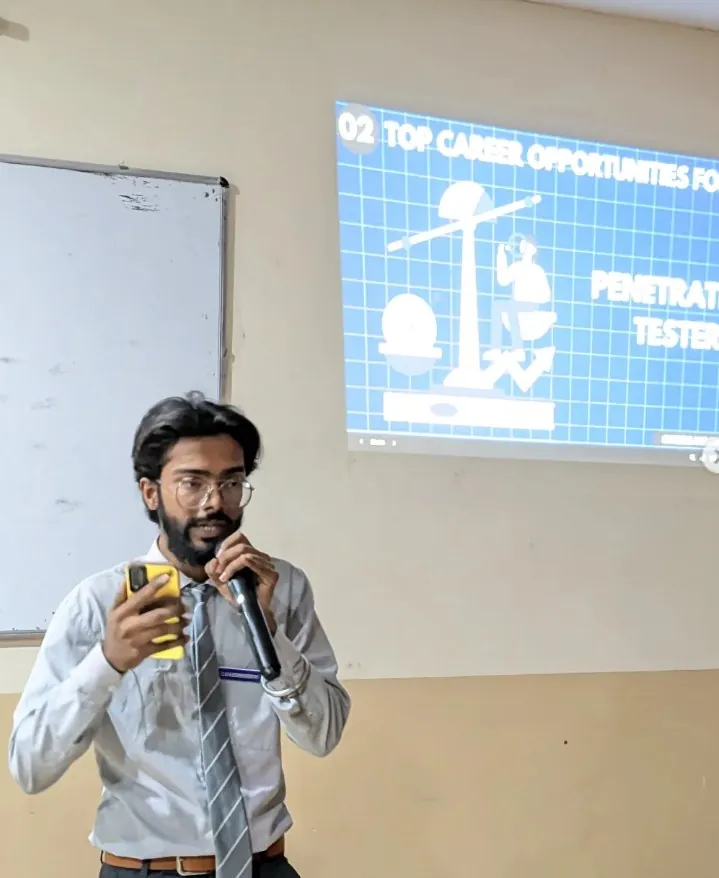
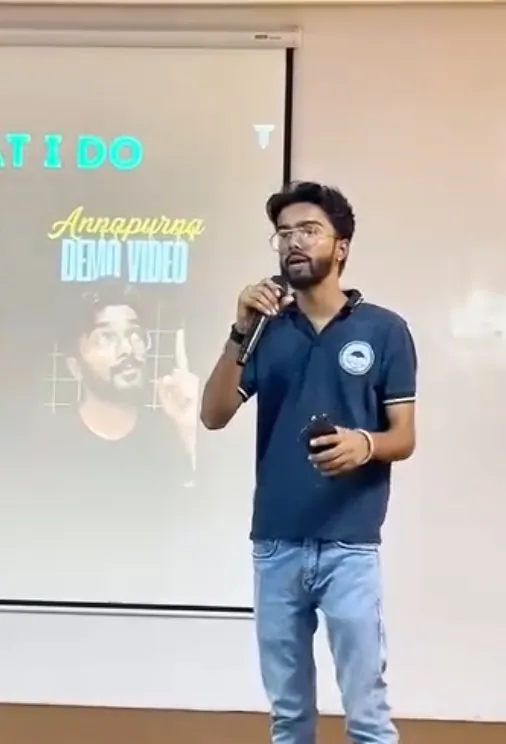
At my VSICS induction talk in July 2025, I gave first-years this three-year roadmap: foundations and AI tools, then hackathons and internships, then placements or a startup.
Will BCA be replaced by AI?
No. AI will not replace the BCA degree or the need for software developers, but it changes what employers expect. Routine coding is increasingly automated, so graduates need stronger problem solving, system design and the ability to build AI-powered products.
What is at risk is shallow skill: copying tutorials, writing boilerplate and memorising syntax. What grows in value is understanding requirements, designing systems, debugging, evaluating AI output, and shipping reliable products. Use AI tools daily, but make sure you could explain and fix everything they write. A BCA student who builds real AI applications is better placed than someone with any degree who only uses chatbots.
Sources

GenAI engineer and AI product builder with 2+ years shipping production-grade AI systems: RAG pipelines, fine-tuned LLMs, hybrid retrieval and multi-modal apps across vision, speech and OCR, architected end to end from ingestion to deployment. Leads engineering for SCULT INDIA's 14-member team, founded the 500+ member TechVerse Enclave community and has mentored 200+ students. Three hackathon first prizes: Changethon 2025 (IIT Roorkee), Product Genesis at Vividhotsava 2025 (CSJMU) and BYTEBATTLE (MeetKats).
Open to GenAI roles, hackathon judging, mentorship sessions and guest talks at colleges. For campus sessions the inviting institution covers the visit end to end: travel (a First AC train ticket for journeys up to five hours, a flight for anything longer), accommodation, meals, and pickup and drop; the honorarium and workshop fees are negotiable on WhatsApp or on the call, and requests are welcome from institutions that can cover the visit this way. Email pranjulrathour41@gmail.com.