Key takeaways
- The best final year projects solve a real problem for real users and are deployed, measured and documented.
- Choose a project at the overlap of your interests, your target job and a problem you can access data for.
- Use AI tools to learn, plan and review, but build and write the core work yourself.
- Reports usually run 40 to 80 pages or 10,000 to 15,000 words; your university's guidelines decide.
- Never buy a project; it is academic misconduct and leaves you unable to defend it in viva or interviews.
The best final year projects for CSE solve a real problem for real users, use current technology sensibly, and are deployed, measured and well documented. In 2026, strong options include RAG assistants over real documents, document AI, speech tools for local languages, and privacy-preserving vision apps. My own projects, from KrishGyan, which won Changethon 2025, to five production AI apps in 2026, taught me what makes projects stand out, so this page covers ideas, choosing, building, documentation, length, black books, resumes, and why buying projects backfires.
What are the best final year projects for CSE?
Strong projects combine a real user, a working deployment and measurable results. AI-focused ideas stand out today, but a well-built web or systems project with real users beats a shallow AI demo.
Ideas with depth:
- A RAG assistant that answers questions from your college's handbooks with page citations.
- Document AI that extracts and validates fields from forms or invoices.
- Speech-to-text and question answering in Hindi or another Indian language.
- Browser-based face attendance with liveness checks, storing embeddings, never images.
- A fine-tuned small model for a domain task, with base versus tuned evaluation.
- A coordination platform for a social problem, like surplus food redistribution.
Each mirrors work I have shipped or seen win hackathons.
How do I choose a final year project in computer science?
Choose at the overlap of three things: a problem you care about, skills relevant to the job you want, and data or users you can actually access. Then check scope: can your team build a working version in the time available?
Also asked as: how to choose final year project computer science
Questions to ask:
- Who exactly is the user, and can you talk to them?
- Is data available legally, or can you collect it?
- Does it show skills employers in your target role want?
- Can you demo one complete flow end to end?
- What can you measure: accuracy, time saved, users?
Avoid copying popular project titles from lists; examiners and interviewers have seen them many times. A specific twist, such as a local language or a real organisation's data, makes ordinary ideas distinctive.
What is the best AI for a final year project?
Use the AI that fits your problem: open models from Hugging Face for fine-tuning and offline use, hosted model APIs for language and vision features, and AI coding assistants to learn and speed up development. "Best" means appropriate, measured and explained.
Also asked as: best ai for final year project
For a project's AI component, prefer approaches you can evaluate: a RAG system with a test set, a classifier with accuracy metrics, or a fine-tuned model compared against its base. Examiners value understanding over novelty. As a development aid, AI assistants help you learn frameworks and debug faster, but write and understand your code yourself, because you must explain every part in your viva and interviews.
How do I make a final year project step by step?
Define the problem and users, research existing solutions, design the system, build a minimal working version early, test with real users, iterate, then document and prepare the demo. Keep weekly milestones.
Also asked as: how to make final year project step by step
A practical sequence:
- Weeks 1 to 2: problem statement, user interviews, literature review.
- Weeks 3 to 4: requirements, architecture and data plan.
- Weeks 5 to 8: minimum working version, deployed.
- Weeks 9 to 12: features, testing and evaluation with real users.
- Weeks 13 to 14: polish, documentation and demo video.
- Final weeks: report, presentation rehearsal and viva preparation.
Use Git from day one, divide work by components, and hold short weekly check-ins with your guide.
How do I make final year project documentation?
Follow your university's template, and write as you build rather than at the end. A typical report includes an abstract, introduction, literature review, requirements, system design, implementation, testing and results, conclusion, future work and references.
Also asked as: how to make final year project documentation
Tips for strong documentation:
- Include architecture, data flow and database diagrams.
- Explain why you made key design decisions, not just what you built.
- Show results with tables and charts: accuracy, response times, user feedback.
- Add screenshots of the working system.
- Cite sources properly with a reference manager such as Zotero.
- Keep a changelog during development to make writing easier.
Write the abstract last, once you know your actual results.
How many pages should a final year project report be?
Most final year project reports run between 40 and 80 pages, including diagrams, screenshots, code excerpts and appendices, but your university or department guidelines decide. Some specify exact page ranges, fonts, margins and line spacing.
Also asked as: how many pages should a final year project be
Quality matters more than length: examiners prefer a clear, well-structured 50 pages over 120 pages padded with copied theory. Put long code listings and raw data in appendices or a linked repository. Check formatting rules early, such as font size, spacing and margins, since these change page counts significantly. Ask your guide for an example of a well-graded report from previous years.
How many words should a final year project report be?
Typical reports are about 10,000 to 15,000 words for the main body, excluding references, appendices and code, though requirements vary widely by university and programme. Always follow the official guideline, which may specify a range.
Also asked as: how many words should a final year project be
Distribute words sensibly: about 10 percent introduction, 15 to 20 percent literature review, 25 to 30 percent design and implementation, 20 percent testing and results, and the rest for discussion and conclusion. Avoid filling word counts with generic textbook explanations; examiners want your problem, your decisions and your evidence. Use precise language and let diagrams carry structural information.
How do I make a black book for a final year project with AI?
The "black book" is the bound final project report used in some Indian universities. AI tools can help you outline chapters, improve grammar, summarise papers you have read, create diagram drafts and check formatting, but the content, results and analysis must be your own.
Also asked as: how to make black book for final year project with ai
A responsible workflow:
- Write your own draft of each chapter from your project notes.
- Use AI to suggest structure and improve clarity, then review every change.
- Generate diagram drafts, then correct them to match your actual system.
- Verify every fact and citation; AI can invent references.
- Check your institution's policy on AI use and declare it if required.
- Run a plagiarism check before submission.
Should I include my final year project on my resume?
Yes, especially as a fresher. Include it under projects with a one-line description, your specific role, the stack, and measurable results, plus links to the live demo and code.
Also asked as: should i include final year project in resume
A strong entry: "Built a RAG assistant answering questions from 300 pages of college handbooks with page citations; 85 percent answer accuracy on a 50-question test set; Next.js, FastAPI, PostgreSQL." Recruiters will ask about it, so be ready to explain architecture, trade-offs and what you would improve. If the project was team work, state your part clearly. A deployed, well-documented project can carry a fresher's resume.
Where can I buy final year projects?
You should not buy final year projects. Submitting purchased work is academic misconduct that can lead to failing or degree cancellation, and you will struggle in the viva and in interviews when asked to explain code you did not write.
Also asked as: where to buy final year projects
Bought projects are also usually generic, reused across many students and easy for examiners to recognise. If you are short on time or skills, choose a smaller scope, ask your guide for help, use open-source libraries legitimately with attribution, learn from tutorials and adapt them to your problem, and ask seniors or mentors for reviews. A modest project you built and understand is worth far more than an impressive one you cannot defend.
Sources

GenAI engineer and AI product builder with 2+ years shipping production-grade AI systems: RAG pipelines, fine-tuned LLMs, hybrid retrieval and multi-modal apps across vision, speech and OCR, architected end to end from ingestion to deployment. Leads engineering for SCULT INDIA's 14-member team, founded the 500+ member TechVerse Enclave community and has mentored 200+ students. Three hackathon first prizes: Changethon 2025 (IIT Roorkee), Product Genesis at Vividhotsava 2025 (CSJMU) and BYTEBATTLE (MeetKats).
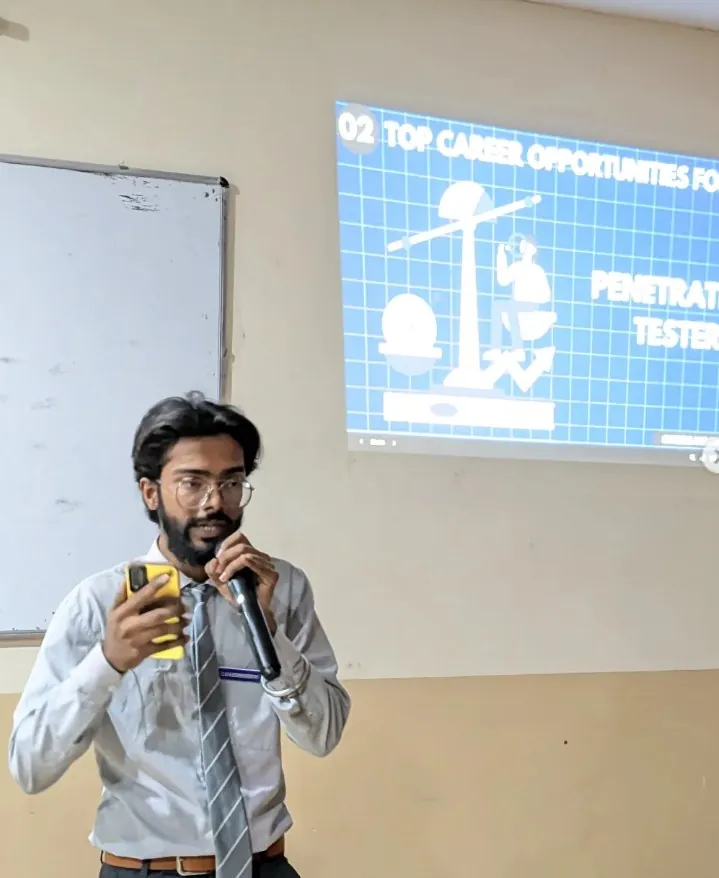
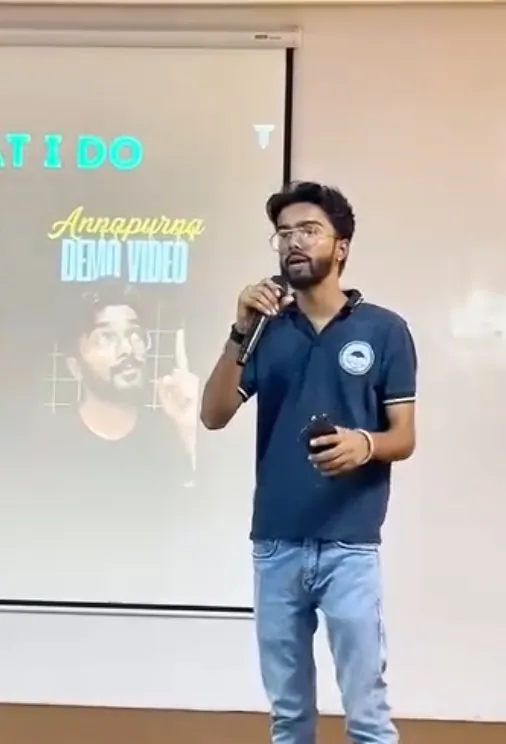
Open to GenAI roles, hackathon judging, mentorship sessions and guest talks at colleges. For campus sessions the inviting institution covers the visit end to end: travel (a First AC train ticket for journeys up to five hours, a flight for anything longer), accommodation, meals, and pickup and drop; the honorarium and workshop fees are negotiable on WhatsApp or on the call, and requests are welcome from institutions that can cover the visit this way. Email pranjulrathour41@gmail.com.