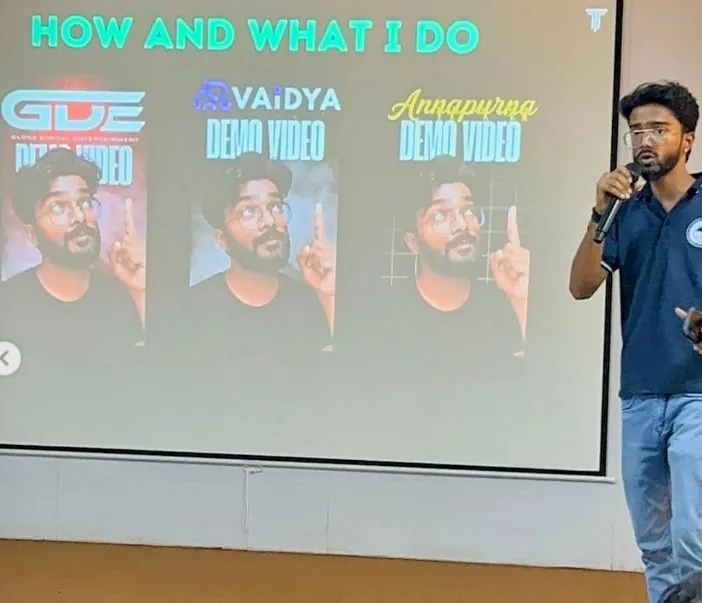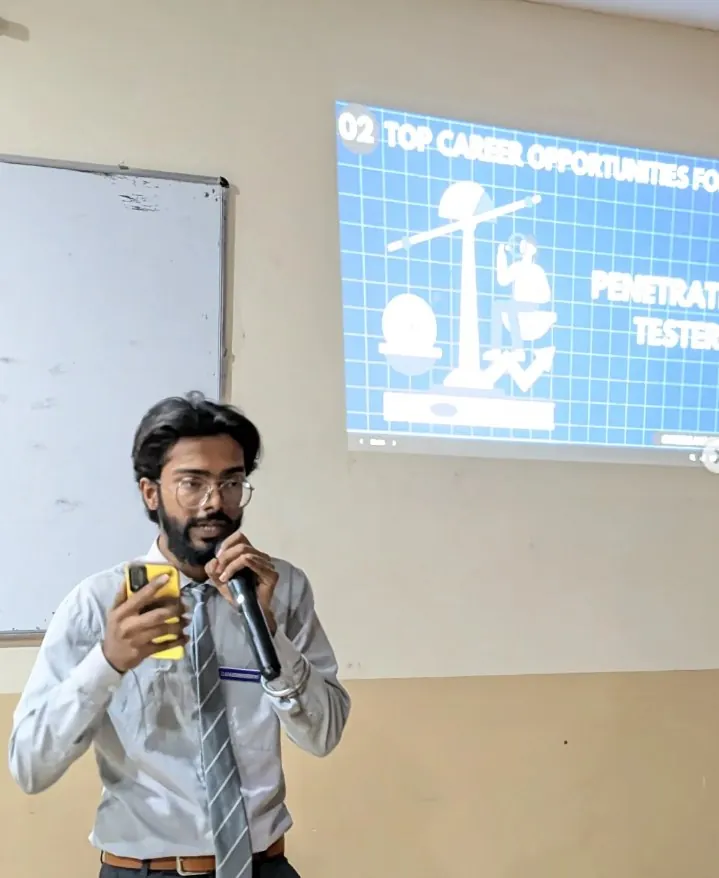
The talks that went well — the VSICS induction, the AI mentorship session — were not the ones with the best slides. They were the ones I had prepared around a single question the room actually had. Here is the process, so speakers can borrow it and coordinators can see what a prepared speaker needs from them.
Ask the coordinator one thing
"What do these students worry about right now?" First-years worry about being behind. Final-years worry about placements. A club worries about whether their projects are good enough. The talk is the answer to that worry, and everything that does not serve the answer is cut.
One question, one story, one demo
- The question the talk answers, written at the top of my notes. For the induction: "What should I do in the next three years?"
- A story with a failure in it. Living Space Automation failing before anything shipped; STROT losing after two sleepless nights. Students trust a speaker who has lost.
- A live demo, even in a talk. Ninety seconds of a real system running does what ten slides of architecture cannot.
Structure
Open with the worry, not with my bio. Answer it in the first five minutes, then spend the rest earning the answer with evidence. End with a task for this week and a way to reach me. Slides are sparse: one idea each, a photo or a number, no paragraphs.
Rehearse three times, with a timer
Once alone to find the shape, once recorded to hear the filler, once to a friend who will be honest. A 45-minute slot means 38 minutes of talk; venues eat the difference. If I cannot finish early in rehearsal, I cut a section, never speed up.
On the day
- Arrive early; test the projector with my laptop; learn the host's name and six students' names before starting.
- Stand where I can see faces. Move when a section changes.
- Stop on time. Questions run as long as students want.
Preparation is mostly subtraction. The talk students remember is the one that answered their question and left before they were tired.

GenAI engineer and AI product builder with 2+ years shipping production-grade AI systems: RAG pipelines, fine-tuned LLMs, hybrid retrieval and multi-modal apps across vision, speech and OCR, architected end to end from ingestion to deployment. Leads engineering for SCULT INDIA's 14-member team, founded the 500+ member TechVerse Enclave community and has mentored 200+ students. Three hackathon first prizes: Changethon 2025 (IIT Roorkee), Product Genesis at Vividhotsava 2025 (CSJMU Kanpur) and BYTEBATTLE (MeetKats).
Open to GenAI roles, hackathon judging, mentorship sessions and guest talks at colleges. Email pranjulrathour41@gmail.com.