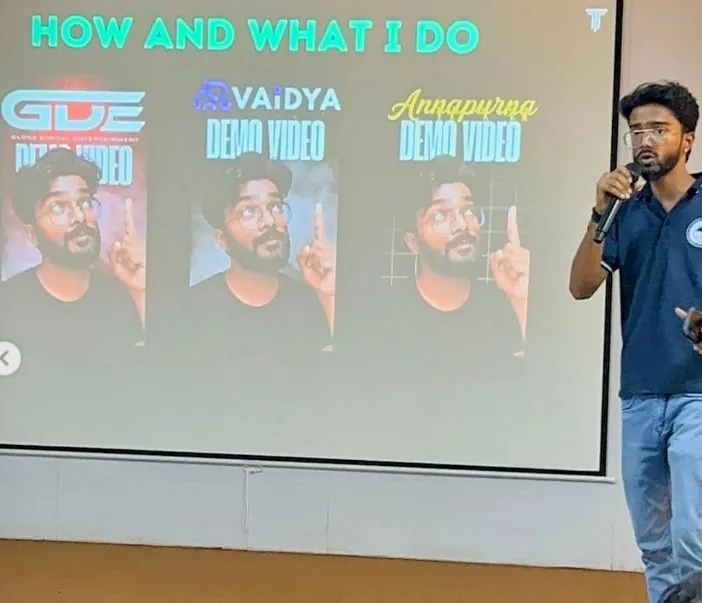
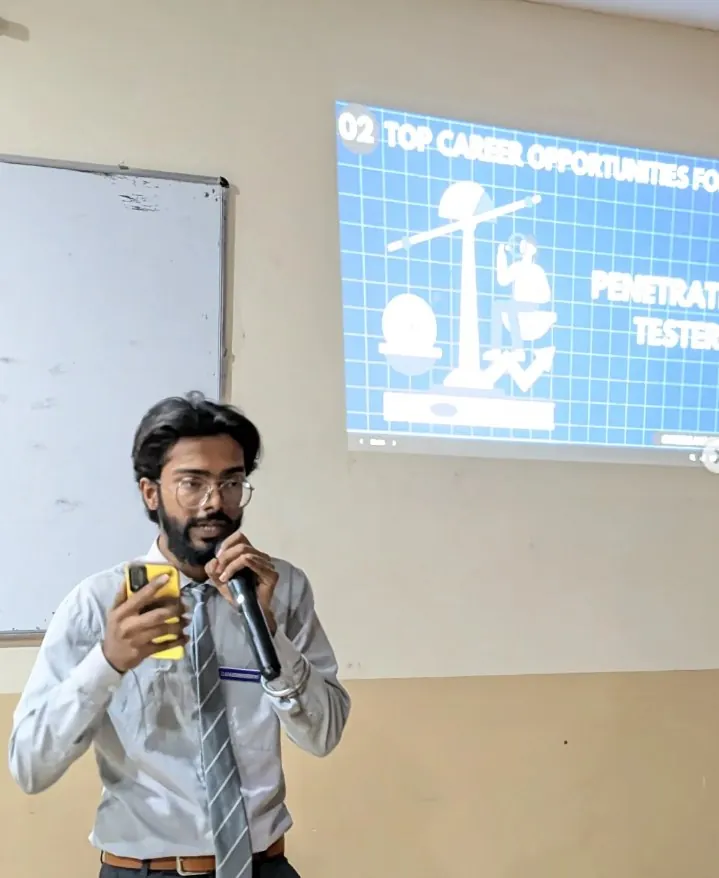
On 6 July 2025 I spoke to 100+ first-years at the induction seminar at VSICS. Preparing it forced me to decide what a first-year actually needs to hear in forty minutes, which is very different from what departments usually schedule. If you are planning an induction, here is what worked.
Cover: a roadmap with years on it
First-years can hold a three-part plan. Year 1: foundations and AI tools, one shipped project. Year 2: hackathons, internships, building in public. Year 3: placements, a startup or higher studies — a deliberate choice, not a default. The full version is in what I told 100+ first-years. A plan with years on it turns anxiety into a schedule.
Cover: one honest failure
My first project, Living Space Automation, failed hard. Saying so on stage did more than any success story, because every student in that hall was afraid of exactly that. A speaker who has failed and continued is a speaker they believe.
Cover: a first task for this week
Not "start learning". "Make a GitHub account, publish one page, and send the link to your class group." Inductions that end with a task produce students who begin; inductions that end with inspiration produce applause.
Skip
- The forty-technology roadmap slide. It produces paralysis.
- Salary numbers. They set the wrong goal for Year 1.
- Long speaker introductions. Two lines, then the talk.
- Anything that could be read from the syllabus.
Format and logistics
- Forty minutes of talk, twenty of questions. First-years have many.
- A practitioner close to their age alongside faculty; the combination works better than either alone.
- A follow-up channel or club sign-up at the door, so the energy has somewhere to go.
Inductions are the highest-leverage talk a department can book: one hour that sets the next three years. I speak at them regularly; see the invite page for how to arrange one.

GenAI engineer and AI product builder with 2+ years shipping production-grade AI systems: RAG pipelines, fine-tuned LLMs, hybrid retrieval and multi-modal apps across vision, speech and OCR, architected end to end from ingestion to deployment. Leads engineering for SCULT INDIA's 14-member team, founded the 500+ member TechVerse Enclave community and has mentored 200+ students. Three hackathon first prizes: Changethon 2025 (IIT Roorkee), Product Genesis at Vividhotsava 2025 (CSJMU Kanpur) and BYTEBATTLE (MeetKats).
Open to GenAI roles, hackathon judging, mentorship sessions and guest talks at colleges. Email pranjulrathour41@gmail.com.