Key takeaways
- Learn Python as a tool for shipping, not as a syllabus. Functions, data structures, files, HTTP, virtual environments and tests cover most of an AI engineer's day.
- The AI-specific Python is small: requests to model APIs, JSON handling, a few libraries, and async for concurrency. You do not need to master NumPy before your first LLM app.
- Twelve weeks of building, one deployed project every three weeks, gets a beginner to a live AI application.
- Skip Python 2, skip memorising every built-in, skip competitive-programming Python until you need it for interviews.
- Read other people's code: the official docs, one open-source repository, and the SDK you are calling.
How do I learn Python for AI?
Learn the Python that ships software, then point it at models. In practice: variables, functions and data structures; reading and writing files and JSON; calling HTTP APIs; virtual environments and packages; classes when you need them; async when you have many calls; tests. Then, with that base, call a model API, build a small FastAPI service around it, and deploy it. Twelve weeks of building gets a beginner to a live LLM application. Twelve weeks of tutorials gets a beginner to week thirteen of tutorials.
Also asked as: how to learn python for ai · python for ai · python for machine learning beginners · learn python for artificial intelligence · python roadmap for ai · how much python is needed for ai · python for genai · python for llm development · best way to learn python for ai · python for data science vs ai
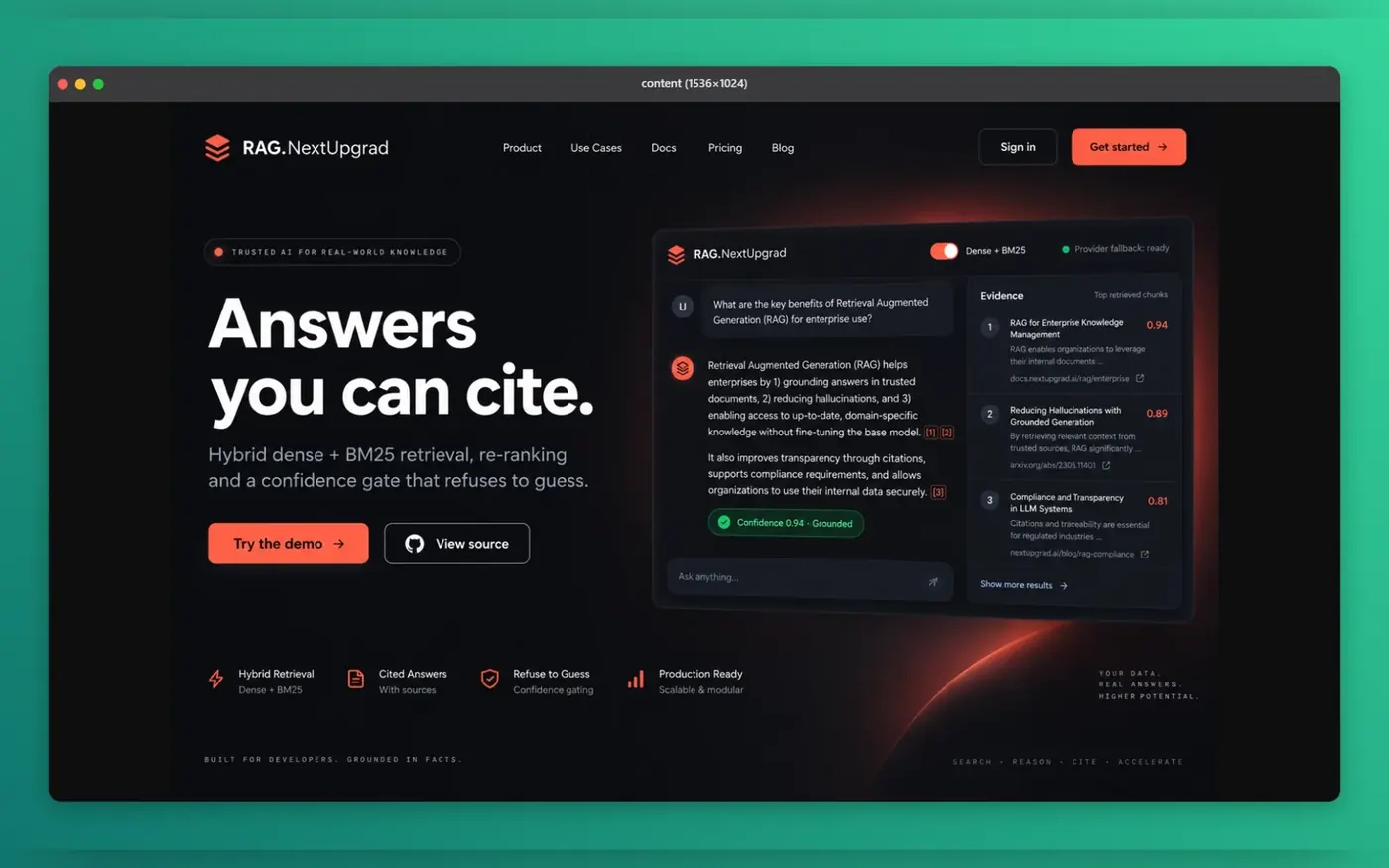
All five production AI systems I shipped in 2026 are Python services: a RAG platform, a fine-tuning platform, a document extraction service, a face recognition backend and an OCR and speech workspace [14]. The Python inside them is not exotic. It is the Python in this roadmap, used carefully, with tests.
Nobody has ever asked me to reverse a linked list in Python at work. Everybody has asked me why the API call timed out. Learn for the second question. Pranjul Rathour
How much Python do I need for AI?
Less than the tutorials suggest, and different. You need: core syntax and data structures; functions with type hints; modules and packages; file and JSON handling; error handling; HTTP requests; virtual environments; the standard library's pathlib, json, datetime, logging and asyncio; classes and dataclasses; and writing tests. You do not need, at first: metaclasses, decorators beyond using them, deep NumPy, or competitive-programming tricks. Those come when a project demands them.
Also asked as: how much python for machine learning · python level needed for ai · do i need to master python for ai · what python concepts for ai · python basics for machine learning · is basic python enough for ai · advanced python for ai · python topics for ai engineer
What is the roadmap from zero to an AI app?
Twelve weeks, four projects, each deployed. Weeks one to three: fundamentals through a command-line tool that reads a file and produces a report. Weeks four to six: HTTP and APIs through a script that calls a model API and saves structured output. Weeks seven to nine: a FastAPI service with a database, deployed on a free tier. Weeks ten to twelve: a RAG application over documents you know, with an evaluation set. Every week, one commit a day, and a README that explains what you built.
Also asked as: python roadmap for ai 2026 · python learning path for ai · python for ai step by step · 3 month python roadmap · python to machine learning roadmap · how long to learn python for ai · python projects for ai beginners · python for ai course
The longer version, with resources per week, is on the portfolio [13].
Which Python libraries matter for AI in 2026?
For calling models: the provider SDKs, or plain httpx and requests [5][6]. For services: FastAPI with Pydantic for validation [4][7]. For data handling: json and pathlib from the standard library, pandas when tables appear. For retrieval: an embeddings client and pgvector or FAISS. For training and fine-tuning: PyTorch, Transformers, PEFT and TRL, learned when you fine-tune, not before. For tests: pytest [8]. For environments: uv or venv with pip [9]. Learn each when a project needs it.
Also asked as: python libraries for ai · best python libraries for machine learning · python libraries for llm · python libraries for genai · langchain vs openai sdk · fastapi for ai · pydantic for llm · python ai stack 2026 · essential python packages for ai
Frameworks such as LangChain are fine for a first prototype; I recommend calling the SDKs directly for your first real project so you understand every line you ship.
Should I learn NumPy, pandas and maths first?
No, not first. For an applications career in GenAI, you can build and deploy your first LLM app without NumPy. Learn pandas when you have a table to analyse, NumPy when you touch vectors directly, and the maths, linear algebra and probability, alongside your first embedding and fine-tuning projects, where it has a purpose. Learning them first is how students spend six months on prerequisites and never ship. For a research or classical ML path, reverse the order.
Also asked as: numpy for ai · do i need numpy for ai · pandas for machine learning · maths for python ai · linear algebra for ai · should i learn maths before ai · data science prerequisites · do i need statistics for genai
What are the best free resources to learn Python for AI?
The official Python tutorial for the language itself [1]. Automate the Boring Stuff for practical scripting [2]. Python for Everybody for a gentle structured course [3]. FastAPI's documentation, which is a course in itself [4]. Hugging Face's free LLM course once you are calling models [10]. fast.ai for deep learning intuition when you get there [11]. Google Colab for a free notebook and GPU [12]. All free. Pick one per stage, finish it by building, and do not collect courses.
Also asked as: best free resources to learn python for ai · free python course for ai · python for ai youtube · learn python free 2026 · best python books for ai · python for everybody · automate the boring stuff · python course for beginners free
What should my first Python AI project be?
A script that reads a folder of your own notes or PDFs, calls a model API to summarise each one into structured JSON, validates the JSON with Pydantic, and writes a report. It touches files, HTTP, error handling, structured data and tests, and it is useful to you. Then wrap it in FastAPI and deploy it. Then add retrieval so you can ask questions across the notes. Three steps, three months, one growing project, live at a URL.
Also asked as: first python ai project · python ai project ideas for beginners · simple ai project in python · python llm project · python project ideas 2026 · mini project python ai · python chatbot project · beginner genai project python
import json
from pathlib import Path
from pydantic import BaseModel

class Summary(BaseModel):
    title: str
    key_points: list[str]
    open_questions: list[str]

def summarise(path: Path) -> Summary:
    text = path.read_text(encoding="utf-8")
    raw = call_model(f"Summarise into JSON with title, key_points, open_questions:\n\n{text}")
    return Summary.model_validate_json(raw)          # fails loudly if the model drifts

report = [summarise(p).model_dump() for p in Path("notes").glob("*.md")]
Path("report.json").write_text(json.dumps(report, indent=2), encoding="utf-8")
That is a week-four project, and a version of it is the seed of every document system I have shipped.
What mistakes keep students stuck in Python tutorials?
Watching instead of typing. Starting a fourth course before deploying a first project. Learning NumPy for months before calling a single API. Skipping virtual environments and losing a week to dependency conflicts. Never writing a test, so every change is scary. Copying assistant output without reading it. Treating tracebacks as failures instead of instructions. The fix for all of them is the same: ship something small every week and read the errors.
Also asked as: why i can't learn python · stuck in tutorial hell python · python learning mistakes · how to get out of tutorial hell · python beginner mistakes · learning python too slow · python practice for ai
Python for AI interview questions
Expect practical Python: parse and validate JSON, write a retry with backoff around an API call, chunk text by paragraphs with a size cap, compute cosine similarity, use a dict to count or group, write a small async fan-out over many API calls, and write a test for one of those. Rarely puzzles. Interviewers want typed, readable code and a candidate who talks through edge cases; the coding round for GenAI roles is a work sample, not an exam.
Also asked as: python interview questions for ai engineer · python coding interview genai · python questions for machine learning interview · python for ai interview preparation · async python interview · python typing interview
Where should I start today?
Install Python, create a virtual environment, and write a script that reads one file and prints a summary of it. Tomorrow make the summary come from a model API. By the weekend, put it in a repository with a README. For a workshop at your college that takes a room from zero Python to a deployed AI app, email pranjulrathour41@gmail.com or use pranjulrathour.scult.in/invite.
Sources
- The Python Tutorial, official documentationdocs.python.org
- Automate the Boring Stuff with Python, Al Sweigart (free online)automatetheboringstuff.com
- Python for Everybody, Charles Severance (free)py4e.com
- FastAPI documentationfastapi.tiangolo.com
- Requests documentationrequests.readthedocs.io
- httpx documentationpython-httpx.org
- Pydantic documentationdocs.pydantic.dev
- pytest documentationdocs.pytest.org
- uv: fast Python package and project managerdocs.astral.sh
- Hugging Face Learn: LLM coursehuggingface.co
- fast.ai Practical Deep Learning for Coderscourse.fast.ai
- Google Colabcolab.research.google.com
- Learning Python for AI in 2026, Pranjul Rathourpranjulrathour.scult.in
- RAG.NextUpgrad source code, a production Python AI service, Pranjul Rathourgithub.com

GenAI engineer and AI product builder with 2+ years shipping production-grade AI systems: RAG pipelines, fine-tuned LLMs, hybrid retrieval and multi-modal apps across vision, speech and OCR, architected end to end from ingestion to deployment. Leads engineering for SCULT INDIA's 14-member team, founded the 500+ member TechVerse Enclave community and has mentored 200+ students. Three hackathon first prizes: Changethon 2025 (IIT Roorkee), Product Genesis at Vividhotsava 2025 (CSJMU Kanpur) and BYTEBATTLE (MeetKats).
Open to GenAI roles, hackathon judging, mentorship sessions and guest talks at colleges. Email pranjulrathour41@gmail.com.