Key takeaways
- RAG retrieves relevant passages and has a model answer from them with citations.
- Build RAG with clean chunking, hybrid retrieval, reranking, citations, a confidence gate and evaluation.
- Learn from official framework tutorials, DeepLearning.AI courses and RAG survey papers.
- Retrieval quality usually matters more than which LLM you choose.
- Use RAG for changing knowledge and fine-tuning for behaviour, often together.
Retrieval-augmented generation, or RAG, connects a language model to your documents so it answers from evidence with citations instead of relying only on training data. It is the most common pattern for building useful AI assistants. I built RAG.NextUpgrad with hybrid dense and BM25 retrieval, reciprocal rank fusion, reranking, cited streaming and a confidence gate, so this page explains RAG, a step-by-step guide, examples, tutorials, PDFs, courses, books, tools, the best LLMs and fine-tuning versus RAG.
What is retrieval augmented generation, explained simply?
RAG combines search with generation: when a user asks a question, the system retrieves relevant passages from a knowledge source, adds them to the prompt, and the language model writes an answer grounded in that evidence, ideally with citations.
Also asked as: retrieval augmented generation explained
The term comes from a 2020 paper by Lewis and colleagues at Facebook AI Research. RAG solves key LLM limits: outdated knowledge, no access to private documents and confident hallucination. Because knowledge lives in an index rather than model weights, you update answers by updating documents, without retraining. Retrieval can use keyword search, embeddings or both. RAG powers support assistants, internal knowledge tools and document question answering, and its quality depends mostly on retrieval.
What is a step-by-step guide to building RAG?
Load and clean documents, split them into chunks, embed and index them, retrieve with hybrid dense and keyword search, rerank the top results, prompt the model to answer only from retrieved passages with citations, then evaluate and monitor.
Each step has choices: chunk by headings or semantic boundaries, keep metadata for filtering and citations, and merge retrieval results with reciprocal rank fusion. Add a confidence gate so the system declines when evidence is weak, as RAG.NextUpgrad does. Evaluate retrieval recall separately from answer faithfulness using tools such as RAGAS. Stream answers for responsiveness, log retrieved passages for debugging, and refresh indexes when documents change.
What are examples of retrieval augmented generation?
Examples include support chatbots answering from help centre articles, internal assistants searching company policies, legal research tools citing cases, medical guideline assistants, coding assistants grounded in documentation, and study tools answering from course notes.
Also asked as: guide to retrieval augmented generation · retrieval augmented generation examples · course on retrieval augmented generation
The OCR & Speech Workspace I built uses document-scoped RAG: users upload documents, Mistral OCR extracts text page by page, and answers cite specific pages. RAG.NextUpgrad applies hybrid retrieval and reranking to general document collections with cited streaming answers. Enterprise products such as Microsoft 365 Copilot and Google's NotebookLM use RAG over users' own content. Each example pairs retrieval with clear citations users can check, grounding answers in verifiable sources rather than model memory.
What does a RAG tutorial cover?
A typical RAG tutorial loads documents, splits them into chunks, creates embeddings, stores them in a vector store such as Chroma or FAISS, retrieves relevant chunks for a question, and passes them to an LLM to generate an answer.
Good tutorials go further: hybrid search, reranking, citations, evaluation and handling questions without answers. LangChain's and LlamaIndex's official RAG tutorials are solid starting points, and the rag-from-scratch repository walks through advanced techniques step by step. After following one, rebuild the pipeline with your own documents and twenty real questions, measuring how often the right passage is retrieved. That exercise teaches more than reading several tutorials.
Is there a retrieval augmented generation tutorial PDF?
There is no single official RAG tutorial PDF, but the foundational papers are freely available as PDFs on arXiv, including the original 2020 RAG paper and comprehensive surveys of RAG techniques. Documentation pages can also be saved as PDFs.
Also asked as: rag retrieval augmented generation tutorial
The survey by Gao and colleagues reviews naive, advanced and modular RAG approaches, retrieval methods, augmentation and evaluation, making it a useful offline reference. Framework documentation from LangChain and LlamaIndex can be printed for study. Be cautious with unofficial PDFs circulating online, which may be outdated given how fast tools change. Pair reading with hands-on building, since retrieval quality only becomes clear when you test real questions.
What are good courses on retrieval augmented generation?
Strong options include DeepLearning.AI's RAG courses, including short courses on advanced RAG and knowledge graphs for RAG and a longer RAG course on Coursera, plus IBM's generative AI courses with RAG modules and LangChain Academy.
Look for courses that cover chunking strategies, hybrid retrieval, reranking, evaluation and production concerns such as latency, cost and access control, not just a basic demo. Coursera courses can usually be audited for free, with certificates through paid enrolment or financial aid. Complete the projects with your own documents. Discussion forums attached to courses help when you get stuck. Combine courses with framework documentation, since libraries evolve faster than recorded lessons.
What are the best books on retrieval augmented generation?
Useful books include RAG-Driven Generative AI by Denis Rothman and Unlocking Data with Generative AI and RAG by Keith Bourne, while broader books such as Chip Huyen's AI Engineering and Hands-On Large Language Models include strong RAG chapters.
Books are best for concepts: retrieval methods, chunking, evaluation and system design trade-offs. For current APIs and tools, rely on documentation and recent papers, since frameworks change quickly. Read sample chapters before buying, prefer books with maintained code repositories, and check publication dates, favouring recent editions. Pair each chapter with experiments on your own data. The RAG survey papers on arXiv complement books with up-to-date overviews of techniques.
What are the best tools for retrieval augmented generation?
Core tools include frameworks such as LangChain, LlamaIndex and Haystack; vector databases such as pgvector, Qdrant and Weaviate; embedding models such as BGE-M3 or commercial APIs; rerankers such as Cohere Rerank or BGE rerankers; and document parsers such as Docling and Unstructured.
For evaluation, RAGAS, TruLens and DeepEval measure faithfulness, relevance and retrieval quality, while Langfuse and similar tools trace requests in production. OCR tools, such as Mistral OCR used in my OCR & Speech Workspace, handle scanned documents. Choose tools your team can operate, and remember that good chunking, hybrid retrieval and reranking often matter more than any specific framework choice. Start simple and add components only when measurements justify them.
What is the best LLM for retrieval augmented generation?
The best RAG models follow instructions closely, use long context well, cite sources faithfully and decline when evidence is missing. Strong choices include Claude, GPT and Gemini models, Cohere's Command models designed for RAG, and open models such as Qwen, Llama and gpt-oss.
Retrieval quality usually matters more than model size: a mid-size model with excellent retrieval and reranking can beat a larger model with weak retrieval. Test candidates on your own questions, measuring faithfulness, citation accuracy and refusal behaviour when answers are absent. Consider latency and cost per query at your expected volume. RAG.NextUpgrad's multi-provider fallback shows the value of keeping the model swappable as better options appear.
Fine-tuning vs retrieval augmented generation: which should you use?
Use RAG when answers depend on specific, changing or private knowledge that must be cited. Use fine-tuning to change behaviour, such as format, tone or a narrow skill. Many production systems combine both: RAG supplies facts, fine-tuning shapes how answers are written.
Also asked as: fine tuning vs retrieval augmented generation
RAG updates instantly when documents change and shows sources, while fine-tuning bakes behaviour into weights and does not reliably teach new facts. Fine-tuning can also make a smaller model follow RAG instructions better, such as citing passages consistently. Start with RAG and prompting, measure where they fall short, then fine-tune for those gaps, evaluating both on the same test set. FineTune Studio and RAG.NextUpgrad represent these two complementary approaches in practice.
Sources
- Lewis et al., Retrieval-Augmented Generation for Knowledge-Intensive NLP Tasksarxiv.org
- Gao et al., Retrieval-Augmented Generation for Large Language Models: A Surveyarxiv.org
- LangChain, Build a RAG application tutorialpython.langchain.com
- RAGAS, documentationdocs.ragas.io
- DeepLearning.AI, Short coursesdeeplearning.ai
- Docling, repositorygithub.com

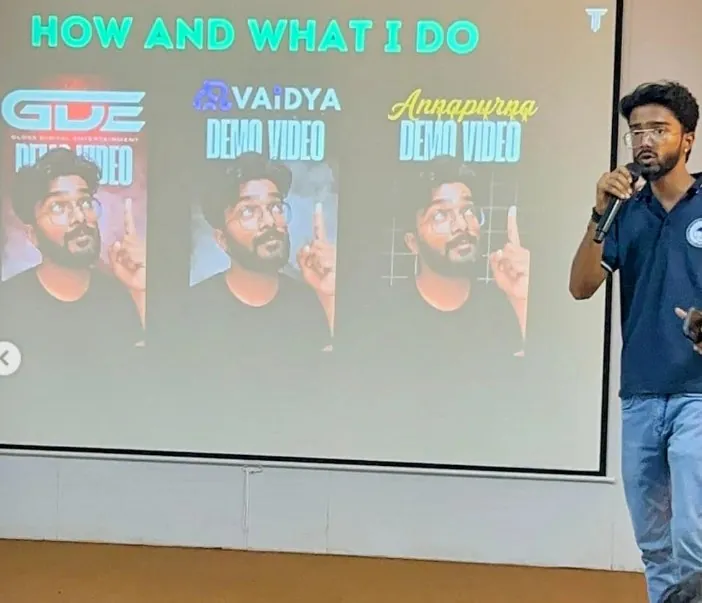
GenAI engineer and AI product builder with 2+ years shipping production-grade AI systems: RAG pipelines, fine-tuned LLMs, hybrid retrieval and multi-modal apps across vision, speech and OCR, architected end to end from ingestion to deployment. Leads engineering for SCULT INDIA's 14-member team, founded the 500+ member TechVerse Enclave community and has mentored 200+ students. Three hackathon first prizes: Changethon 2025 (IIT Roorkee), Product Genesis at Vividhotsava 2025 (CSJMU) and BYTEBATTLE (MeetKats).
Open to GenAI roles, hackathon judging, mentorship sessions and guest talks at colleges. For campus sessions the inviting institution covers the visit end to end: travel (a First AC train ticket for journeys up to five hours, a flight for anything longer), accommodation, meals, and pickup and drop; the honorarium and workshop fees are negotiable on WhatsApp or on the call, and requests are welcome from institutions that can cover the visit this way. Email pranjulrathour41@gmail.com.