
Key takeaways
- AI agents pursue goals by taking steps with tools, unlike chatbots that only answer.
- Generative AI creates new content by predicting patterns learned from examples.
- Vibe coding builds software from plain-language prompts and suits prototypes best.
- Agents reach the web through DNS and IP addresses like any other software.
- Workflows follow coded steps, agents choose steps, skills guide agents and RAG supplies knowledge.
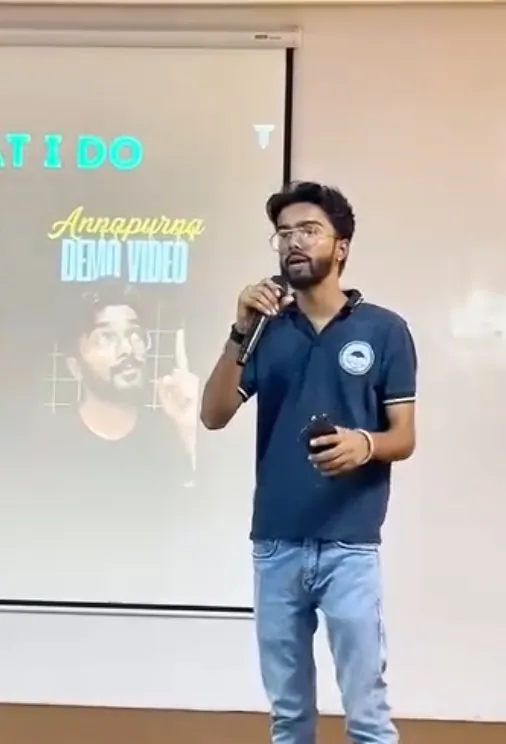
AI terms multiply quickly, but most become clear with simple explanations and a few comparisons. Generative AI creates content, ChatGPT is a chat product built on it, and AI agents go further by taking actions with tools. I build AI products such as RAG.NextUpgrad and explain these ideas to students in campus sessions, so this page covers agents, generative AI, ChatGPT and vibe coding in simple terms, how agents use DNS and IP addresses, and agents versus assistants, tools, workflows, skills and RAG.
What are AI agents in simple terms?
An AI agent is software that can do tasks for you, not just answer questions. You give it a goal, and it decides steps, uses tools such as search or email, checks results and keeps going until the job is done.
Think of a chatbot as someone who answers your questions, and an agent as an assistant who also runs errands. For example, asked to plan a study schedule, an agent might read your timetable, check exam dates and create calendar events. Agents use a language model to decide what to do next. They can make mistakes, so good agents ask for approval before important actions and show what they did.
What is generative AI in simple terms?
Generative AI is AI that creates new content, such as text, images, music, video or code, based on patterns it learned from huge amounts of examples. You describe what you want, and it produces something new.
It works by learning patterns during training: language models learn how words follow each other, and image models learn how pictures are structured. When you give a prompt, the model generates output piece by piece, predicting what fits best. Generative AI powers ChatGPT, Claude, Gemini and image generators. It is creative and useful but can produce confident mistakes, so verify facts and use it as a helper rather than an authority.
How does ChatGPT work in simple terms?
ChatGPT reads your message and predicts a helpful response one small piece of text at a time, using a large language model trained on vast amounts of text and then refined with human feedback to follow instructions and converse.
During training, the model learned patterns of language, facts and reasoning by predicting missing or next words. Later training taught it to be helpful, follow instructions and avoid harmful content. When you chat, it considers your whole conversation as context. It does not look things up unless search is enabled, so it can be outdated or wrong. Features such as memory, files and tools are added around the core model.
What is vibe coding in simple terms?
Vibe coding means building software by describing what you want to an AI in plain language and accepting the code it writes, often without reading it closely. Andrej Karpathy coined the term in 2025.
It lets beginners and busy developers create apps, websites and tools quickly, testing by trying the result and asking for changes. The risk is that nobody fully understands the code, so bugs, security holes or messy designs can hide inside. Vibe coding works well for prototypes and personal projects. For anything people rely on, review the code, add tests and learn enough programming to understand what the AI built.
Do AI agents use IP addresses or DNS?
Yes, like any software that accesses the internet. When an agent's tool visits a website, the system resolves the domain name through DNS to an IP address, then connects. Websites see requests coming from the IP address of the server running the agent.
Also asked as: does ai agents use ip address or dns
For cloud agents, that means the provider's data centre addresses; for local agents, your own network. Some AI companies publish user agent names and IP ranges for their crawlers and agents, so websites can identify or block them. Emerging standards, such as cryptographically signed agent requests, aim to let sites verify legitimate agents. If you build agents, respect robots.txt, rate limits and site terms, and identify your agent honestly.
What is the difference between AI agents and AI assistants?
AI assistants mainly respond to your requests in conversation, helping you write, answer questions or summarise. AI agents act more independently toward goals, planning steps and using tools to complete tasks with less step-by-step direction.
The line is blurring: assistants such as ChatGPT, Claude and Gemini now include agent features like browsing, running code and operating apps. A useful test is who drives the process. With an assistant, you ask, review and ask again. With an agent, you set the goal and it decides the steps, checking in when needed. Most products sit on a spectrum, adding autonomy where tasks are well defined.
What is the difference between AI agents and AI tools?
An AI tool is something you use directly for a specific job, such as a grammar checker, image generator or transcription app. An AI agent decides which tools to use, and when, to reach a goal.
Within agent systems, tools also mean the functions an agent can call, such as search, calculators or database queries. A tool does one thing when asked; an agent chains several tools together, interpreting results between steps. For example, a transcription tool converts audio to text, while a meeting agent might transcribe, summarise, extract tasks and email them. Choose simple tools when one step suffices, and agents when tasks need coordination.
What is the difference between AI agents and AI workflows?
In an AI workflow, developers define the steps in code, and the model performs specific parts, such as summarising or classifying. In an AI agent, the model itself decides which steps to take and in what order.
Workflows are predictable, easier to test and cheaper, making them ideal for well-understood processes, such as extracting invoice fields and routing them for approval. Agents handle open-ended tasks where the steps cannot be known in advance, such as researching a new topic. Anthropic recommends starting with the simplest approach, often a workflow, and adding agent autonomy only when it clearly improves results. Many real systems mix both.
What is the difference between AI agents and skills?
An agent is the system that plans and acts. Skills are packaged instructions, scripts and resources that an agent can load when relevant, teaching it how to do specific tasks, such as formatting reports or following a review checklist.
Anthropic introduced Agent Skills in 2025, later published as an open format: each skill is a folder with a SKILL.md file describing when and how to use it. Skills make agents more capable and consistent without retraining models, and they can be shared across teams and tools. A skill does nothing by itself; an agent decides to use it. Think of skills as reference manuals the agent consults.
What is the difference between AI agents and RAG?
RAG is a technique for answering questions from retrieved documents. An AI agent is a system that pursues goals by taking actions. Agents often use RAG as one tool, searching knowledge before deciding what to do.
A RAG system typically follows fixed steps: retrieve relevant passages, then generate a cited answer, as RAG.NextUpgrad does with hybrid search, reranking and a confidence gate. An agent might search several sources, notice missing information, search again, then take actions such as creating a ticket. Agentic RAG combines both, letting a model control retrieval. Use plain RAG for question answering, and agents when tasks require multiple steps or actions.
Sources

GenAI engineer and AI product builder with 2+ years shipping production-grade AI systems: RAG pipelines, fine-tuned LLMs, hybrid retrieval and multi-modal apps across vision, speech and OCR, architected end to end from ingestion to deployment. Leads engineering for SCULT INDIA's 14-member team, founded the 500+ member TechVerse Enclave community and has mentored 200+ students. Three hackathon first prizes: Changethon 2025 (IIT Roorkee), Product Genesis at Vividhotsava 2025 (CSJMU) and BYTEBATTLE (MeetKats).
Open to GenAI roles, hackathon judging, mentorship sessions and guest talks at colleges. For campus sessions the inviting institution covers the visit end to end: travel (a First AC train ticket for journeys up to five hours, a flight for anything longer), accommodation, meals, and pickup and drop; the honorarium and workshop fees are negotiable on WhatsApp or on the call, and requests are welcome from institutions that can cover the visit this way. Email pranjulrathour41@gmail.com.


