Key takeaways
- Most hackathons are open to anyone meeting eligibility rules; student-only events need enrolment.
- Non-coders contribute through research, design, pitching, testing and no-code prototypes.
- Beginners should join beginner-friendly events, take a clear role and keep the project small.
- Find AI hackathons on Devpost, Devfolio, Unstop, MLH, Kaggle and AI company event pages.
- A hackathon pitch centres on the problem, a live demo, impact and honest answers to questions.
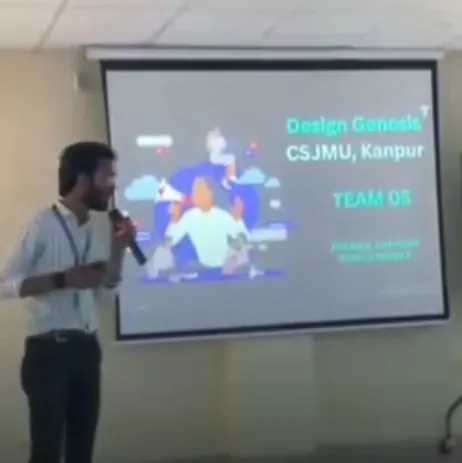
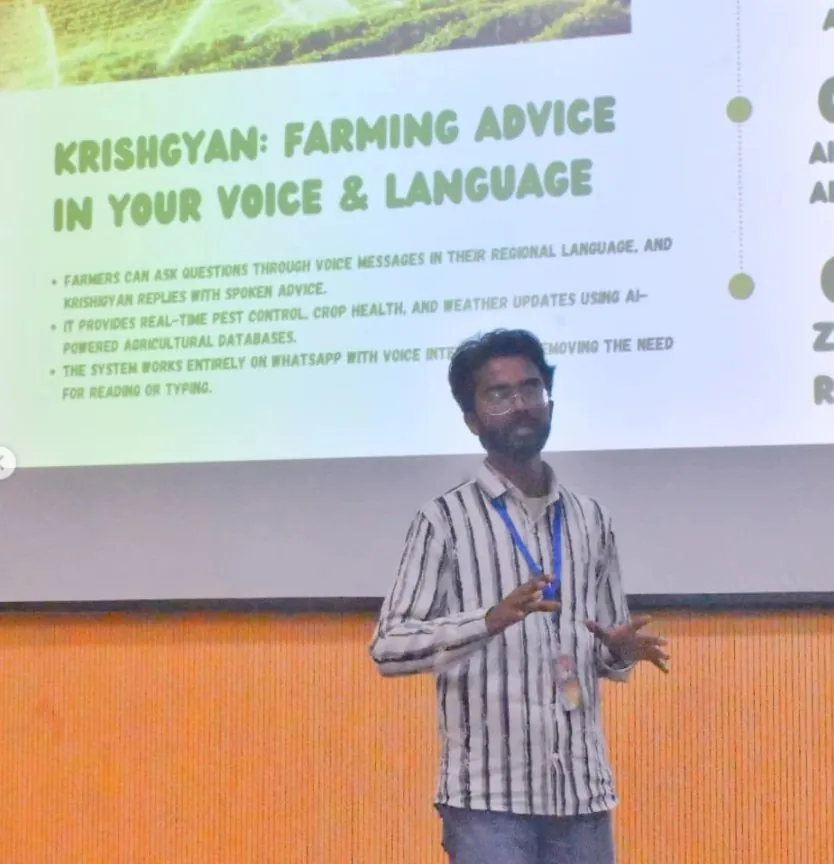
Most hackathons are open to anyone who meets their eligibility rules: students, professionals, designers and beginners, often with no coding experience required. Student-only and college-specific events are the main exceptions. I have competed in 10+ hackathons and pitched winning projects such as KrishGyan at Changethon 2025, so this page covers who can join, joining without coding, experience or college, finding AI hackathons, and how to pitch, including at Smart India Hackathon, with examples.
Can anyone join a hackathon?
Usually yes, within each event's eligibility rules. Open hackathons welcome students, professionals and hobbyists; student hackathons require enrolment in a college; some corporate or government events have age, nationality or institution requirements.
Also asked as: can anyone join hackathon
Check the rules page for age limits, team size, location restrictions and whether employees of sponsors may compete. Online hackathons widen access, since you can join from anywhere with internet. Many events also welcome non-coders such as designers, product thinkers and domain experts, because strong teams need more than programmers. If you are unsure whether you qualify, email the organisers; they generally prefer more participants and will clarify quickly.
Can you join a hackathon without coding?
Yes. Teams need designers for interfaces and slides, researchers who understand users and the problem, presenters who pitch well, and people who manage time and scope. Many hackathons explicitly welcome non-technical participants.
Also asked as: can i join hackathon without coding
Contribute by interviewing potential users, writing the problem statement, designing screens in Figma, preparing the pitch deck, testing the product and making the demo video. No-code tools such as Bubble, Glide or automation platforms also let non-programmers build working prototypes, and AI assistants can help with simple scripts. Some events have design or ideathon tracks where code is optional. Learning basic coding over time widens your role, but you can make a real impact from day one.
Can you join a hackathon with no experience?
Yes. Beginner-friendly hackathons, including many MLH and college events, offer workshops, mentors and starter kits, and some have prizes for the best beginner team. Everyone starts with a first hackathon.
Also asked as: can i join a hackathon with no experience
Prepare a little: learn basic Git, set up your laptop, and try building a tiny project beforehand. At the event, join a team with at least one experienced member, take a clear role, ask mentors for help early, and focus on learning rather than winning. Keep the project small so you finish. After the event, write down what you learned and publish the project. By your third hackathon, you will contribute far more confidently.
Can you join a hackathon after college?
Yes. Many hackathons are open to working professionals and graduates, including corporate challenges, open innovation events, Web3 and AI hackathons, and online global competitions. Only student-specific events require current enrolment.
Also asked as: can i join hackathon after college
Graduates often find hackathons useful for career switches, building portfolio projects, meeting startup founders and testing business ideas. Check rules carefully: some events limit participation to people under a certain age or within a few years of graduation. Professional hackathons may involve harder problem statements and stronger competition, but also bigger opportunities, such as investor interest or job offers. Employers sometimes run internal hackathons too, which are a good way to work with new colleagues.
Can you join a hackathon without being in college?
Yes. Open hackathons accept self-taught developers, freelancers, professionals, career changers and, in some cases, school students. Student hackathons that require a college ID are the main ones you cannot join without enrolment.
Also asked as: can i join hackathon without college
Look for open events on Devpost, Devfolio, Unstop and community platforms, plus company and government challenges that list eligibility as open to all. School students should check age limits and may need guardian consent. Without a college network, find teammates through event Discord servers and team formation sessions, which are common at the start of hackathons. Self-taught builders often do well because they are used to learning quickly and shipping independently.
Where can you join an AI hackathon?
Find AI hackathons on Devpost, Devfolio, Unstop, MLH, lu.ma event listings, Kaggle competitions, and the event pages of AI companies, cloud providers and developer communities, which frequently host online and in-person AI events.
Also asked as: where can i join an ai hackathon
Many AI companies and cloud providers run hackathons with credits for their APIs, and college tech fests across India include AI tracks. Follow AI developer communities and newsletters, since announcements spread there first. Kaggle offers long-running data and model competitions, which differ from weekend build events but sharpen ML skills. Choose events whose tracks match your interests, such as agents, RAG or vision, and prepare a reusable starter project to save setup time.
What is a hackathon pitch?
A hackathon pitch is a short presentation, usually two to five minutes, where a team explains the problem, demonstrates its solution and convinces judges of its impact and feasibility, often followed by a few minutes of questions.
Also asked as: how to pitch in sih hackathon
Unlike startup pitches, hackathon pitches centre on the working demo and what was built during the event. Judges score innovation, technical execution, design, impact and presentation, so the pitch must make each visible quickly. A strong pitch has a sharp problem statement, a live demo of the core flow, a brief explanation of how it works, and a clear next step. A pitch deck, if used, is usually five to seven slides.
How do you give a pitch at a hackathon?
Open with the problem and who suffers from it in one or two sentences, show the live demo immediately, explain the technology briefly, state the impact and next steps, and finish on time. Practise at least twice with a timer.
Also asked as: how to give pitch in hackathon
Assign roles: one speaker, one demo driver, and others ready for technical questions. Prepare a backup recording in case the live demo fails. Use real examples, such as an actual user scenario, instead of abstract claims. Avoid spending time on team introductions or long architecture slides. When judges ask questions, answer honestly, including what is mocked or unfinished, since credibility matters. Keep the demo at the centre so judges see value in seconds.
How do you pitch at Smart India Hackathon?
SIH evaluations focus on your understanding of the problem statement, feasibility, innovation and impact for the organisation that posed it. Pitch by restating the problem in the ministry's or company's terms, demonstrating your prototype, and showing how it can be deployed.
Prepare for rounds: the idea submission presentation in the official template, then evaluation by experts at the grand finale, often with mentoring rounds in between. Show research on the problem owner's context, a working prototype, data or validation from users, a deployment plan and cost-conscious design. Expect detailed questions on scalability, security and integration with existing systems. Practise answering in simple, confident language, and keep your demo running reliably on your own devices.
What are some hackathon pitch examples?
A strong example opening: "Farmers lose crops because expert advice arrives too late and in the wrong language. KrishGyan gives farmers advice over WhatsApp in their own voice and language. Let us show you a farmer asking about a leaf disease."
Then demo the core flow, explain the technology in two sentences, mention validation or impact, and close with next steps, such as piloting with a farmer group. Another useful structure: the problem in numbers, a user story, the live demo, how it works, what we built this weekend, and what comes next. Watch winning demo videos on Devpost to study pacing. Write your pitch as a script, cut it to fit the time, then rehearse until it sounds natural.
Sources

GenAI engineer and AI product builder with 2+ years shipping production-grade AI systems: RAG pipelines, fine-tuned LLMs, hybrid retrieval and multi-modal apps across vision, speech and OCR, architected end to end from ingestion to deployment. Leads engineering for SCULT INDIA's 14-member team, founded the 500+ member TechVerse Enclave community and has mentored 200+ students. Three hackathon first prizes: Changethon 2025 (IIT Roorkee), Product Genesis at Vividhotsava 2025 (CSJMU) and BYTEBATTLE (MeetKats).
Open to GenAI roles, hackathon judging, mentorship sessions and guest talks at colleges. For campus sessions the inviting institution covers the visit end to end: travel (a First AC train ticket for journeys up to five hours, a flight for anything longer), accommodation, meals, and pickup and drop; the honorarium and workshop fees are negotiable on WhatsApp or on the call, and requests are welcome from institutions that can cover the visit this way. Email pranjulrathour41@gmail.com.