Key takeaways
- A winning idea names a specific user, removes one friction, and can be demonstrated end to end in three minutes.
- Pick ideas where the hard part is something your team can do in a day, not something that needs a dataset you do not have.
- Voice, regional language and offline-first features win in India because they serve users other teams ignore.
- Adapt the idea to the problem statement's owner: a ministry wants scale and compliance, a startup wants a demo of one feature.
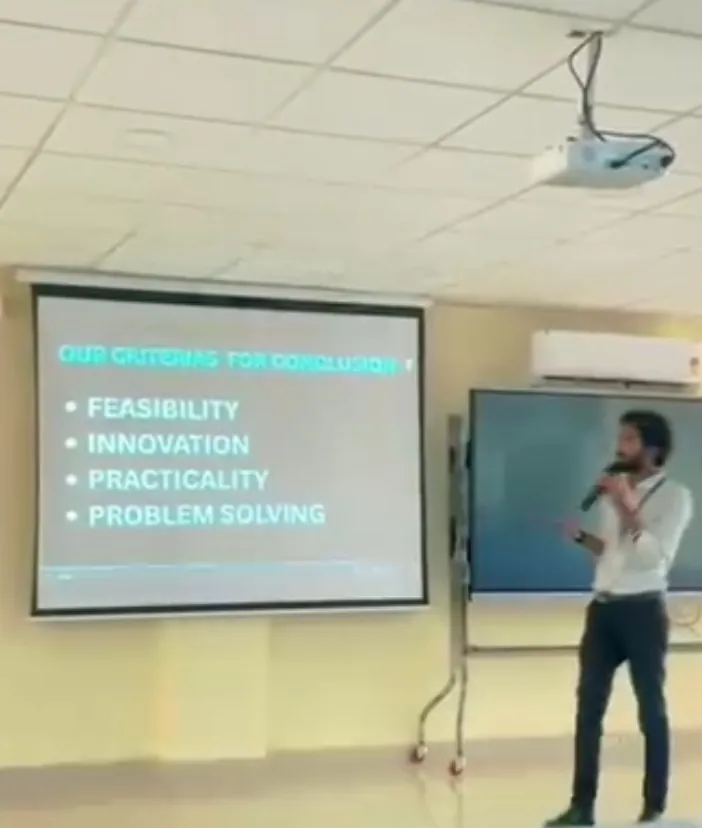
- The idea is 10 percent of the result. The demo, the pitch and the team are the rest. Use the ideas here as starting points, not scripts.
What makes a hackathon project idea good?
A good hackathon idea has four properties: a named user with a real friction, a before-and-after a judge can see in one demo, a hard technical part your team can finish in the time available, and a plausible next step after the event. Ambition is not one of the four. Every first prize I have won came from a smaller idea than the teams we beat, executed completely.
Also asked as: hackathon project ideas · hackathon ideas · best hackathon project ideas · best hackathon ideas · good hackathon ideas · unique hackathon ideas · cool hackathon ideas · hackathon ideas for beginners · hackathon ideas for students · how to find hackathon ideas · winning hackathon ideas
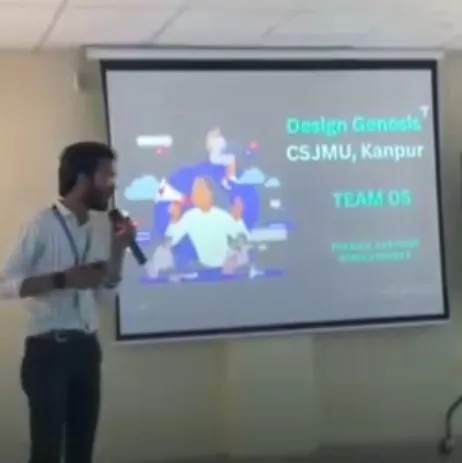
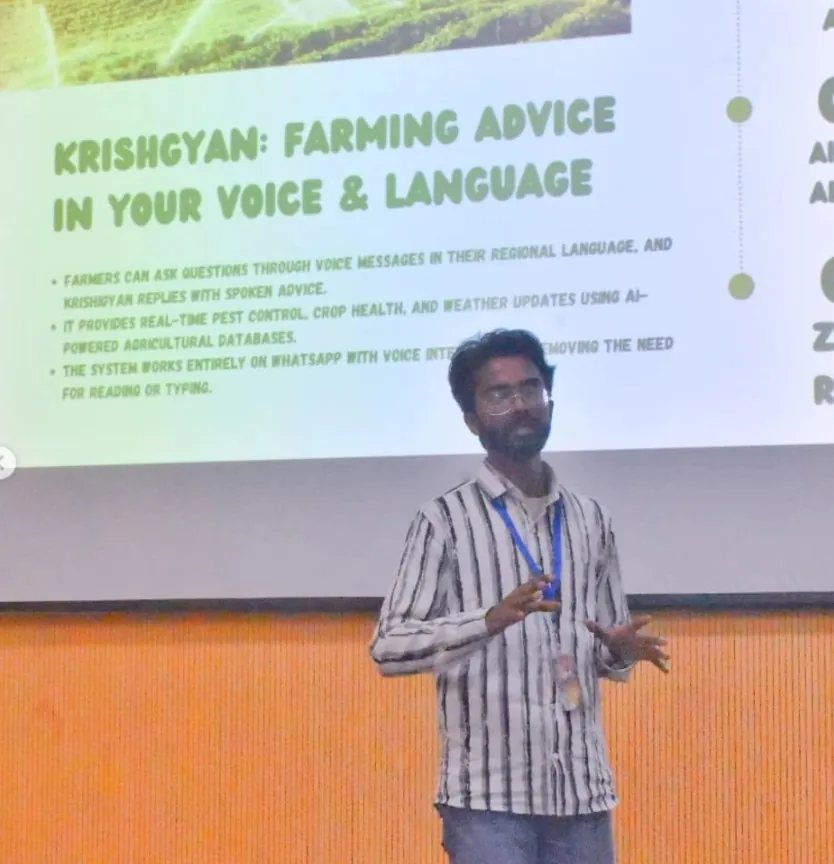
KrishGyan won Changethon at IIT Roorkee because the demo was a farmer's voice note going in and spoken advice coming out, in the farmer's language, on WhatsApp, with no reading required [1]. Annapurna won BYTEBATTLE because a judge could watch one meal move from a hotel kitchen to a shelter through four clear roles [2]. BrandHive won Product Genesis because we showed the whole loop for a small business, not a features slide [3]. None of those ideas was novel. All of them were complete.
Judges do not remember the idea. They remember the moment the demo worked and they understood who it was for. Pranjul Rathour
How do I generate hackathon ideas fast?
Use a three-column frame: an audience, a friction, and what technology removes it. Audiences: farmers, first-year students, small shopkeepers, clinic staff, college offices, delivery workers, parents. Frictions: a form, a queue, a language barrier, a lost document, a phone call nobody answers, a spreadsheet updated by hand. Technology: voice in and out, document extraction, a RAG assistant over one set of documents, a vision check, an agent that finishes one repetitive task. Combine any row from each column and you have a candidate in thirty seconds.
Also asked as: how to come up with hackathon ideas · hackathon idea generator · how to brainstorm hackathon ideas · hackathon problem statement ideas · how to choose hackathon project · hackathon idea selection
40 hackathon project ideas, with the hard part named
Each idea below states the user, the demo and the hard part. Change the audience to match your problem statement; the shape carries over.
Also asked as: ai hackathon project ideas · ai project ideas for hackathon · machine learning hackathon ideas · generative ai hackathon ideas · llm hackathon ideas · web development hackathon ideas · app ideas for hackathon · hackathon ideas 2026 · social good hackathon ideas · fintech hackathon ideas · healthcare hackathon ideas · education hackathon ideas · agriculture hackathon ideas
AI and generative AI
- Voice-first advisory over WhatsApp for farmers or shopkeepers: voice note in, spoken answer out, in a regional language. Hard part: speech recognition quality on real audio. KrishGyan is this idea [1].
- RAG assistant over one college's documents, syllabus, notices, previous-year papers, with page citations. Hard part: chunking messy PDFs so retrieval works.
- Invoice or receipt extraction to a spreadsheet with validation that totals add up. Hard part: deterministic validation after the model extracts.
- Prescription reader that turns a photo into a medication schedule with reminders. Hard part: handwriting and drug-name normalisation; keep a human confirm step.
- Lecture recording to notes: transcribe, segment by topic, produce a summary and a quiz. Hard part: speaker diarisation and long-audio chunking.
- Resume to job-fit report for a specific posting, with the gaps and one project suggestion per gap. Hard part: avoiding generic output; ground it in the posting text.
- Government scheme eligibility checker by conversation: answer five questions, get the schemes you qualify for with the documents needed. Hard part: keeping the rules table accurate and cited.
- Code review agent for student repositories that comments on a pull request with tests it ran. Hard part: sandboxing and a tight tool set.
- Local-language news summariser for one district, from public feeds, with source links. Hard part: dedup across sources and honest attribution.
- Meeting-minutes agent that joins a call recording, extracts decisions and owners, and files them. Hard part: precision on who owns what.
Agriculture and rural
- Crop disease photo triage with a confidence threshold and a "see an expert" path. Hard part: a model that admits uncertainty on out-of-distribution photos.
- Mandi price alerts by voice for a crop and district. Hard part: reliable public price data ingestion.
- Irrigation scheduling from weather and soil inputs with SMS output. Hard part: an honest, simple model rather than a fake precise one.
- Cold-storage or transport sharing between small farmers. Hard part: the matching logic and trust; roles, as in Annapurna [2].
- Fertiliser dose calculator in a regional language, offline-first. Hard part: getting the agronomy right and citing it.
Education and campus
- Attendance by face recognition with liveness, embeddings-only storage, per-class galleries. Hard part: threshold tuning and privacy design.
- Doubt-solving queue for a class, with an LLM first pass and a teacher escalation. Hard part: knowing when the model should not answer.
- Placement tracker that scrapes the college's notices and turns them into a calendar with deadlines. Hard part: parsing inconsistent notice formats.
- Lab equipment booking with conflict detection and a waitlist. Hard part: none technical, which is why it ships.
- Peer tutoring marketplace inside one campus, with verified student profiles. Hard part: trust and moderation.
- Exam paper generator from a syllabus with difficulty tags and an answer key, reviewed by a teacher. Hard part: quality control and avoiding hallucinated facts.
- Accessibility reader for scanned course PDFs: OCR to clean text to audio. Hard part: reading order on two-column pages.
Health and public services
- Clinic queue and token system with SMS updates for a primary health centre. Hard part: works on feature phones.
- Vaccination or check-up reminders for a ward, by voice call in the local language. Hard part: opt-in, consent and unsubscribe from the first version.
- Blood donor coordination with availability and distance, verified by a hospital contact. Hard part: verification without friction.
- Medical report explainer: upload a lab report, get plain-language explanations of each line with the normal range cited, and a clear "ask your doctor" boundary. Hard part: restraint.
- Emergency contact card by QR for two-wheeler riders. Hard part: none; the demo is the product.
Fintech and small business
- GST invoice generator for a kirana shop that works offline and syncs later. Hard part: offline-first data model.
- UPI QR with payment tracking for stalls and events. Hard part: reconciliation.
- Expense splitting for hostels with recurring bills and settlement suggestions. Hard part: none; polish wins.
- Loan document checklist assistant that tells a first-time applicant what is missing from their file. Hard part: accurate, cited requirements.
- Small-business review responder that drafts replies to Google reviews in the owner's voice, with approval before posting. Hard part: never auto-post.
Civic, community and sustainability
- Surplus food coordination between donors, NGOs and volunteers with verified impact. Hard part: roles and trust; this is Annapurna [2][7].
- Pothole and streetlight reporting with photo, location and a public status board. Hard part: dedup of the same issue reported twice.
- Lost-and-found for a campus or a city event with image matching. Hard part: matching without false positives.
- E-waste pickup scheduler for a locality with a route for the collector. Hard part: route optimisation, kept simple.
- Water tanker demand aggregation for a colony. Hard part: coordination logic and notifications.
Developer tools and productivity
- One-click deploy of a student's Python project to a free host with a generated README and Dockerfile. Hard part: handling the ten ways student projects are structured.
- Hackathon team finder matching skills and availability inside one event. Hard part: cold start; seed it with the event's registrations.
- Prompt library with version stamps per model and date, so a team knows which prompt worked where. Hard part: the discipline; I run one at tools.scult.in.
Which ideas suit an AI hackathon specifically?
The ones where the model does one narrow job with real inputs and a visible output: voice in and voice out, a photo to a structured record, a document set to cited answers, a repository to a review with evidence. Ideas 1 to 10 above are built for that. Avoid "a chatbot for X" unless X is a specific document set and the demo shows a citation; judges have seen a thousand generic chatbots.
Also asked as: ai hackathon ideas 2026 · best ai project for hackathon · how to win ai hackathon · ai for social good hackathon ideas · generative ai project ideas for students · llm project ideas · rag project ideas · computer vision hackathon ideas · nlp hackathon ideas
Open models make most of these feasible on a laptop: Whisper for speech [8], Ollama for a local LLM [9], and the Hugging Face hub for vision and embedding models [10].
How do I adapt an idea to a Smart India Hackathon problem statement?
Read the problem statement for its owner and its constraint. A ministry statement wants scale, compliance and integration with existing systems, so the idea should show a pilot that could grow and a data-handling story. A company statement wants one feature demonstrated on their kind of data. Map one idea from the list to the statement, then rewrite the user and the demo in the statement's own vocabulary. Never present a generic project with the statement's name pasted on.
Also asked as: smart india hackathon project ideas · sih project ideas · best project for smart india hackathon · smart india hackathon problem statements · how to select problem statement for sih · sih 2026 ideas · sih winning projects · best topic for smart india hackathon
The official portal publishes each cycle's problem statements and rules, and they change every year, so read the current list before choosing [5]. The internal college round is where most teams are eliminated; treat that presentation as the final.
What hackathon ideas work for beginners?
Ideas 19, 27, 30 and 34: a booking system, an emergency QR card, an expense splitter, a reporting board. None needs a model, a dataset or an API key. Each can be finished, polished and demoed by a team learning as they go, and a finished beginner project beats an unfinished ambitious one on every rubric I have used. Add one small AI feature only if the core works by hour 20.
Also asked as: hackathon ideas for beginners · easy hackathon ideas · simple hackathon project ideas · hackathon ideas for first year students · beginner friendly hackathon projects · hackathon ideas without ai · hackathon ideas for non coders
What ideas should I avoid?
Anything that needs a dataset you do not have on day one. Anything whose demo depends on a third party approving an API key during the event. Anything with "blockchain" attached to a problem that a database solves. Anything that requires convincing a judge of a market instead of showing a user. Anything so broad that your three-minute demo would need ten. Novelty is not on the rubric; completeness is.
Also asked as: bad hackathon ideas · hackathon ideas to avoid · overused hackathon ideas · why hackathon projects fail · common hackathon project mistakes
How do I present a hackathon idea?
Lead with the user and the pain, in one sentence. Show the demo before you explain the architecture. Put one diagram of how it works. Say what you cut and why, which shows judgement. End with what you would build next and what you need. Three minutes, rehearsed three times. The idea gets thirty seconds; the demo gets ninety.
Also asked as: how to present hackathon idea · how to pitch a hackathon idea · hackathon idea presentation · hackathon ppt ideas · how to explain project in hackathon · hackathon pitch tips
Can you help our team with an idea?
If your college or hackathon wants a session on idea selection, scoping and demos before the event, or a judge or mentor during it, that is one of the things I do. The longer list with 2026-specific angles is on the portfolio [4]. Email pranjulrathour41@gmail.com or use pranjulrathour.scult.in/invite.
Sources
- KrishGyan: 1st prize, Changethon 2025, IIT Roorkee, Pranjul Rathourpranjulrathour.scult.in
- Annapurna: 1st prize, BYTEBATTLE by MeetKats, Pranjul Rathourpranjulrathour.scult.in
- BrandHive: 1st prize, Product Genesis at Vividhotsava 2025, CSJMU Kanpurpranjulrathour.scult.in
- AI hackathon project ideas 2026, Pranjul Rathourpranjulrathour.scult.in
- Smart India Hackathon, official site and problem statementssih.gov.in
- Devfolio hackathon listingsdevfolio.co
- Annapurna source codegithub.com
- Whisper: open speech recognition model (OpenAI)github.com
- Ollama: run open models locallyollama.com
- Hugging Face models hubhuggingface.co

GenAI engineer and AI product builder with 2+ years shipping production-grade AI systems: RAG pipelines, fine-tuned LLMs, hybrid retrieval and multi-modal apps across vision, speech and OCR, architected end to end from ingestion to deployment. Leads engineering for SCULT INDIA's 14-member team, founded the 500+ member TechVerse Enclave community and has mentored 200+ students. Three hackathon first prizes: Changethon 2025 (IIT Roorkee), Product Genesis at Vividhotsava 2025 (CSJMU Kanpur) and BYTEBATTLE (MeetKats).
Open to GenAI roles, hackathon judging, mentorship sessions and guest talks at colleges. Email pranjulrathour41@gmail.com.