Key takeaways
- Every rubric worth using reduces to feasibility, innovation, practicality and problem solving, with presentation as a smaller weight.
- Anchor each score: write what a 2, a 5 and an 8 look like before the event, so judges score the same thing.
- Score the demo you saw and the answers you heard, not the deck or the ambition. A working small thing beats a described big thing.
- Brief judges for fifteen minutes, give them one sheet per team, and protect the time so every team is judged under the same conditions.
- Decide tie-breaks and conflicts of interest before the first pitch, and publish the criteria to teams in advance.
What are the judging criteria for a hackathon?
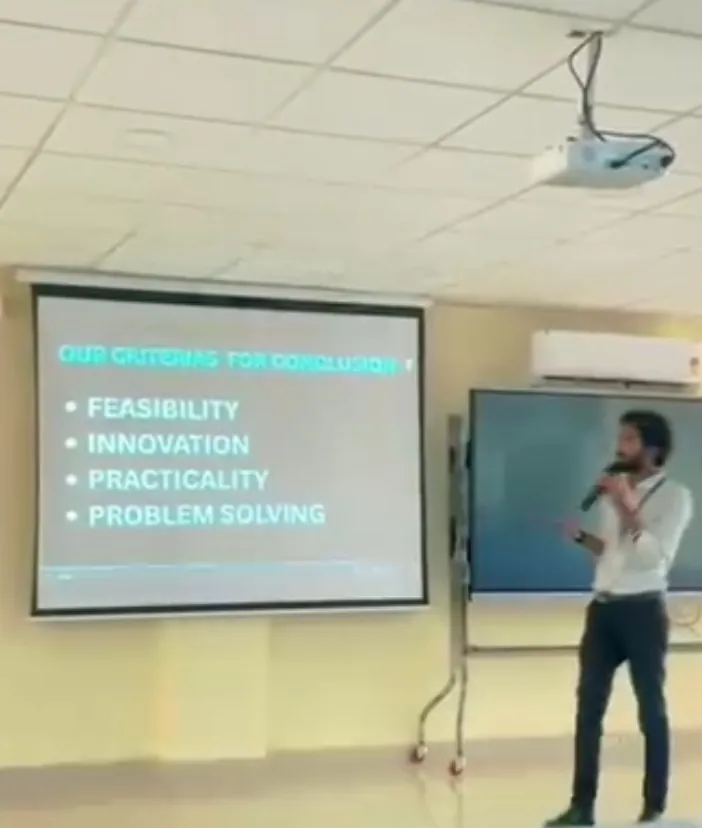
Four things, whatever the rubric calls them: feasibility, does it work and could it exist; innovation, is there a real insight, not a new coat of paint; practicality, would the stated user actually adopt it; and problem solving, did the team understand the problem before building. Presentation and teamwork are usually smaller weights. Organisers dress these up with different names; judges who have sat on panels recognise the same four underneath.
Also asked as: hackathon judging criteria · hackathon evaluation criteria · hackathon rubric · hackathon judging rubric · how are hackathons judged · hackathon scoring criteria · hackathon judging parameters · what do hackathon judges look for · criteria for judging hackathon projects · hackathon marking scheme
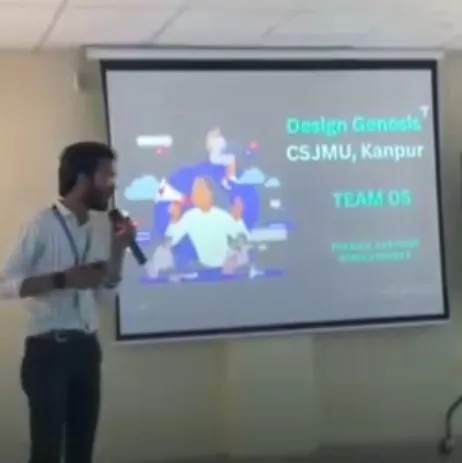
These four are the ones I put on the screen when I brief a judging room, because I learned them from the other side: three first prizes, one loss, and then panels of my own [1][2]. The full rubric with score anchors is on the portfolio and free to copy.
Judges do not score the idea. They score the evidence: what ran, what the team understood, what they cut. Write the rubric so it can only be filled in from evidence. Pranjul Rathour
A rubric you can copy
Five criteria, weights that sum to one hundred, and score anchors at 2, 5 and 8 out of 10 so every judge means the same thing by a 7.
Also asked as: hackathon rubric template · hackathon judging sheet · hackathon score sheet · hackathon evaluation sheet · hackathon judging template excel · hackathon rubric pdf · sample hackathon rubric · hackathon judging form
Weights are a choice; my reasoning for putting feasibility and problem solving above innovation is that innovation is the easiest criterion to fake with words and the hardest to verify in three minutes [4]. For an AI hackathon, add one line under feasibility: is the model doing real work on real inputs, or is the AI a label on a rules engine?
How should a judge spend the time per team?
Fifteen minutes: three for the pitch, two for the demo if it was not live, five for questions, two to score alone, three to confer if the panel scores together. Judge the demo and the answers, not the deck. Ask at least one question that tests understanding rather than the project. Score independently before discussing, then discuss only where scores differ by more than two points.
Also asked as: how to judge a hackathon · hackathon judging process · hackathon judging time per team · how to be a good hackathon judge · hackathon judge tips · hackathon judging best practices · judging a hackathon for the first time
What questions should judges ask?
Who is this for, and have you spoken to them? What happens when it fails? What did you build yourselves versus take from a library? Why did you cut what you cut? What would you do with a month? How is this different from the existing solution? What did you learn that surprised you? The first and last reveal problem understanding; the middle ones reveal feasibility and judgement.
Also asked as: hackathon judge questions · questions judges ask at hackathons · hackathon q&a questions · what to ask hackathon teams · hackathon jury questions · hackathon interview questions from judges
How do I brief a judging panel?
Fifteen minutes before the first pitch, all judges in one room. Cover: the four criteria and their weights, the score anchors with one example each, the time protocol and who keeps time, the rule of independent scoring before discussion, conflicts of interest and how to declare them, tie-breaking, and how feedback is delivered. Hand each judge a one-page sheet per team. Ask them to score the demo they saw, not the potential they imagine.
Also asked as: how to brief hackathon judges · judges briefing hackathon · hackathon judge orientation · what to tell hackathon judges · judge training hackathon · hackathon judge onboarding
My briefing outline, which takes exactly fifteen minutes, is written up separately [3]. The two things new judges most need to hear: score independently first, and a working small thing beats a described big thing.
How do you break ties and handle conflicts of interest?
Decide both before the event and write them down. Tie-break by a pre-declared criterion, usually feasibility, then problem solving, then a short re-demo if still tied; never by adding a new criterion in the room. Conflicts: any judge who has mentored a team, knows a member personally, or works for a sponsor whose product the team used declares it and abstains from scoring that team; the remaining judges' scores are normalised. Publish both rules to teams with the criteria.
Also asked as: hackathon tie breaker · how to break ties in hackathon judging · hackathon judge conflict of interest · fair hackathon judging · hackathon judging bias · hackathon judging fairness · hackathon judging controversy
Both processes, with the edge cases I have met, are written up in detail [5][6]. The commonest conflict at college hackathons is a mentor judging their own mentees, and the fix is simply to separate the two roles before the event.
How should judges give feedback?
One specific, actionable sentence per team, delivered privately or in writing, that names what would have moved the score: "the demo depended on Wi-Fi; seed the data next time", "you never named the user; start there". Not a ranking, not a critique of the idea, not encouragement without content. Teams remember one clear sentence for years, and it is the only part of judging that improves the next hackathon.
Also asked as: hackathon judge feedback · how to give feedback to hackathon teams · hackathon feedback examples · constructive feedback hackathon · hackathon feedback form · post hackathon feedback
My notes on feedback that actually helped teams, and the kind that did not, are on the portfolio [7].
How do the criteria differ for Smart India Hackathon or corporate hackathons?
The four criteria hold; the weights and a fifth item shift. Smart India Hackathon panels include the problem statement's owners, so fit with existing systems and policy carries extra weight, and the current year's official rubric governs [10]. Corporate hackathons weight practicality toward the sponsor's platform or data. Community events such as those run under Major League Hacking publish organiser guidance that leans toward learning and inclusion [9]. Read the event's own rubric, then map it onto the four.
Also asked as: smart india hackathon judging criteria · sih evaluation parameters · corporate hackathon judging criteria · mlh judging criteria · online hackathon judging criteria · ai hackathon judging criteria · hackathon judging criteria for students
How do I become a hackathon judge?
Build and ship something first, then attend, then mentor, then ask the organiser for a panel seat. Organisers want judges who have shipped, can follow a rubric, show up on time and write feedback. After the first panel, invitations arrive with speaking invitations. Publish your rubric; organisers copy it and remember where it came from, which is how this one travels.
Also asked as: how to become a hackathon judge · hackathon judge requirements · how to get invited as hackathon judge · hackathon judge qualifications · hackathon judge application · who can be a hackathon judge · hackathon mentor to judge
My own path from participant to judge, and what organisers told me they look for, is written up separately [8].
Need a judge, or a briefing for your panel?
I judge and mentor at college hackathons and internal Smart India Hackathon rounds, on-site across India or remote, and I brief panels using the rubric above. Free for student communities. Send the date, format and problem statements to pranjulrathour41@gmail.com or use pranjulrathour.scult.in/invite.
Sources
- A hackathon judging rubric organisers can copy, Pranjul Rathourpranjulrathour.scult.in
- What hackathon judges look for, Pranjul Rathourpranjulrathour.scult.in
- What a judges' briefing should cover, Pranjul Rathourpranjulrathour.scult.in
- Scoring rubric weights: how I weigh innovation versus execution, Pranjul Rathourpranjulrathour.scult.in
- Tie-breaking in hackathon judging: a fair process, Pranjul Rathourpranjulrathour.scult.in
- Judge conflicts of interest and how to handle them, Pranjul Rathourpranjulrathour.scult.in
- How judges should give feedback, Pranjul Rathourpranjulrathour.scult.in
- How to become a hackathon judge and get invited, Pranjul Rathourpranjulrathour.scult.in
- Major League Hacking judging guidance for organisersguide.mlh.io
- Smart India Hackathon, official portalsih.gov.in

GenAI engineer and AI product builder with 2+ years shipping production-grade AI systems: RAG pipelines, fine-tuned LLMs, hybrid retrieval and multi-modal apps across vision, speech and OCR, architected end to end from ingestion to deployment. Leads engineering for SCULT INDIA's 14-member team, founded the 500+ member TechVerse Enclave community and has mentored 200+ students. Three hackathon first prizes: Changethon 2025 (IIT Roorkee), Product Genesis at Vividhotsava 2025 (CSJMU Kanpur) and BYTEBATTLE (MeetKats).
Open to GenAI roles, hackathon judging, mentorship sessions and guest talks at colleges. Email pranjulrathour41@gmail.com.