FineTune Studio
Fine-tuning an open LLM is usually a notebook nobody can reproduce. I wanted it to feel like a product: upload a dataset, pick a base model, set the QLoRA knobs, launch — and watch the loss fall in real time instead of discovering hours…
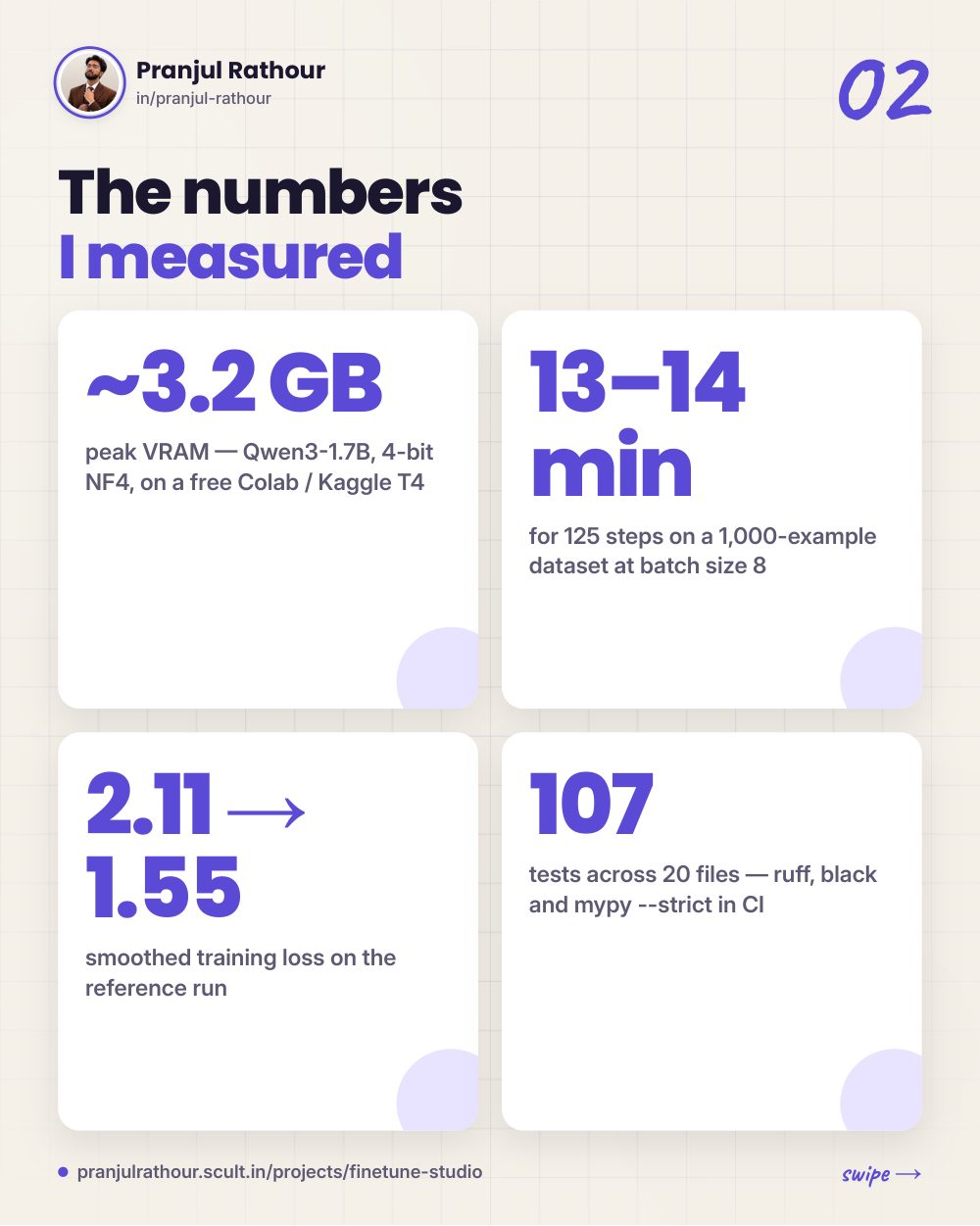
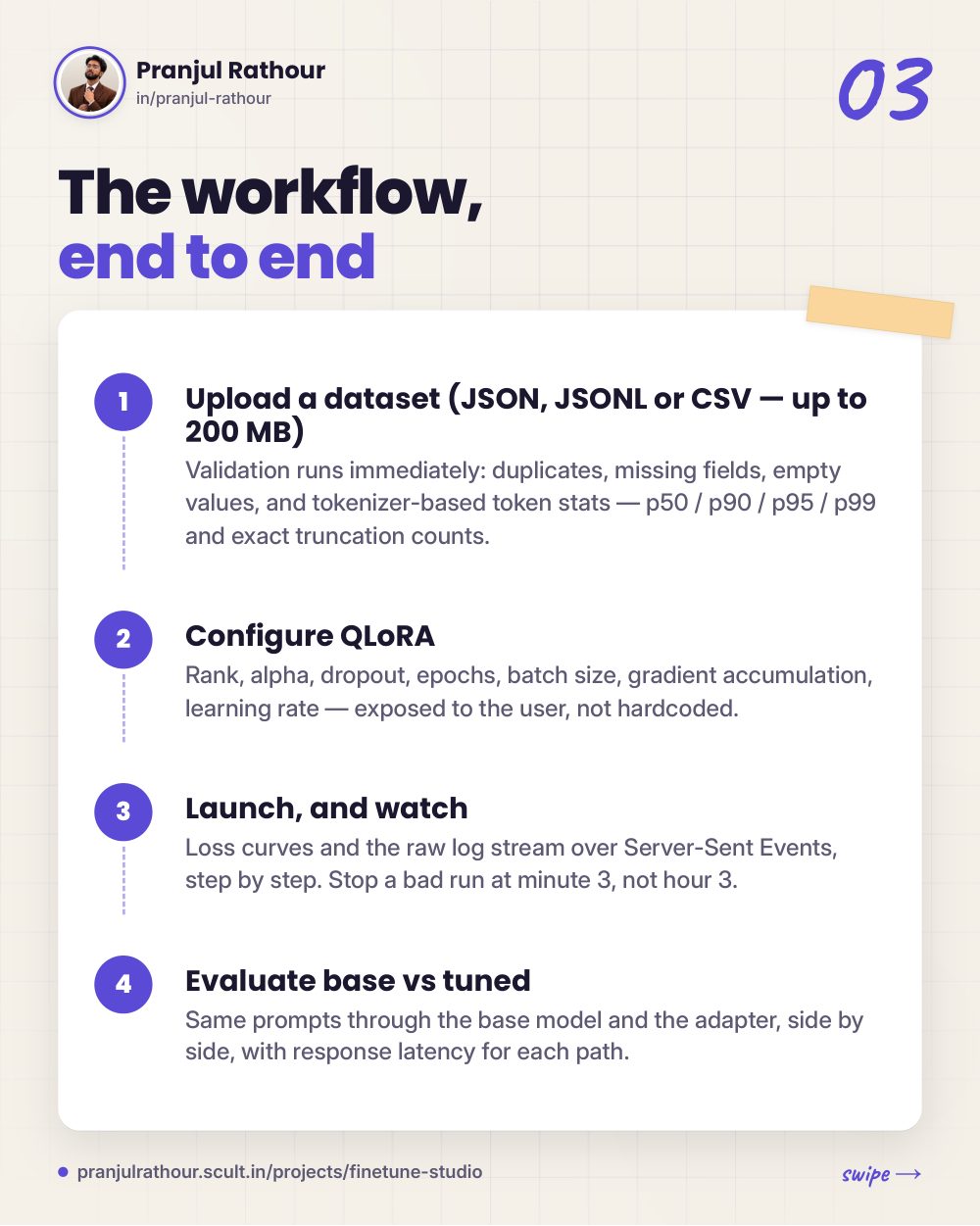
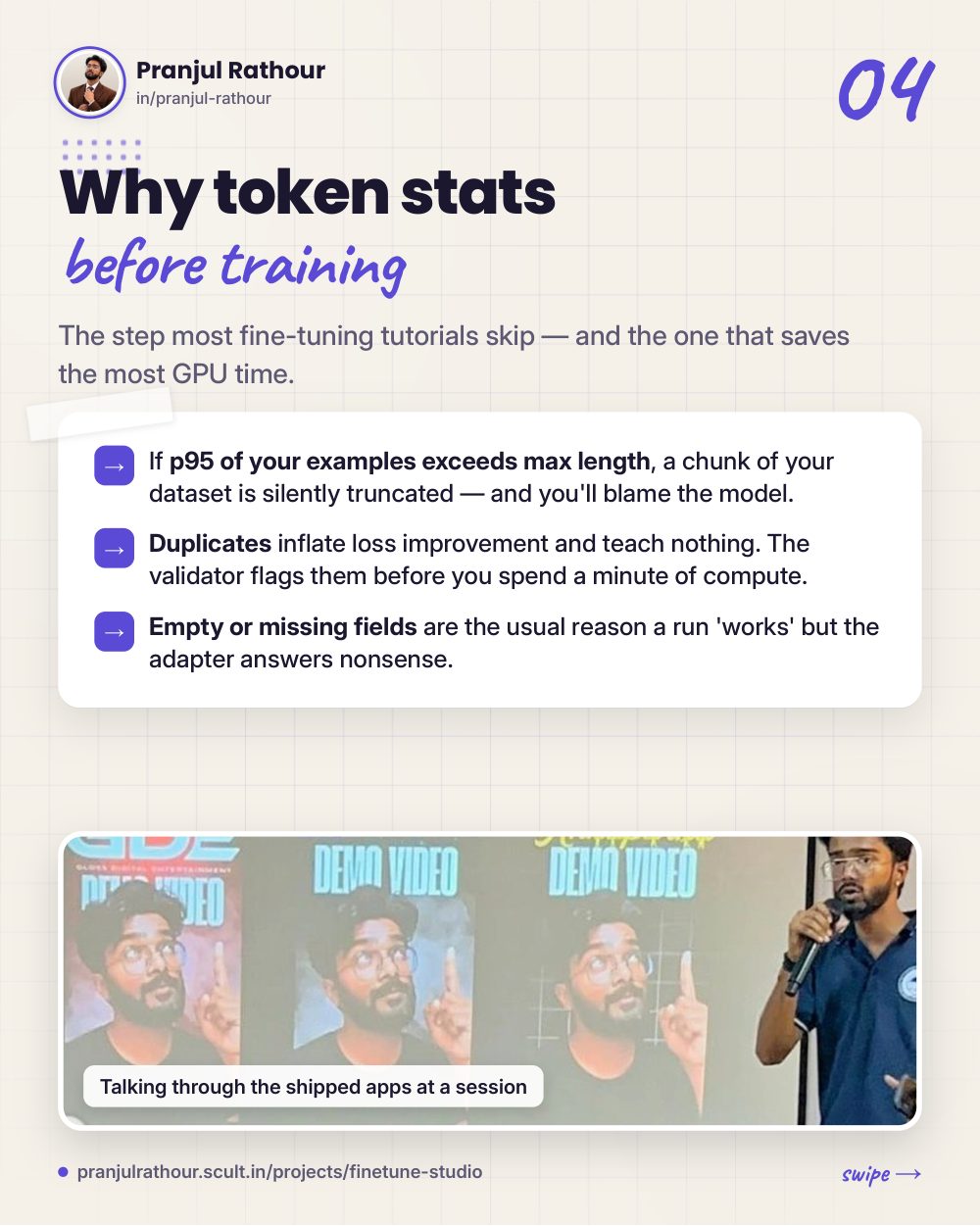
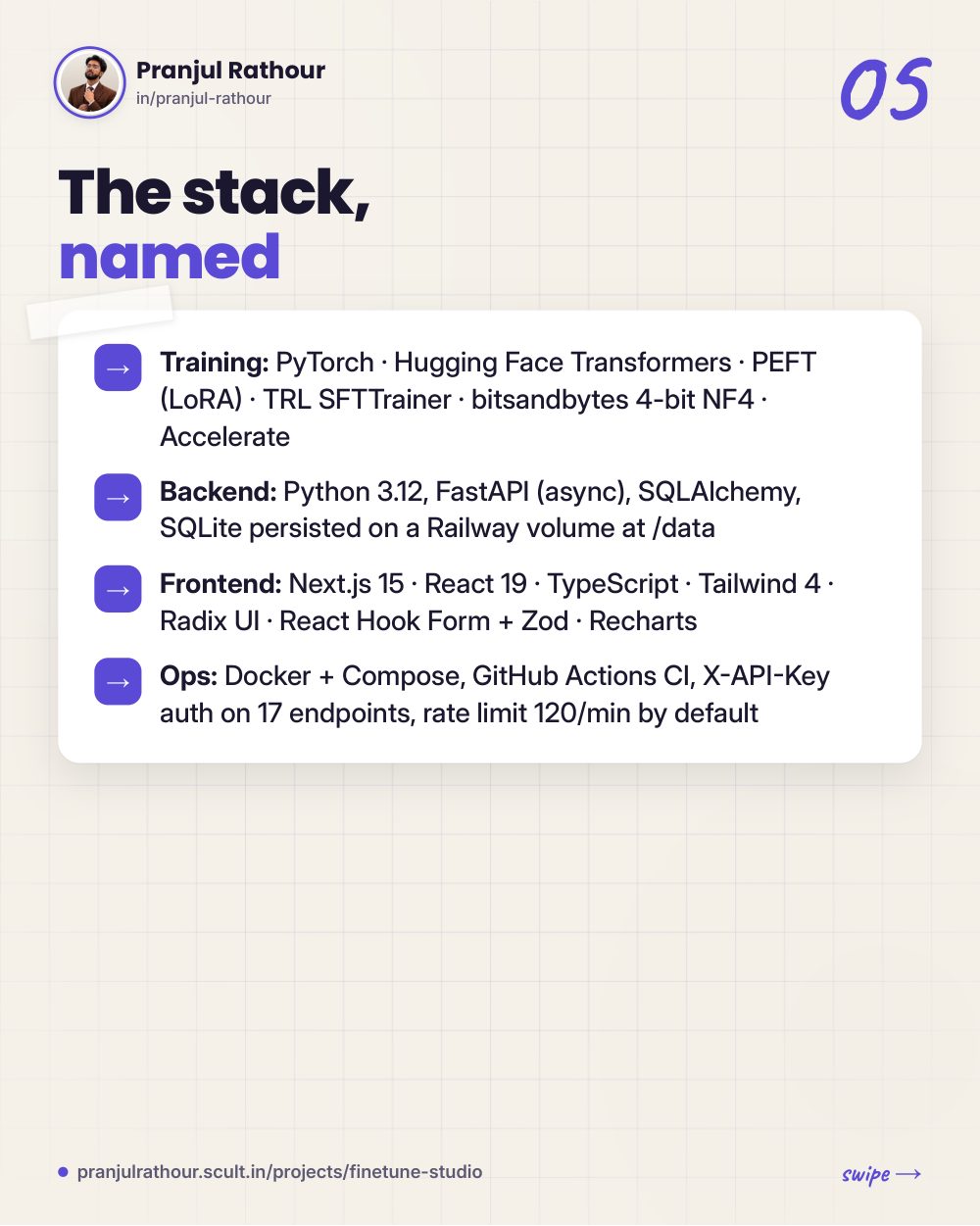
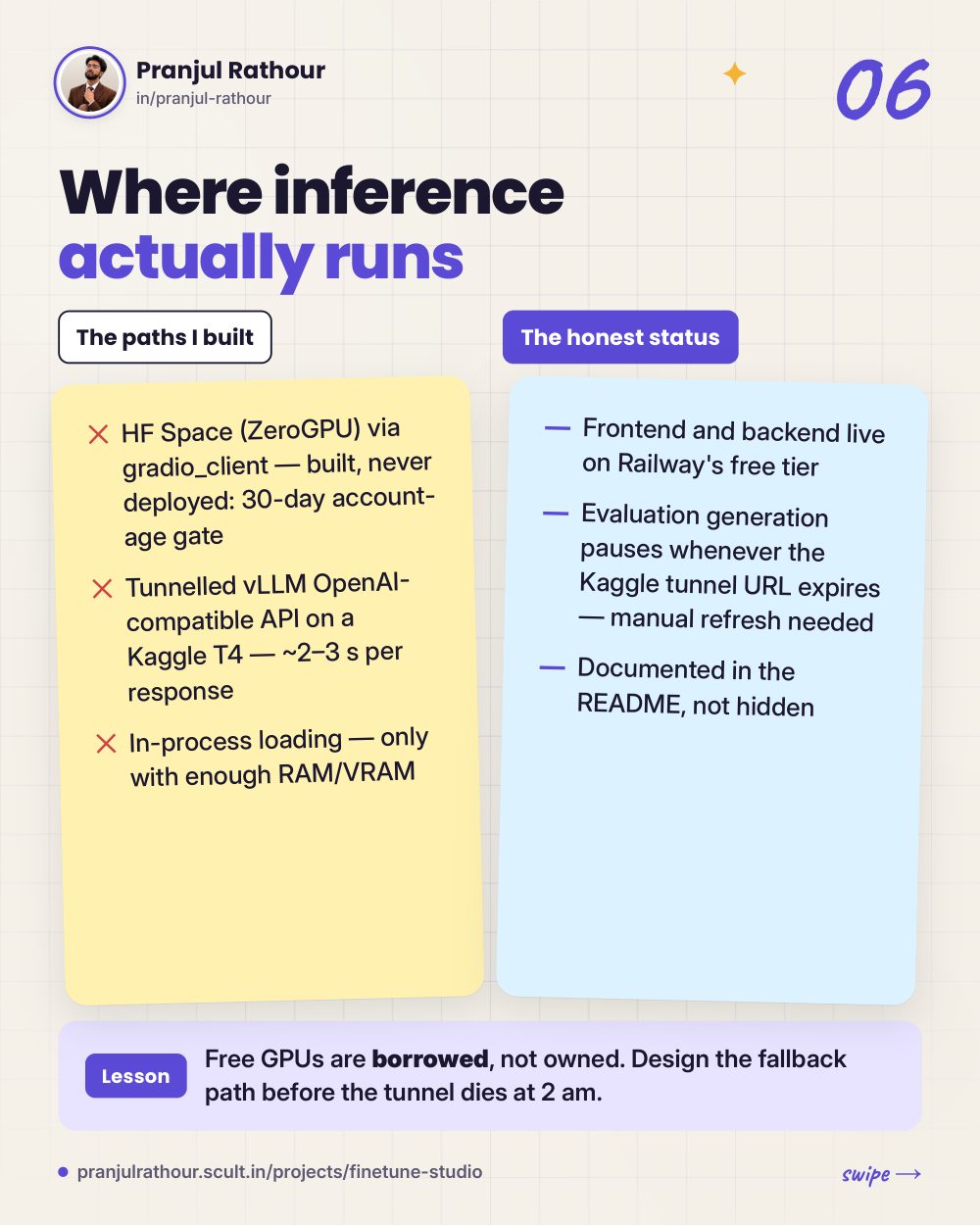
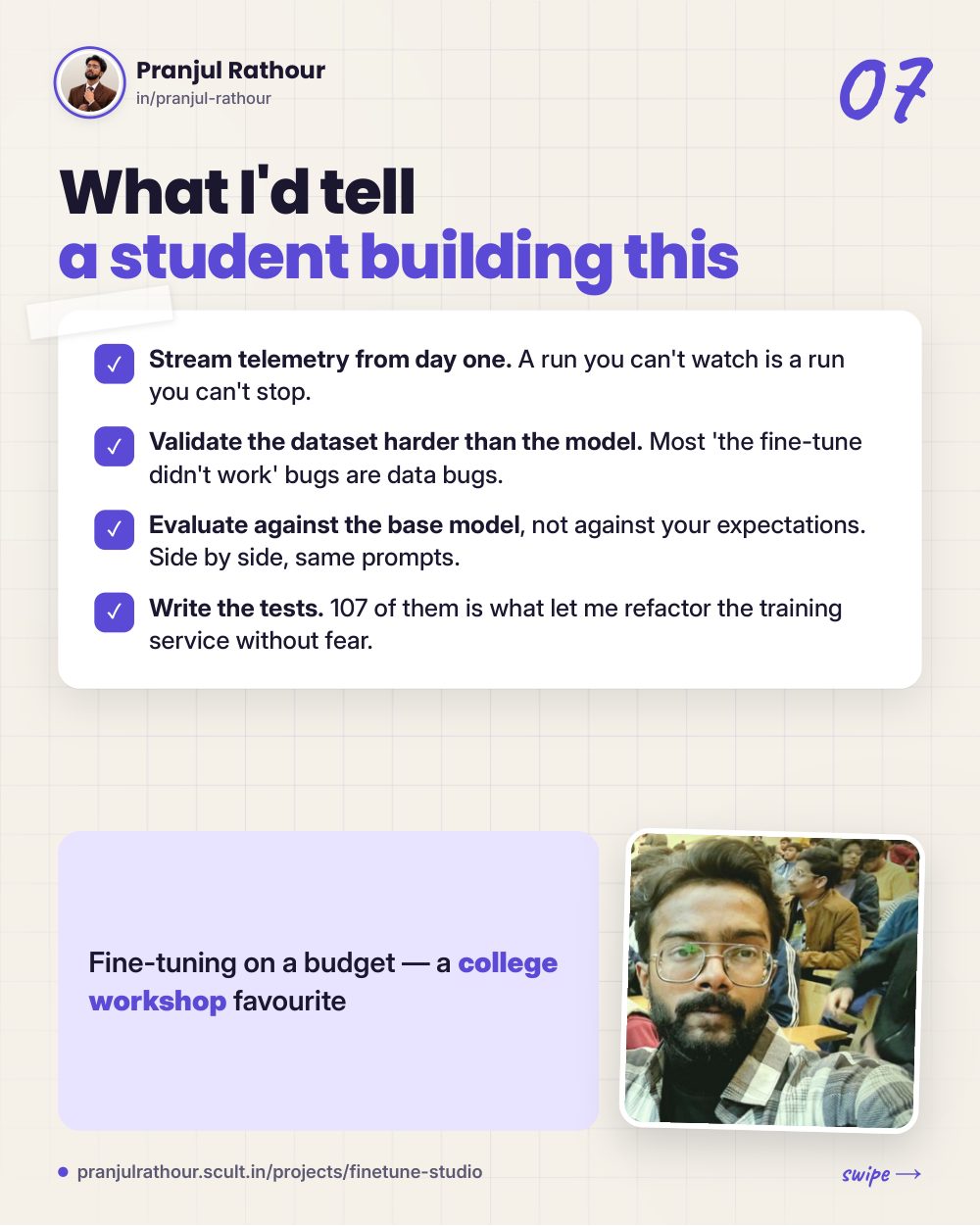
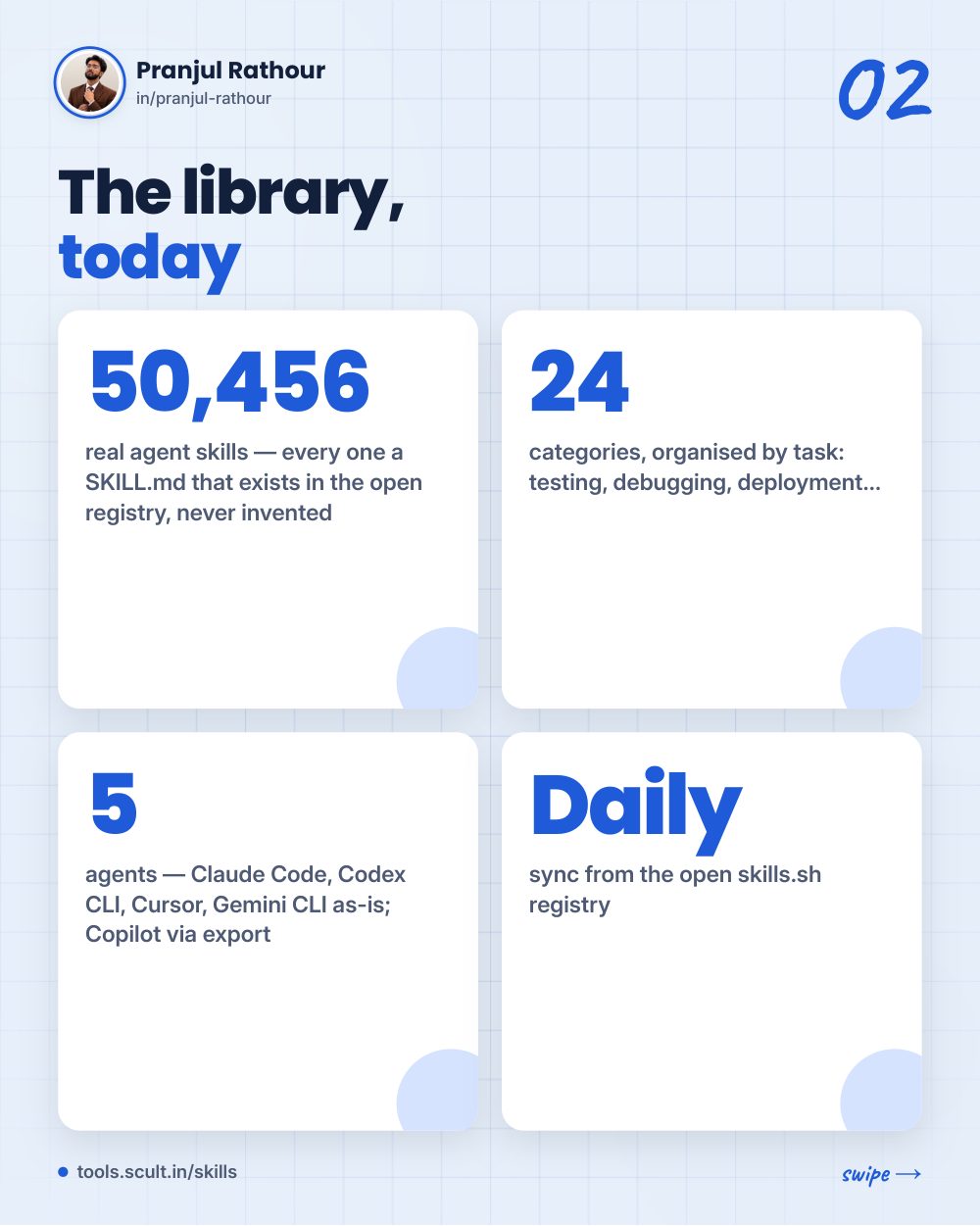
Fine-tuning an open LLM is usually a notebook nobody can reproduce. I wanted it to feel like a product: upload a dataset, pick a base model, set the QLoRA knobs, launch — and watch the loss fall in real time instead of discovering hours later that it never did. FineTune Studio is that platform. Qwen3-1.7B in 4-bit on a free T4, ~3.2 GB peak VRAM, 125 steps in about 13 minutes, base-vs-tuned evaluation side by side, 107 tests in CI. Here's how it's built and what I'd change. Built at NextUpgrad Web Solutions; code on GitHub. I also build tools.scult.in — 15 free tools, 1,200+ prompts and a 50,000-skill library, free for anyone, no signup.
More carousels

Want this as a live session at your college?
Open to GenAI roles, hackathon judging, mentorship sessions and guest talks at colleges.