Key takeaways
- A guest speaker is an outside expert invited to share knowledge or experience with an audience such as a class or club.
- Invite with a clear purpose, audience, date options, format and logistics in one concise message.
- Introduce speakers in under a minute with relevant credentials and why the audience should listen.
- Most talks run 30 to 60 minutes including questions; workshops run longer.
- Speakers are often offered an honorarium plus travel and stay; terms are agreed directly in advance.
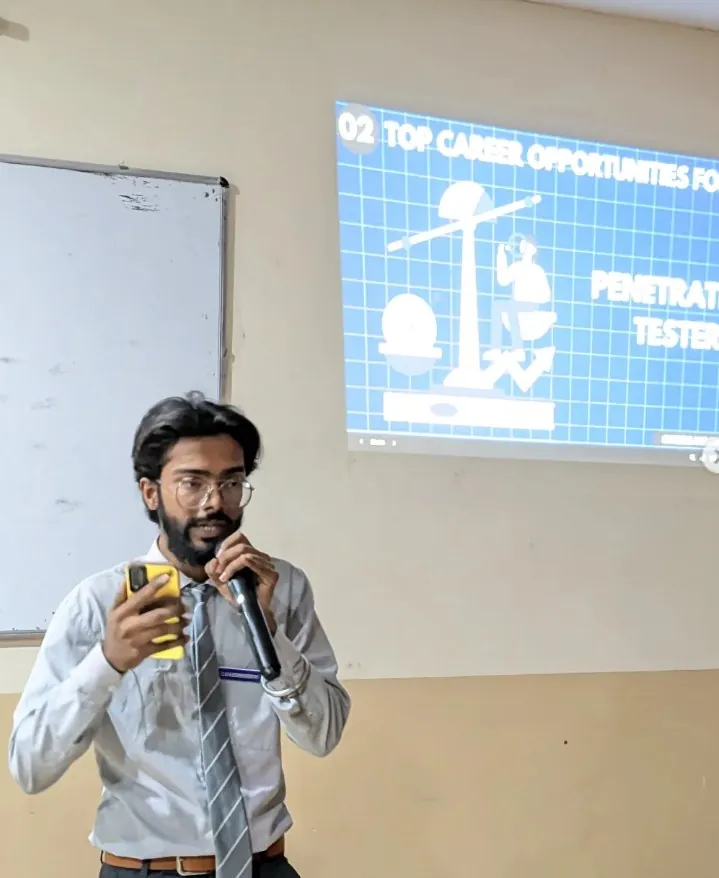
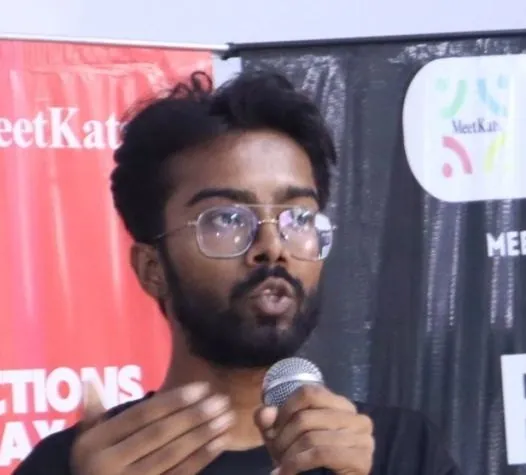
A guest speaker is someone from outside an organisation invited to talk to its audience, such as a class, college club, conference or company team, to share expertise, experience or inspiration. A guest speaker session is the talk, workshop or Q&A that results. I speak at colleges and communities on GenAI, careers and building products, including a VSICS induction seminar for 100+ first-years in July 2025, so this page covers both sides: inviting, introducing and welcoming a speaker, talk length, payment, how to speak well as a guest, and how to write the term correctly.
What is a guest speaker?
A guest speaker is an invited presenter who is not a regular member of the host organisation, brought in to offer knowledge, a practical perspective or a story that the audience would not otherwise hear.
Also asked as: what is guest speaker · do you capitalize guest speaker
In colleges, guest speakers include industry engineers, founders, alumni, researchers and community leaders who connect classroom learning with real practice. In companies, they bring outside perspectives on technology, leadership or culture. A good guest speaker adapts to the audience, gives practical takeaways and leaves time for questions. For students, these sessions are also networking opportunities: a thoughtful question or follow-up message can start a mentorship.
What is a guest speaker session?
A guest speaker session is an event where an invited speaker presents to an audience, usually as a talk, workshop, panel or fireside chat, followed by questions. In colleges, it may be part of a course, a club event, an orientation or a tech fest.
Also asked as: what is guest speaker session
Common formats:
- Talk: 30 to 45 minutes on one topic, then questions.
- Workshop: hands-on session of one to three hours, often with laptops.
- Fireside chat: a host interviews the speaker conversationally.
- Panel: several speakers discuss a theme with a moderator.
The best sessions have a clear purpose agreed in advance, such as "how to build a first AI project", and an audience that knows what to expect.
How do I invite a guest speaker?
Send a short, specific invitation: who you are, the audience and its size, the purpose and topic, proposed dates and format, duration, logistics such as travel and stay, and any honorarium, plus a contact for questions. Invite well in advance.
Also asked as: how to invite a guest speaker
A template:
Subject: Invitation to speak at [College] on [Topic]
Hello [Name], I coordinate [Club] at [College]. We would like to invite you to
give a [45-minute talk / 2-hour workshop] on [Topic] for about [number] [second-year
CS students]. Possible dates: [two or three options]. We will arrange [travel, stay,
meals, pickup] and [honorarium details]. Could we schedule a short call?
Many speakers have an invitation page with their terms; mine is at pranjulrathour.scult.in/invite.
How do I introduce a guest speaker?
Keep it under a minute: the speaker's name, two or three credentials relevant to the topic, why the audience should listen, and the session title, then welcome them to the stage. Confirm pronunciation and details with the speaker beforehand.
Also asked as: how to introduce guest speaker sample
A sample introduction:
Good afternoon, everyone. Our guest today builds production AI systems and
mentors students. They will show us how to go from a college project to a
product people actually use. Please welcome [Name] to talk about
"Building your first AI app".
Avoid reading a long biography; a focused introduction sets energy and expectations.
How do I welcome a guest speaker?
Welcome them before the event with clear logistics, greet them on arrival, introduce them to organisers and faculty, show the venue and test the setup together, offer water and a quiet moment, and thank them publicly at the end.
Also asked as: how to welcome guest speaker
A checklist:
- Share an agenda, venue details and a contact number in advance.
- Arrange pickup if needed and someone to greet them.
- Test projector, microphone, adapters and internet before they arrive.
- Introduce them warmly on stage.
- Manage time and questions with a moderator.
- Thank them on stage and by email afterwards, sharing photos and feedback.
Small details shape whether a speaker returns and recommends your event to others.
How long should a guest speaker talk?
Most guest talks run 30 to 45 minutes plus 10 to 15 minutes of questions. Workshops run one to three hours. Short keynote or lightning formats run 10 to 20 minutes.
Match length to purpose and audience. For students, 30 to 40 minutes of talk with plenty of questions usually beats an hour-long lecture. Agree the exact timing in advance, share the schedule, and give the speaker time signals. Leave buffer for setup and transitions, especially when several speakers follow each other. A session that ends slightly early with energy is better than one that runs over.
Do guest speakers get paid?
Often, yes: many speakers receive an honorarium, and hosts usually cover travel, accommodation and meals. Some speak without a fee for causes they support, early in their careers, or to build visibility. Terms vary widely and are agreed in advance.
Also asked as: do guest speaker get paid
Hosts should state their budget and what they cover in the invitation; speakers should state their terms clearly. For colleges, covering travel and stay and offering an honorarium, even a modest one, shows respect for the speaker's time. Put agreements in writing, including dates, duration, topic, recording permissions and payment. Never assume; a short, clear conversation avoids awkwardness later.
How do I speak as a guest speaker?
Know your audience, build the talk around one clear message, use stories and concrete examples, show rather than tell with demos, keep slides simple, and leave real time for questions.
Also asked as: how to speak as a guest speaker
What works with student audiences:
- Open with a relatable problem or story.
- Share specific, honest experiences, including failures.
- Show something working: a demo or a project walkthrough.
- Give three practical takeaways they can act on this week.
- End with how to reach you and resources to continue.
Arrive early to test equipment, keep a backup of slides and demos offline, and stay after the session; the best conversations often happen then.
Is "guest speaker" hyphenated?
No. "Guest speaker" is written as two separate words without a hyphen when used as a noun, as in "our guest speaker today".
Also asked as: is guest speaker hyphenated
When used as a compound modifier before another noun, some writers hyphenate it, as in "a guest-speaker series", but "guest speaker series" without a hyphen is common and acceptable. Style guides differ, so follow your organisation's style and be consistent within a document. It is never written as one word. The same pattern applies to similar phrases such as "keynote speaker" and "guest lecture", which are also two words. When you write event posters, invitations or certificates, check the speaker's preferred name, title and designation too; getting those right matters more to most speakers than hyphenation.
Do you capitalise "guest speaker"?
Capitalise it only at the start of a sentence, in a title or heading, or when it is part of a formal title before a name. In ordinary sentences, it is lowercase: "We invited a guest speaker from industry."
Examples: "Guest Speaker Session: Building with AI" uses title case in a heading; "the guest speaker, Dr Sharma, will join at noon" keeps it lowercase. On posters and event pages, title case for headings is common. Consistency within the same document matters more than the specific style you choose.
Sources

GenAI engineer and AI product builder with 2+ years shipping production-grade AI systems: RAG pipelines, fine-tuned LLMs, hybrid retrieval and multi-modal apps across vision, speech and OCR, architected end to end from ingestion to deployment. Leads engineering for SCULT INDIA's 14-member team, founded the 500+ member TechVerse Enclave community and has mentored 200+ students. Three hackathon first prizes: Changethon 2025 (IIT Roorkee), Product Genesis at Vividhotsava 2025 (CSJMU) and BYTEBATTLE (MeetKats).
Open to GenAI roles, hackathon judging, mentorship sessions and guest talks at colleges. For campus sessions the inviting institution covers the visit end to end: travel (a First AC train ticket for journeys up to five hours, a flight for anything longer), accommodation, meals, and pickup and drop; the honorarium and workshop fees are negotiable on WhatsApp or on the call, and requests are welcome from institutions that can cover the visit this way. Email pranjulrathour41@gmail.com.