
Key takeaways
- Colleges invite people who have done something specific and can say so in one line. Build the thing first, then the talk about it.
- Plan a session around one outcome students can act on that week, not around covering a topic.
- Structure: a story, the map, one live demo, the roadmap, then a long Q&A. Slides are cue cards, not the talk.
- Silence in the room is a setup problem, not a students problem. Ask a question that has no wrong answer and wait.
- The follow-up decides the relationship: share the slides, answer the emails, and ask the organiser for the next thing.
How do I get invited to give a guest lecture at a college?
Do something specific, describe it in public, and make it easy to book you. Colleges and tech clubs invite people whose credential fits in one sentence, "shipped five production AI apps", "won Changethon at IIT Roorkee", and who have a page or a post that shows what a session with them looks like. Start with your own college and clubs you belong to, offer a concrete topic and two dates, say it is free for students, and post about the first session the same week. The second invitation comes from the first post.
Also asked as: how to give guest lecture in college · how to become a guest lecturer in college · how to get invited to speak at colleges · how to become a guest speaker · how to become a campus speaker · how to get speaking opportunities as an engineer · guest lecture opportunities for professionals · how to become a tech speaker
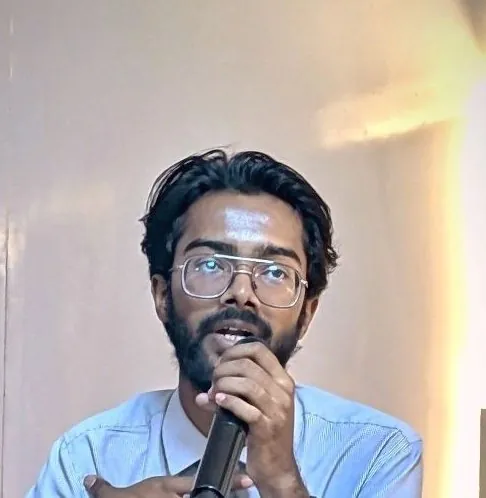
My first sessions were at VSICS Kanpur, my own college, to first-years and to the coding club: a career roadmap, a session on AI in the software lifecycle, a debate [1][2][3]. Each one produced a post with photos, each post produced the next invitation, and the pattern has not changed since. A page listing the talks I offer, with formats and logistics, is what organisers now book from [8].
Nobody invites you to talk about AI. They invite you to talk about the thing you built, because you are the only person who can. Pranjul Rathour
What should a guest lecture cover?
One outcome. Decide what students should be able to do on Monday because of your session, then build backwards. For first-years: a roadmap and permission to start. For second- and third-years: one skill demonstrated live and a project to try. For final-years: what the industry actually hires for and how to show it. A talk that covers a whole topic teaches nothing; a talk that changes one action teaches something.
Also asked as: guest lecture topics · topics for guest lecture in engineering college · seminar topics for computer science students · guest lecture topics for cse · how to choose topic for guest lecture · technical talk topics · what to talk about in a college talk · ai topics for guest lecture
The three-year roadmap I gave 100+ first-years at the VSICS induction was one outcome: know what year one, two and three are for, and start year one this week [1].
How do I structure a 60- or 90-minute technical talk?
Open with a two-minute story that has a failure in it. Show the map: three or four ideas, on one slide, that the session will cover. Do one live demo of something real, ten minutes at most. Give the roadmap: what to do next, in order. Then stop early and take questions for the rest of the slot. Students remember the story, the demo and one line from the roadmap. Slides are cue cards with one idea each; nobody reads paragraphs on a screen.
Also asked as: how to structure a technical talk · guest lecture format · how to prepare a technical presentation · how to give a tech talk · talk structure for students · how to make a presentation for guest lecture · how long should a guest lecture be · 90 minute workshop structure
My full outline for a 90-minute GenAI session, with the demo and the roadmap slides, is written up on the portfolio [6].
How do I prepare a guest lecture?
Ask the organiser five questions: who is in the room and how many, what year, what they already know, what the room has, and what they want students to leave with. Write the one outcome. Build the demo first and rehearse it on the machine you will use. Then write slides, no more than one per two minutes. Rehearse once with a timer, once without slides, and cut a third. Arrive early and test the projector with your laptop.
Also asked as: how to prepare for a guest lecture · how to prepare a campus talk · guest lecture preparation · how to prepare a technical talk · presentation preparation checklist · how to rehearse a talk · how to prepare slides for a talk
The longer version of how I prepare is on the portfolio [4]; the short version is that the demo is built before a single slide exists.
How do I handle a quiet room or a difficult question?
A quiet room is a setup problem. Ask a question with no wrong answer, "who here has used ChatGPT for an assignment?", raise your own hand, and wait a full five seconds. Take the first answer seriously and build on it. For a question you cannot answer, say so, say what you would check and how, and offer to follow up by email. For a hostile question, restate it calmly, answer the part that is fair, and move on. Students forgive not knowing; they do not forgive bluffing.
Also asked as: how to handle q&a after a talk · how to handle questions you don't know · how to engage students in a lecture · how to make a guest lecture interactive · how to deal with a quiet audience · how to answer difficult questions in a presentation · public speaking for engineers · how to overcome stage fear for a talk
I wrote a separate piece on handling Q&A after technical talks, because it is where most speakers either win or lose the room [5]. The single most useful habit: repeat every question aloud before answering, so the back row hears it and you get three seconds to think.
Should I use slides, a demo or a whiteboard?
All three, in that priority reversed: demo first, whiteboard for the one idea that needs drawing, slides as cue cards. A live demo of a real system is the part students talk about afterwards and the part that proves you have built things. A whiteboard sketch of an architecture lands harder than a diagram slide because they watch it appear. Slides carry structure, links and the roadmap. Never read from them.
Also asked as: slides vs demo in a technical talk · how many slides for a 60 minute talk · live demo in presentation tips · should i do a live demo · presentation tips for engineers · how to make technical slides
Are guest lecturers paid? Should I charge?
Some are, many are not, and universities often have fixed honoraria under their rules. I speak at student communities for free, on-site with travel covered or remote at no cost, because those rooms are where the people I want in the industry sit, and because I was helped the same way. Early on, speak for free and for the post. Later, charge companies and conferences, and keep colleges free if you can. Say your terms in your first reply so nobody is embarrassed.
Also asked as: are guest lecturers paid · do guest speakers get paid · how much do guest lecturers earn · guest lecture honorarium · should i charge for speaking at colleges · speaking fee for students · free speaker for college events
How do I become a hackathon judge or mentor as well?
The same way, one step further: attend hackathons, then mentor at one, then ask the organiser to sit on the panel. Organisers want judges who have built and shipped, who can brief a rubric and who show up on time. Once you have judged once, the invitations come with the speaking ones. Publish your rubric, because organisers copy it and remember where it came from.
Also asked as: how to become a hackathon judge · how to get invited as hackathon judge · hackathon mentor how to · how to judge a hackathon · hackathon judge requirements · how to be a good hackathon judge
My path from participant to judge, and what organisers told me they look for, is written up separately [7].
What mistakes do first-time speakers make?
Covering everything. Reading slides. Forty minutes of context before anything concrete. A demo that has never run on the presenting laptop. No questions asked of the room until the end. Running over time into the next session. Bluffing an answer. Leaving without sharing slides or a way to reach you. Each is fixable before the session with the checklist above; none is fixable during it.
Also asked as: common mistakes in guest lectures · presentation mistakes to avoid · public speaking mistakes engineers make · how not to give a boring lecture · technical talk mistakes
How do I turn one talk into a lasting relationship with a college?
Send the slides and links within a day. Reply to every student email for a month. Post the photos and tag the college and the club. Then propose the next thing: a hands-on workshop, a judging slot at their hackathon, monthly office hours for the club. Three of my longest mentoring relationships with student clubs started as a single session followed by one email I bothered to send.
Also asked as: how to build relationships with colleges as a speaker · follow up after guest lecture · mentor relationship with students · how to get repeat speaking invitations · campus speaker relationships
Where can I start speaking?
At your own college's club, next month, on the thing you built last semester. Offer two dates, one topic and a demo. If you would like to see how I structure sessions, the talk menu and the 90-minute outline are public [6][8]. If your college wants a session, or wants a speaker to show your students how to become speakers, email pranjulrathour41@gmail.com or use pranjulrathour.scult.in/invite.
Sources
- VSICS Induction Seminar 2025: mentor and speaker to 100+ first-years, Pranjul Rathourlinkedin.com
- AI-powered software development: mentorship session at VSICS Kanpur under TechVerse Enclavelinkedin.com
- INSIGHT, The Talk Show, VSICS Kanpur: debate on nationalism and policylinkedin.com
- How I prepare a campus talk, Pranjul Rathourpranjulrathour.scult.in
- Handling Q&A after a technical talk, Pranjul Rathourpranjulrathour.scult.in
- GenAI guest lecture outline, 90 minutes, Pranjul Rathourpranjulrathour.scult.in
- How to become a hackathon judge and get invited, Pranjul Rathourpranjulrathour.scult.in
- Speaking topics I offer colleges, Pranjul Rathourpranjulrathour.scult.in

GenAI engineer and AI product builder with 2+ years shipping production-grade AI systems: RAG pipelines, fine-tuned LLMs, hybrid retrieval and multi-modal apps across vision, speech and OCR, architected end to end from ingestion to deployment. Leads engineering for SCULT INDIA's 14-member team, founded the 500+ member TechVerse Enclave community and has mentored 200+ students. Three hackathon first prizes: Changethon 2025 (IIT Roorkee), Product Genesis at Vividhotsava 2025 (CSJMU Kanpur) and BYTEBATTLE (MeetKats).
Open to GenAI roles, hackathon judging, mentorship sessions and guest talks at colleges. Email pranjulrathour41@gmail.com.