Key takeaways
- Generic public-speaking advice, power poses, breathing tricks, helps less for a technical talk than structuring the content so the room can follow it.
- Nerves do not go away with experience; they get quieter because preparation removes the specific things you are actually afraid of, forgetting what's next or losing the room.
- Filler words drop dramatically once you replace them with a deliberate pause, which also makes you sound more confident, not less.
- Rehearsing out loud, not silently reading slides, is the single highest-leverage practice habit, and most people skip it.
- Reading a room in real time, confusion, boredom, engagement, and adjusting pace or depth accordingly, is a trainable skill, not a fixed trait.
How do I actually get better at public speaking for tech talks?
By practising the specific talk out loud, repeatedly, more than by practising "public speaking" as a general skill. Generic advice, power poses, deep breathing, helps a little with nerves in the moment, but the bigger lever for a technical talk is structure: a clear problem, a logical build, a strong close, rehearsed enough times that you are not simultaneously thinking about content and delivery. Most improvement comes from removing the specific things you are afraid of, forgetting what comes next, losing the room, running over time, one rehearsal at a time.
Also asked as: how to improve public speaking · public speaking tips for engineers · how to get better at giving talks · public speaking for tech presentations · overcoming fear of public speaking students · public speaking practice tips
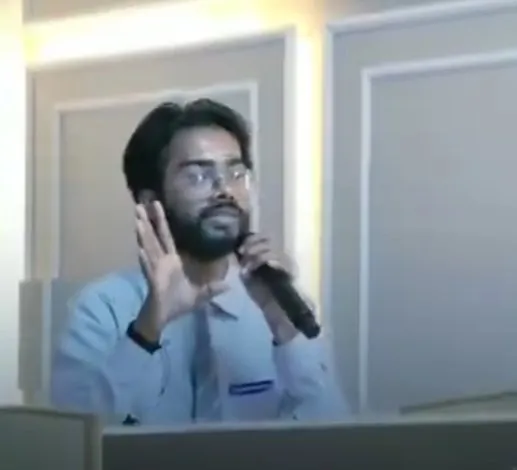
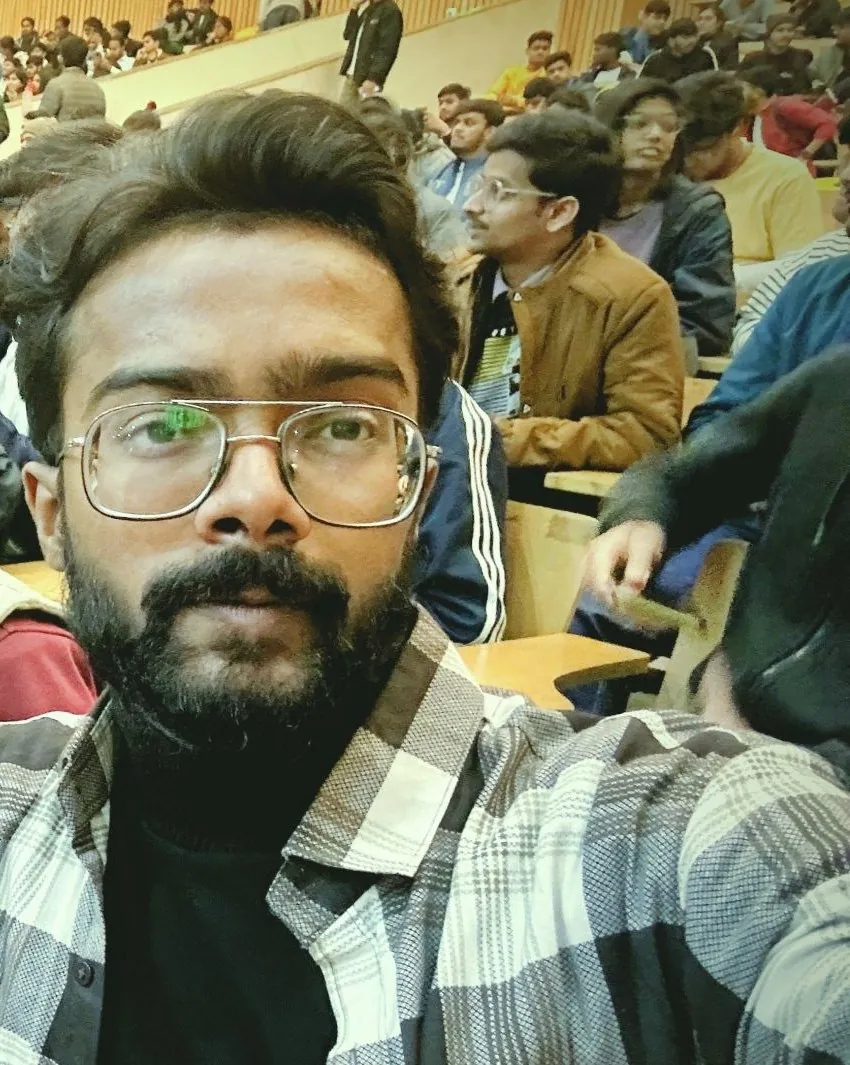
I have given technical talks to rooms from twenty to several hundred students, and the improvement that actually showed up in feedback came almost entirely from rehearsal discipline, not from any general public-speaking technique.
Confidence on stage is not a personality trait. It is the residue of having rehearsed the specific talk enough times that nothing in it can surprise you. Pranjul Rathour
Why does structure matter more than delivery style for a technical talk?
Because an audience that cannot follow the logical thread of a talk will not be won over by good delivery, and an audience that can follow a clear structure will forgive an imperfect delivery. A technical talk needs a stated problem, a build toward the solution with one idea per section, and a close that restates what changed for the listener. Delivery, pace, tone, eye contact, matters, but it amplifies a structure that already works; it cannot rescue a talk that has no clear thread [3][4].
Also asked as: how to structure a technical talk · talk structure for engineers · presentation structure tips · how to organize a tech talk · content vs delivery public speaking
How do I handle nerves before and during a talk?
Nerves rarely disappear with experience; they get quieter because thorough preparation removes the specific fears driving them. Rehearse the opening thirty seconds until it is close to memorised, since a strong start calms the rest of the talk. Arrive early enough to test the room's tech, slides, mic, clicker, so equipment surprises do not add to the nerves. Accept a slightly faster heartbeat as normal rather than fighting it, and use the first minute's adrenaline for energy rather than trying to suppress it entirely.
Also asked as: how to calm nerves before a talk · public speaking anxiety students · how to stop being nervous presenting · managing stage fright · nervous before presentation tips
How do I cut filler words like "um" and "so"?
Replace the filler with a deliberate silent pause instead of trying to suppress it through willpower alone; a pause reads as confidence, while "um" reads as searching. Filler words cluster at points where you have not fully decided what comes next, so the real fix is often tightening your structure and rehearsal, not a speech habit in isolation. Recording yourself and counting fillers in a five-minute segment makes the habit visible, which is usually enough to start correcting it, since most people underestimate how often they do it until they hear it back.
Also asked as: how to stop saying um · reduce filler words public speaking · how to speak without saying like · eliminate verbal fillers · public speaking pause technique
What is the single most effective practice habit?
Rehearsing the actual talk out loud, standing, at full volume, as many times as the stakes justify, rather than silently reading slides or rehearsing only in your head. Silent rehearsal does not train the muscle memory of speaking, the timing, or where you actually stumble; those only show up when you say the words aloud. Recording one full out-loud rehearsal and watching it back, however uncomfortable, surfaces more fixable problems in ten minutes than a week of silent preparation.
Also asked as: best way to practice a speech · how to rehearse a presentation · practicing public speaking effectively · talk rehearsal tips · how many times should i rehearse a talk
How do I read a room and adjust in real time?
Watch for the visible signals: heads down on phones, note-taking, confused frowns, nodding along, and adjust pace or depth accordingly, slowing down and adding an example when you see confusion, moving faster when you see impatience. This is trainable by deliberately watching the room instead of only your slides or notes during rehearsal-adjacent early talks, and by asking a trusted person in the audience to flag specific moments afterward where the room's energy visibly shifted.
Also asked as: how to read the room while speaking · audience engagement techniques · how to tell if audience is bored · adjusting pace during a talk · live audience feedback speaking
What mistakes do people make trying to improve their public speaking?
Practising general public-speaking exercises instead of the actual talk they need to give. Reading slides silently and calling it rehearsal. Trying to eliminate nerves entirely instead of channelling them. Adding more content when a talk runs long instead of cutting it, which makes nerves worse under time pressure. Never recording themselves, so the gap between how a talk feels and how it actually sounds stays invisible.
Also asked as: public speaking improvement mistakes · common presentation mistakes · why is my public speaking not improving · presentation skills mistakes students make
Public speaking interview and evaluation questions
"Tell me about a time you presented to a group" is asked in almost every interview, technical or not, and the strongest answers describe a specific talk, its structure, and what you changed after getting feedback, not a general claim of being "good at public speaking". Toastmasters-style structured feedback, or simply asking a trusted listener for one specific thing to improve, builds this evidence faster than unstructured practice alone [1].
Also asked as: public speaking interview questions · presentation skills interview · describe a time you gave a presentation · toastmasters feedback format
Where should I start?
Record yourself giving your next talk's opening two minutes, out loud, standing, and watch it back once. That single exercise usually surfaces more than a week of reading advice. For a workshop on technical public speaking for students and early-career engineers, email pranjulrathour41@gmail.com or use pranjulrathour.scult.in/invite.
Sources
- Toastmasters International, evaluate to motivatetoastmasters.org
- TED, Chris Anderson's secret to great public speaking (talk)ted.com
- Chris Anderson, TED Talks: The Official TED Guide to Public Speaking (2016)ted.com
- Nancy Duarte, Resonate: Present Visual Stories that Transform Audiences (2010)duarte.com
- How to give a guest lecture in college, Pranjul Rathourpranjulrathour.github.io
- How to invite a guest speaker to your college, Pranjul Rathourpranjulrathour.github.io
- How I prepare a campus talk, Pranjul Rathourpranjulrathour.scult.in
- Handling Q&A after a technical talk, Pranjul Rathourpranjulrathour.scult.in

GenAI engineer and AI product builder with 2+ years shipping production-grade AI systems: RAG pipelines, fine-tuned LLMs, hybrid retrieval and multi-modal apps across vision, speech and OCR, architected end to end from ingestion to deployment. Leads engineering for SCULT INDIA's 14-member team, founded the 500+ member TechVerse Enclave community and has mentored 200+ students. Three hackathon first prizes: Changethon 2025 (IIT Roorkee), Product Genesis at Vividhotsava 2025 (CSJMU Kanpur) and BYTEBATTLE (MeetKats).
Open to GenAI roles, hackathon judging, mentorship sessions and guest talks at colleges. Email pranjulrathour41@gmail.com.