Key takeaways
- A datathon focuses on analysing data or building models on a given dataset; a hackathon focuses on building a working product.
- Corporate hackathons let employees prototype ideas quickly and often feed real product roadmaps.
- Winning teams pick a narrow real problem, divide roles clearly, demo something that works, and tell a clear story.
- The best problem statement is one where you understand the user, can get data, and can show a demo in the time.
- Find hackathons on Devfolio, Unstop, MLH, Devpost and college fest pages; build teams in event communities.
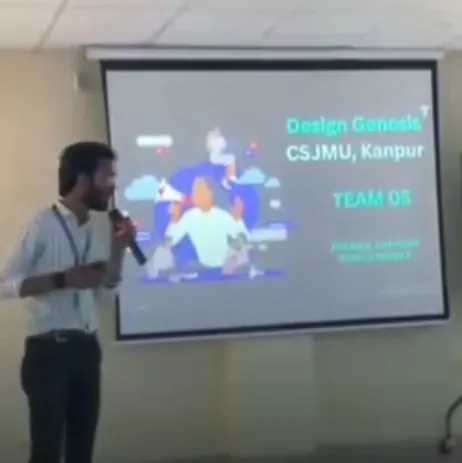
A hackathon is a short event where teams build a working prototype; a datathon is a similar event focused on analysing a dataset or building predictive models, judged on insights or accuracy. Both reward clear thinking under time pressure. I have won three hackathon first prizes, at Changethon 2025 at IIT Roorkee, Product Genesis at Vividhotsava 2025 and BYTEBATTLE by MeetKats, and judged and mentored others, so this page covers datathons, corporate hackathons, what makes a good event and a winning team, choosing problem statements including Smart India Hackathon, online versus offline formats, and finding events and teammates in India.
Hackathon vs datathon: what is the difference?
A hackathon asks teams to build a working product or prototype, judged on problem, solution, execution and presentation. A datathon asks teams to work with data, analysing it for insights or building models, judged on accuracy, insight quality and presentation.
Datathons often provide a dataset and a question, such as predicting crop yields or finding patterns in transport data, and may use a leaderboard like Kaggle competitions. Hackathons are more open: you choose the stack and deliver an app, device or service. Skills overlap, and data-heavy hackathon projects resemble datathons. If you enjoy analysis and modelling, start with datathons; if you enjoy building products, start with hackathons.
What is a hackathon in business?
In business, a hackathon is an internal or sponsored event where employees, or invited participants, build prototypes in a short time to explore new ideas, solve company problems or test technologies. Some prototypes become real products.
Companies run hackathons to encourage innovation, break silos between teams, test emerging tools such as generative AI, and spot talent. Sponsored public hackathons also help companies promote their APIs and recruit. For employees, they are a chance to work on something new with colleagues from other teams. For students, company-sponsored hackathons can lead to internships when your project impresses the right people.
What makes a good hackathon?
A good hackathon has clear themes and rules, well-defined judging criteria, available mentors, reliable logistics such as internet, power and food, a fair timeline, and judges who understand both technology and impact.
From the organiser and judge side, details that matter:
- Problem statements that are real and specific, ideally from actual users or partners.
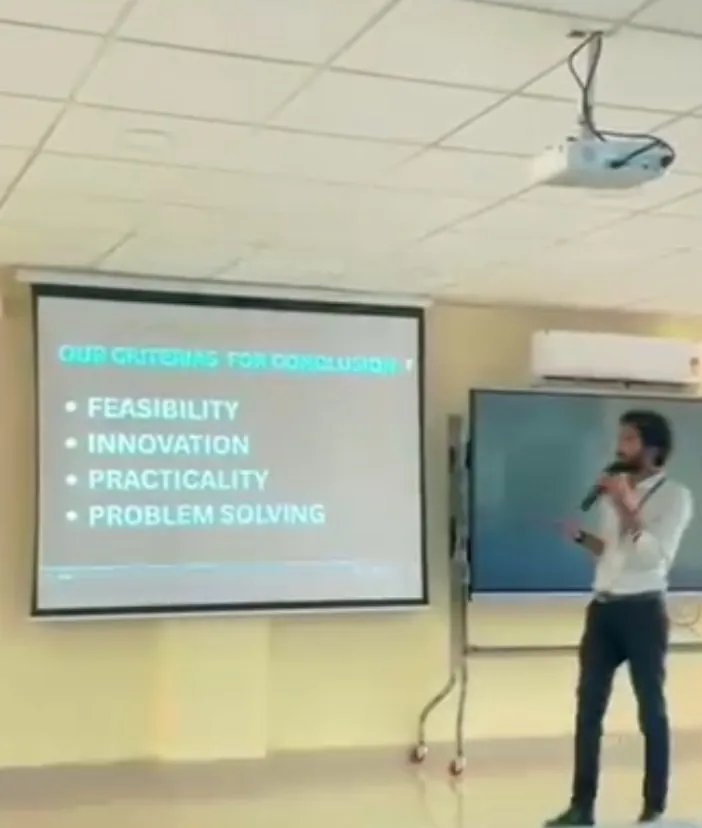
- Judging criteria published in advance, with demos prioritised over slides.
- Mentors who circulate early, not just at the end.
- Clear rules on pre-built code and AI tools.
- Inclusive design: beginner tracks, team-matching, safe environment.
- Feedback for teams after judging.
Participants learn most at events that reward working demos and real problems over polished slides.
What makes a winning hackathon team?
Winning teams are not always the most skilled coders. They pick a narrow, real problem, agree on scope early, divide roles clearly, build one feature that works end to end, rehearse the demo, and explain why it matters.
Also asked as: what makes a winning hackathon team? not what you think
What I see from both sides of the judging table:
- A real user: teams that spoke to the person with the problem stand out.
- Ruthless scope: one core flow, finished, beats five half-done features.
- Roles: one person owns the pitch and story from the start.
- Integration early: connect front end and back end in the first hours.
- Rehearsal: a demo practised five times rarely fails.
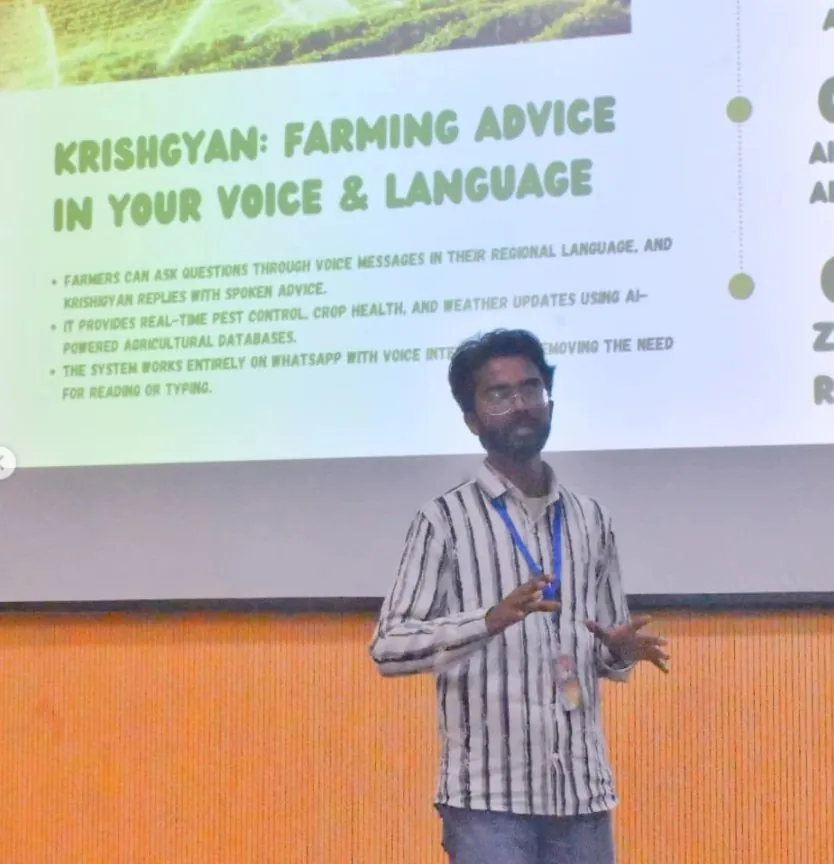
KrishGyan won Changethon 2025 with exactly this approach: one clear user, farmers asking in their own voice and language, and a demo that worked.
What are the best hackathon problem statements?
The best problem statements describe a real user, a specific pain, and a measurable outcome, with access to data or a way to test the solution. They leave room for creativity while being narrow enough to demo in the time.
Signs of a strong problem statement to pick:
- You or your team understand the user personally.
- Data or APIs needed are available.
- A working demo is possible in the time limit.
- The impact is easy to explain to judges.
- Few teams are likely to pick it, or you have a distinctive angle.
Avoid statements that require hardware you do not have, data that does not exist, or vague goals like "use AI for education" without a specific user.
How do I choose the best problem statement for Smart India Hackathon?
There is no single best statement. Choose one where your team understands the problem domain, can access or simulate the needed data, and can build a convincing prototype, and where your solution can stand out among many teams choosing the same statement.
Also asked as: best problem statement for smart india hackathon 2025
A selection process:
- Shortlist five statements matching your skills and interests.
- Research each: users, existing solutions, data availability.
- Estimate how many teams will choose it; popular ones need a sharper angle.
- Sketch the demo for each in one page.
- Pick the one with the clearest user and most feasible demo.
Read the official SIH website for the current year's statements, rules, timelines and the presentation template, and follow your college's internal selection process.
Are hackathons online or offline?
Both exist. Many hackathons are offline at colleges and venues, some are fully online, and some are hybrid, with online qualifying rounds and an offline finale. The event page always states the format.
Offline hackathons offer better networking, mentoring and energy, but require travel; online ones are more accessible and let you join events across India and abroad. Hybrid formats are common for large competitions: submit an idea or prototype online, then shortlisted teams build at a venue. Choose by your goals: offline for networking and learning, online for volume and convenience.
Is Smart India Hackathon online or offline?
Smart India Hackathon combines both: college-level internal hackathons and idea submissions happen through institutions and online registration, and the grand finale for shortlisted teams is held offline at nodal centres across India.
Also asked as: is hackathon online or offline
The exact process and dates change each edition, so follow the official SIH website and your college's SPOC, the single point of contact, for current rules. Prepare for the offline finale by testing your setup thoroughly, planning for limited internet, and rehearsing your demo and presentation with the official template. Mentoring rounds during the finale are valuable; listen carefully and adapt.
Where can I find hackathons in India?
Find hackathons on Devfolio and Unstop, which list many Indian events, Major League Hacking and Devpost for student and global events, Kaggle for data competitions, and on college tech fest websites and developer community channels.
Also asked as: where to find hackathon in india
Ways to stay updated:
- Follow Devfolio, Unstop and MLH on social media and set alerts.
- Join developer communities such as Google Developer Groups and college clubs.
- Watch tech fest announcements from IITs, NITs and other colleges.
- Follow companies that sponsor hackathons for their APIs.
- Ask seniors; they know which events are worth the travel.
Start with beginner-friendly or online events, then move to larger competitions.
How do I find or assemble a team for a hackathon?
Join the event's community channels, such as Discord or WhatsApp groups, post a short introduction with your skills and idea, and look for complementary skills: development, design, data and presentation. Many events run team-formation sessions.
Also asked as: how can one find/assemble a team for the (mlh) midnight hackathon
Tips:
- Introduce yourself with specifics: "Python and FastAPI developer, interested in health tech."
- Look for teammates whose skills fill your gaps.
- Agree on goals early: learning, winning or building a startup.
- Have a short call before the event to agree on the idea and roles.
- Prefer teammates who are reliable over those who are famous.
Communities such as TechVerse Enclave, which I founded, help students find teammates; a team that communicates well beats a team of strangers with stronger resumes.
Sources

GenAI engineer and AI product builder with 2+ years shipping production-grade AI systems: RAG pipelines, fine-tuned LLMs, hybrid retrieval and multi-modal apps across vision, speech and OCR, architected end to end from ingestion to deployment. Leads engineering for SCULT INDIA's 14-member team, founded the 500+ member TechVerse Enclave community and has mentored 200+ students. Three hackathon first prizes: Changethon 2025 (IIT Roorkee), Product Genesis at Vividhotsava 2025 (CSJMU) and BYTEBATTLE (MeetKats).
Open to GenAI roles, hackathon judging, mentorship sessions and guest talks at colleges. For campus sessions the inviting institution covers the visit end to end: travel (a First AC train ticket for journeys up to five hours, a flight for anything longer), accommodation, meals, and pickup and drop; the honorarium and workshop fees are negotiable on WhatsApp or on the call, and requests are welcome from institutions that can cover the visit this way. Email pranjulrathour41@gmail.com.