Key takeaways
- Winners pick a specific problem, build one complete working flow, and pitch it clearly with a live demo.
- Learn one fast full-stack setup, model APIs, deployment and pitching before chasing advanced topics.
- AI helps you build faster and add smart features, but judges reward understanding and a real use case.
- Hackathons are worth it for skills, portfolio projects, networks and opportunities, even without winning.
- College students should start with beginner-friendly events and build towards national ones like Smart India Hackathon.
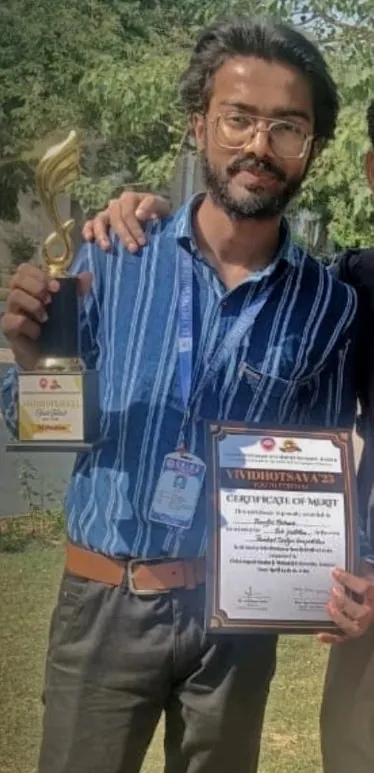
To win hackathons, choose a specific real problem, build one complete working flow rather than many half-features, make the demo reliable, and pitch it clearly: user, problem, live demo, how it works, impact. Teams that finish and explain well beat teams with bigger ideas and broken demos. I have won first prizes at Changethon 2025 at IIT Roorkee, Product Genesis at Vividhotsava 2025 and BYTEBATTLE by MeetKats, finished top three at an IIT Kanpur hackathon, and mentored at more than ten, so this page shares what actually works.
How do I win hackathons?
Win by solving a narrow, real problem for a specific user, delivering a working end-to-end demo, and pitching it with clarity and evidence. Judges remember one flow that works far more than ambitious plans.
Also asked as: how to win hackathons
A winning approach:
- Spend the first hour defining the user, problem and one core flow.
- Deploy a skeleton early so integration problems surface quickly.
- Cut features ruthlessly; finish the core.
- Polish the demo path and record a backup video.
- Prepare a pitch: problem, demo, how it works, impact, next steps.
- Rehearse answers about technical choices and limitations.
Pick themes where you have domain insight; it shows. Talk to mentors early in the event: they often know what judges care about and can save you hours of wrong turns.
How do people actually win hackathons?
Most winners combine a sharp problem statement, a demo that works live, and a confident, honest pitch. Behind that, they usually come prepared: a team with clear roles, a familiar tech stack, starter templates and experience from previous events.
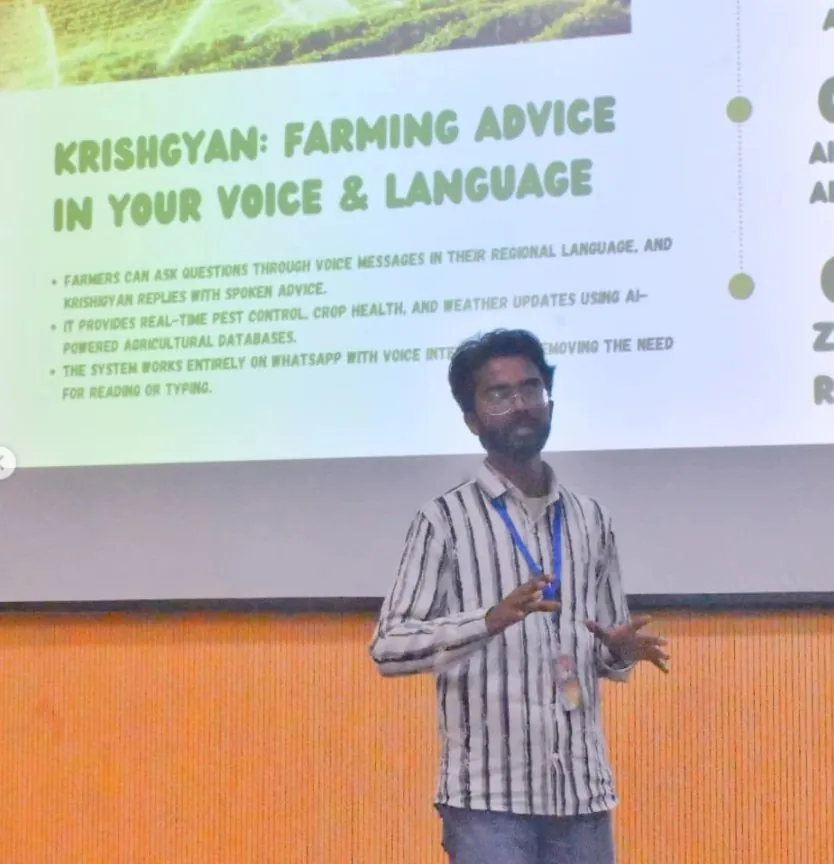
KrishGyan won Changethon 2025 because the demo showed exactly the promised flow: a farmer asking a question in their own voice and language over WhatsApp and getting useful advice. Annapurna won BYTEBATTLE by coordinating surplus food with a simple, working system. Neither was the most technically complex project in the room; both solved a clear problem and worked flawlessly on stage.
What should I learn to win hackathons?
Learn to build a complete app fast: one front-end framework, one back-end framework, a database, deployment, and calling AI model APIs. Add Git teamwork, basic UI design and pitching. Depth in a fast stack beats shallow knowledge of many.
Also asked as: what to learn to win hackathons
A practical skill set:
- Next.js or React for the front end.
- FastAPI or Node.js for the back end.
- PostgreSQL or Supabase for data and auth.
- LLM APIs, embeddings and simple RAG for AI features.
- Deploying to Vercel, Railway or similar in minutes.
- Figma basics and a clean component library.
- A three-minute pitch structure.
Practise by building small projects in one day before events. Keep a personal starter template with authentication, a database connection and deployment already configured, so the event's hours go into the problem itself.
How do I win hackathons with AI?
Use AI in two ways: as a building assistant, speeding up coding, debugging and design, and as a product feature, such as retrieval-augmented answers, document understanding, voice interfaces or agents that solve the user's problem.
Also asked as: how to win hackathons with ai
Judges are now used to AI projects, so a chatbot wrapper rarely impresses. Stand out by grounding AI in real data with citations, handling local languages, adding evaluation or confidence checks, and showing why AI is necessary for the problem. Be ready to explain your model choices, prompts, failure cases and costs. Read each event's rules on AI-assisted coding and disclose use where required.
Are hackathons worth it?
Yes, for most students. Even without winning, you gain fast, practical learning, portfolio projects, teamwork experience, mentors' feedback, and connections with peers, sponsors and recruiters. Wins add credibility and sometimes internships or funding.
Also asked as: are hackathons worth it reddit
They are less worth it if you attend many events without finishing projects or reflecting on lessons, or if they hurt your studies and health. Choose events that match your interests, prepare beforehand, and continue your best projects afterwards. Several opportunities in my own journey came from people I met at hackathons, which no certificate captures.
What does the community say about whether hackathons are worth it?
Community discussions, such as on Reddit, generally say hackathons are worth it for learning, networking and portfolio building, especially early in your career, while warning against treating them as guaranteed paths to jobs or chasing participation certificates.
Common advice: go with a goal, such as learning a new framework or meeting companies; prioritise events with good mentors and sponsors; build something you would show in an interview; and avoid burnout from back-to-back events. Some experienced developers say returns diminish after many events, at which point open source or internships may teach more.
What are hackathons in college?
College hackathons are coding events organised by colleges, student clubs, tech fests or companies, where student teams build projects in a fixed time, often 24 to 36 hours, judged on innovation, execution and presentation.
They range from internal department events to national competitions such as Smart India Hackathon, where colleges first run internal rounds. College hackathons are usually beginner-friendly, with mentors, workshops and themes relevant to students. They are an excellent first step: you learn to build quickly, work in a team, and present your work, skills that matter in placements and beyond.
Which hackathons should I join in college?
Start with your college's internal hackathons and beginner-friendly online events, then join inter-college and national events as your skills grow. Smart India Hackathon, tech fest hackathons at IITs and NITs, and company-sponsored events are strong options.
Also asked as: what hackathons should i join in college
A progression:
- First year: internal events and online beginner hackathons.
- Second year: inter-college and tech fest hackathons, one themed event in your interest area.
- Third year onwards: national events, company challenges and Smart India Hackathon.
Follow Devfolio, Unstop and Major League Hacking for listings, and choose events with mentors and clear judging.
What are the best hackathons for college students?
Strong choices include Smart India Hackathon, Major League Hacking member events, hackathons at IIT and NIT tech fests, company challenges such as those run by large technology firms, Web3 and AI-themed events on Devfolio, and Google's student programmes such as the Solution Challenge when running.
"Best" depends on your goals: national recognition, learning a new technology, meeting specific companies or building social impact projects. Look at past winners and sponsor lists to judge quality. Well-organised events publish clear rules and judging criteria, provide mentors and treat participants well.
Do hackathons look good on college applications?
Yes. For college or postgraduate applications, hackathons show initiative, practical skills, teamwork and the ability to build under pressure. Wins or strong projects with real users stand out more than participation alone.
Describe them concretely: what problem you solved, your role, the technology, and results such as awards or users. Link to code or a demo if the application allows. For job applications, hackathon projects work the same way on resumes. One meaningful project you continued developing after the event is more impressive than a long list of participations.
Sources

GenAI engineer and AI product builder with 2+ years shipping production-grade AI systems: RAG pipelines, fine-tuned LLMs, hybrid retrieval and multi-modal apps across vision, speech and OCR, architected end to end from ingestion to deployment. Leads engineering for SCULT INDIA's 14-member team, founded the 500+ member TechVerse Enclave community and has mentored 200+ students. Three hackathon first prizes: Changethon 2025 (IIT Roorkee), Product Genesis at Vividhotsava 2025 (CSJMU) and BYTEBATTLE (MeetKats).
Open to GenAI roles, hackathon judging, mentorship sessions and guest talks at colleges. For campus sessions the inviting institution covers the visit end to end: travel (a First AC train ticket for journeys up to five hours, a flight for anything longer), accommodation, meals, and pickup and drop; the honorarium and workshop fees are negotiable on WhatsApp or on the call, and requests are welcome from institutions that can cover the visit this way. Email pranjulrathour41@gmail.com.