Key takeaways
- Build the story first: one message per slide, then evidence, then design.
- A proven format covers problem, solution, why now, market, product, traction, model, competition, team, roadmap and ask.
- A roadmap slide ties specific milestones to the funding you are raising.
- Pitch decks persuade; proposals detail scope and terms; send-ahead investor decks must stand alone.
- AI tools and Canva speed up design, but write the narrative and numbers yourself.
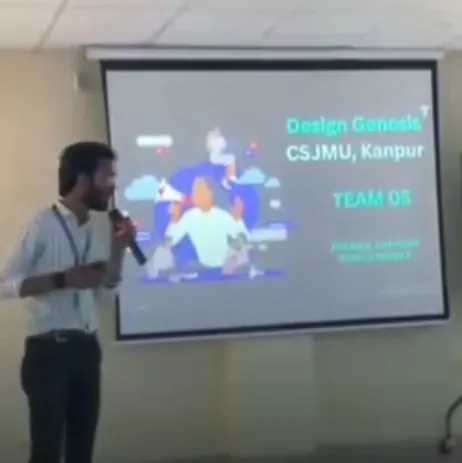
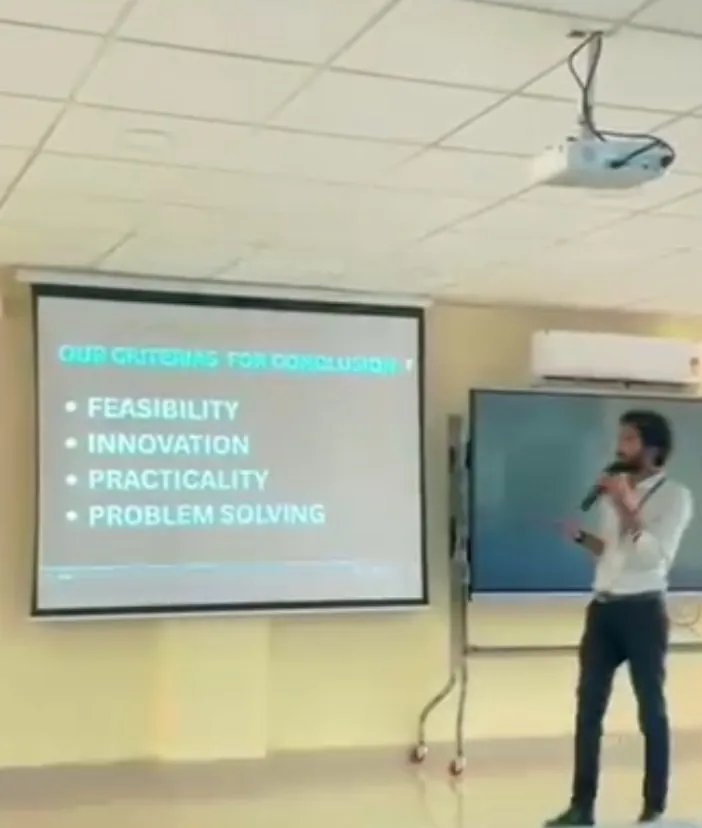
A pitch deck is a short slide presentation, usually 10 to 15 slides, that explains your problem, solution, market, traction, team and ask to investors, judges or partners. A good deck tells a clear story in minutes. I have pitched at hackathons and product competitions, winning Product Genesis at Vividhotsava 2025 with BrandHive and Changethon 2025 with KrishGyan, so this page covers a tutorial, the best format, tips, the roadmap slide, deck types, examples and tools.
What is a good pitch deck tutorial?
Build your deck in this order: write the story in one paragraph, outline one message per slide, add evidence, design simply, then rehearse with a timer. Start from the content, not a template, because design cannot fix an unclear story.
Step by step: write a one-sentence description of what you do; describe the problem in the customer's words; show the solution with a product screenshot or demo; prove demand with traction or validation; size the market honestly; explain the business model; show the team; and finish with your ask and how you will use it. Then cut every slide that does not support the decision you want the audience to make, and test the deck on someone outside your field.
What is the best pitch deck format?
A proven format, close to Sequoia's and Y Combinator's guidance: title, problem, solution, why now, market, product, traction, business model, competition, team, financials or roadmap, and the ask. Ten to fifteen slides is typical.
Also asked as: best pitch deck ai
Use 16:9 slides, one idea per slide, large readable text and a headline that states the takeaway, such as "Farmers lose crops because advice arrives too late", rather than a generic label like "Problem". Keep a separate appendix for detailed metrics and answers to expected questions. Send a PDF when emailing investors, since it displays consistently, and keep a version with speaker notes for live pitches. For hackathons, compress to five to seven slides plus a live demo.
What are the best pitch deck tips?
Lead with the problem and why it matters, show proof rather than adjectives, keep slides visual and simple, and know your numbers cold. Investors and judges decide quickly, so your first two slides must make them want to see the rest.
Also asked as: pitch deck best tips
More tips: use real customer quotes and data; show the product early; explain why your team is the one to solve this; be honest about competition instead of claiming none exists; keep text minimal and speak the details; and end with a specific ask. Guy Kawasaki's 10/20/30 rule, ten slides, twenty minutes, thirty-point font, is a useful starting discipline. Rehearse out loud many times, and prepare answers for the hardest questions you expect.
What goes on a roadmap slide in a pitch deck?
A roadmap slide shows what you will achieve over the next 12 to 24 months, usually as milestones on a timeline: product launches, customer or revenue targets, key hires and expansion, tied to the funding you are raising.
Also asked as: roadmap pitch deck
Make milestones specific and measurable, such as launching in three more languages or reaching a set number of active users, rather than vague goals like scaling up. Link each milestone to the use of funds, so investors see how their support creates progress toward the next round. Keep it to four to six milestones and show what is already done. In hackathon pitches, a roadmap slide shows judges what happens after the event, which signals commitment beyond the weekend.
What is the difference between an investor deck and a pitch deck?
The terms often mean the same thing. When distinguished, a pitch deck is a short, visual deck for presenting live, while an investor deck is a more detailed, text-rich version sent ahead of or after meetings for investors to read on their own.
Also asked as: investor deck vs pitch deck
A presentation deck relies on the speaker: big visuals, few words and a demo. A send-ahead investor deck must stand alone, so it includes more explanation, metrics, market data and financial details. Many founders keep both versions of the same story. Investors often skim emailed decks quickly, so even the detailed version needs clear headlines and a logical flow. Data rooms and financial models come later, during due diligence, not in the first deck.
What is the difference between a proposal and a pitch deck?
A pitch deck persuades someone to invest in or back an idea, usually at an early conversation. A proposal is a detailed document offering specific work or a solution to a client, with scope, deliverables, timeline, pricing and terms.
Also asked as: proposal vs pitch deck
Pitch decks are short, visual and story-driven, aiming for a next meeting or a yes in principle. Proposals are longer, precise and often contractual, answering a client's request or tender with exactly what will be delivered. A sales deck sits between them, presenting a product to potential customers. Use a pitch deck for investors, competitions and partnerships; use a proposal when a client is ready to evaluate a concrete offer and needs detail to approve it.
What are some VC pitch deck examples?
Well-known public examples include Airbnb's early seed deck, YouTube's 2005 deck, LinkedIn's Series B deck shared by Reid Hoffman, and early decks from companies such as Uber and Buffer. Collections of these are widely available online.
Study them for structure, not style: Airbnb's deck states the problem, solution, market and business model in a few simple slides, and LinkedIn's annotated deck explains the reasoning behind each slide. Remember that famous decks succeeded partly because of strong teams and timing, so do not copy their exact formats. Also read guidance from investors, such as Sequoia's business plan outline and Y Combinator's seed deck advice, which explain what investors look for.
What are some game pitch deck examples?
A game pitch deck shows the game's hook, genre, core gameplay loop, target audience, platforms, art style, unique features, monetisation, team, timeline and the support you need. Publishers expect to see gameplay early, ideally a video or playable prototype.
Many studios and publishers share template decks and talks about what they want, and game jam projects are a good source of prototypes to build pitches around. Strong game decks open with a one-line hook and key art, then show a short gameplay clip, comparable successful titles, and a realistic production plan. Keep it to 10 to 15 slides. Publishers care about scope and the team's ability to finish, so show prior shipped projects, even small ones.
What is the best AI tool for pitch decks?
Popular AI tools include Gamma and Beautiful.ai, which generate full decks from a prompt or outline, Canva's AI design features, Microsoft Copilot in PowerPoint, and general assistants such as ChatGPT, Claude and Gemini for writing and structure.
Use AI for drafts, structure and design speed, but write the story and numbers yourself. AI-generated decks often look polished but generic, with vague claims that investors and judges see through quickly. A good workflow: write your narrative and key facts, ask an assistant to propose a slide outline and critique your argument, generate a first design, then edit every slide for accuracy and specificity. Never let AI invent metrics, quotes or market sizes.
What is the best pitch deck software?
PowerPoint, Google Slides and Keynote remain reliable standards. Canva offers easy templates and design tools, Pitch focuses on collaborative startup decks, and Figma Slides suits design-heavy teams. Choose what your team can edit quickly and share reliably.
Canva is a strong choice for students and hackathon teams because its pitch deck templates, brand kits and real-time collaboration make good-looking slides fast; export to PDF or PowerPoint for compatibility. Google Slides works well for live collaboration in teams. Whatever tool you use, check how the deck renders on another computer and as a PDF, embed fonts, compress large images, and keep a backup copy offline in case the venue's internet fails.
Sources
- Sequoia Capital, Writing a Business Plansequoiacap.com
- Y Combinator, How to build your seed round pitch deckycombinator.com
- Guy Kawasaki, The 10/20/30 Rule of PowerPointguykawasaki.com
- Reid Hoffman, LinkedIn's Series B pitch to Greylockreidhoffman.org
- Canva, Pitch deck templatescanva.com
- Gamma, AI presentationsgamma.app

GenAI engineer and AI product builder with 2+ years shipping production-grade AI systems: RAG pipelines, fine-tuned LLMs, hybrid retrieval and multi-modal apps across vision, speech and OCR, architected end to end from ingestion to deployment. Leads engineering for SCULT INDIA's 14-member team, founded the 500+ member TechVerse Enclave community and has mentored 200+ students. Three hackathon first prizes: Changethon 2025 (IIT Roorkee), Product Genesis at Vividhotsava 2025 (CSJMU) and BYTEBATTLE (MeetKats).
Open to GenAI roles, hackathon judging, mentorship sessions and guest talks at colleges. For campus sessions the inviting institution covers the visit end to end: travel (a First AC train ticket for journeys up to five hours, a flight for anything longer), accommodation, meals, and pickup and drop; the honorarium and workshop fees are negotiable on WhatsApp or on the call, and requests are welcome from institutions that can cover the visit this way. Email pranjulrathour41@gmail.com.