Key takeaways
- Winning projects pair one clear user problem with a working demo and a concise pitch.
- AI entries stand out with specificity, evaluation and safety rather than generic chatbots.
- Winning teams combine complementary roles and integrate early.
- Study open-source winners for patterns, but build during the event and declare reused templates.
- Legal hackathons pair lawyers and developers to improve access to justice.
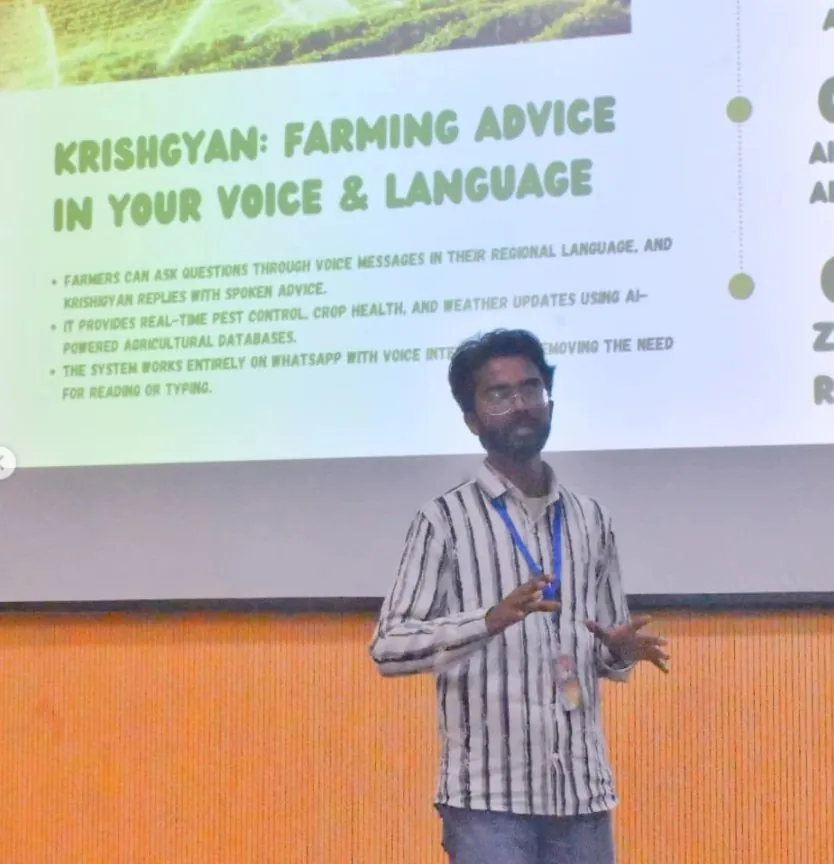
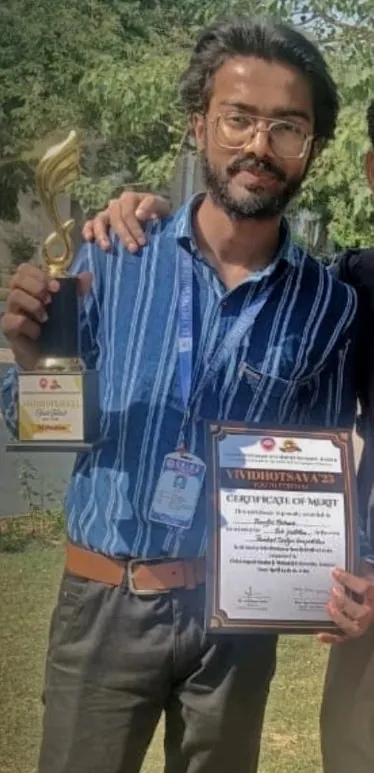
Winning hackathon projects solve a clear, real problem with a working demo that judges understand in minutes; they are rarely the most complex idea in the room. I have won first prizes with KrishGyan at Changethon 2025, BrandHive at Product Genesis 2025 and Annapurna at BYTEBATTLE, so this page covers winning projects and ideas, AI project ideas, winning team setups, projects with source code, examples of hackathons and problem statements, starter code, and what a legal hackathon is.
What do the best hackathon winning projects have in common?
Winning projects combine a specific user problem, a working demo of the core flow, clear impact, and a confident pitch. Judges reward what they can see working and understand quickly, not long feature lists.
Common traits: a narrow scope executed well, real data or realistic scenarios, thoughtful use of sponsor technology, and an honest explanation of what is complete. My winning projects followed this shape: KrishGyan delivered farming advice in a farmer's own voice and language over WhatsApp, and Annapurna coordinated surplus food, each solving one clear problem. Browse winners in Devpost project galleries to study patterns across many events and tracks.
What are good hackathon winning project ideas?
Strong ideas solve problems judges recognise: accessibility tools, local-language assistants, healthcare triage helpers, agriculture advice, waste reduction, education support, financial literacy and civic services, each built around one convincing user flow.
Make ideas specific: instead of an education app, build a tool that turns lecture recordings into quizzes for one course; instead of a health app, build a symptom diary that prepares questions for a doctor visit. Combine a real need with a technology the event values, such as an AI API or sponsor tool. Validate quickly by asking a few potential users, and prepare data in advance where the rules allow it.
What are the best AI-based hackathon winning projects?
Winning AI projects apply models to real problems with grounding and reliability: RAG assistants with citations over specific documents, voice assistants in regional languages, vision tools for inspection or accessibility, and agents that complete narrow workflows end to end.
Also asked as: best ai based hackathon winning projects
Judges have seen many generic chatbots, so stand out with specificity, evaluation and safety: show accuracy on test questions, handle wrong answers gracefully, and protect user data. KrishGyan used AI to make farming advice accessible by voice in local languages, which judges could immediately grasp. Add a measurable result, such as response time or accuracy on sample cases, and explain how the system avoids hallucinations or misuse.
What makes a winning hackathon team?
A winning team has complementary skills and clear roles: a backend or AI developer, a frontend developer, a designer or product thinker, and a strong presenter, with one person owning scope and time.
Also asked as: hackathon winning team ideas
Agree on the idea and the demo path in the first hour, divide work into parallel tasks, and integrate early rather than at the end. Use tools everyone knows. Hold short check-ins every few hours to adjust scope. Assign one person to the pitch and demo video while others finish building. Teams with shared communication habits, such as quick updates and honest blockers, consistently outperform teams of strong individuals working separately.
Where can you find hackathon projects with source code?
Devpost project galleries link many winning projects to their GitHub repositories, and searching GitHub for hackathon names, MLH events or topics such as hackathon RAG returns thousands of open projects with code.
Also asked as: best hackathon projects with source code
Use them to learn structure and patterns, not to submit copies: most hackathons require building during the event, and judges can detect reused projects. Look for projects with clear READMEs, demo videos and recent activity. Study how teams scoped features, organised code and deployed quickly. Reuse your own templates, such as an authentication or API starter you built earlier, where rules allow, and declare them in your submission. Fork interesting ones to experiment with their stacks.
What are some hackathon examples for students?
Examples include college tech fest hackathons, MLH student events, Smart India Hackathon, company-sponsored student challenges, developer community events, and hackathons on Devfolio and Unstop, ranging from 24-hour sprints to multi-month national programs.
Also asked as: examples of hackathon problems
Typical student projects include campus apps for events or lost-and-found, study tools, accessibility helpers, local business tools and sustainability trackers. For beginners, small college hackathons and online events with mentors are ideal first steps. Changethon at IIT Roorkee and Product Genesis at Vividhotsava, CSJMU, are examples where student teams, including mine, built and won with focused projects. Start local, then aim for national events as your skills grow.
What are examples of hackathon problem statements?
Examples: help farmers get timely crop advice; reduce food waste by connecting donors and recipients; make government forms accessible in local languages; detect fake news; improve campus safety; track carbon footprints; or help patients manage medicines.
Government hackathons such as Smart India Hackathon publish detailed problem statements from ministries, often involving data, citizen services or infrastructure. Corporate hackathons focus on their products or APIs, such as building with a specific AI platform. Open innovation tracks let teams define their own problems. When choosing, prefer statements with clear users, available data and a demo you can build in the time, rather than vague or very ambitious ones.
What are some AI hackathon examples?
AI hackathons include events run by AI companies and cloud providers with API credits, college AI tracks, Kaggle-style data competitions, government AI challenges, and community events focused on agents, RAG, vision or voice applications.
Example builds from such events: a legal document assistant that answers questions with citations, a sign language translator using pose estimation, an AI tutor for a specific subject, a voice-based form filler for low-literacy users, and an agent that triages customer emails. Strong entries show evaluation and safety, not just a working demo. Prepare a reusable stack, such as FastAPI with a vector store and streaming chat, to start building immediately.
Where can you find hackathon code examples and starters?
Use official starter templates from frameworks and sponsors: Next.js and FastAPI templates, Vercel AI SDK examples, LangChain and LlamaIndex starters, Supabase and Firebase quickstarts, and sponsor sample repositories shared before events.
Prepare your own minimal starter before hackathons: authentication, a database connection, an API route, a simple UI and deployment configured, so event time goes into the actual idea. Check the rules, since some events prohibit pre-written project code but allow general templates and libraries. Keep the starter documented, and declare reused components in your submission. Practising with the starter once before the event avoids setup surprises when time is short. Share it with teammates in advance.
What is a legal hackathon?
A legal hackathon brings together lawyers, law students, developers and designers to build technology solutions for legal problems, such as access to justice, document automation, contract analysis and legal information for citizens.
Teams might build a chatbot that explains tenant rights, a tool that drafts simple legal notices, a contract clause analyser, or a court-date reminder system. Mixed teams matter, since lawyers understand the problems and constraints while developers build. Legal tech hackathons emphasise accuracy, privacy and clear disclaimers, because wrong legal information can harm people. AI tools with retrieval and citations, like those used in RAG systems, are common in modern legal hackathon projects.
Sources

GenAI engineer and AI product builder with 2+ years shipping production-grade AI systems: RAG pipelines, fine-tuned LLMs, hybrid retrieval and multi-modal apps across vision, speech and OCR, architected end to end from ingestion to deployment. Leads engineering for SCULT INDIA's 14-member team, founded the 500+ member TechVerse Enclave community and has mentored 200+ students. Three hackathon first prizes: Changethon 2025 (IIT Roorkee), Product Genesis at Vividhotsava 2025 (CSJMU) and BYTEBATTLE (MeetKats).
Open to GenAI roles, hackathon judging, mentorship sessions and guest talks at colleges. For campus sessions the inviting institution covers the visit end to end: travel (a First AC train ticket for journeys up to five hours, a flight for anything longer), accommodation, meals, and pickup and drop; the honorarium and workshop fees are negotiable on WhatsApp or on the call, and requests are welcome from institutions that can cover the visit this way. Email pranjulrathour41@gmail.com.