Key takeaways
- Hackathons compress scoping, building, teamwork and presenting into one or two days.
- They turn bad when demos beat working software, crunch replaces sleep or projects die after.
- Beginners, non-coders, non-CS and school students all have useful roles at hackathons.
- For placements and resumes, outcomes and your role matter more than event names.
- List hackathons with event, result, year, project and stack, linking to code or demos.
Hackathons are worth it for most students because they compress learning, teamwork and shipping into a weekend, but they have real downsides when they replace deeper work. I won first prizes at Changethon 2025 at IIT Roorkee with KrishGyan and at BYTEBATTLE with Annapurna, and I mentor students preparing for events, so this page covers why hackathons matter, why they can be bad, coding needs, beginners, non-CS and school students, placements and resumes.
Are hackathons really important?
Hackathons are important as accelerated practice: you scope a problem, build a working prototype, present it and get feedback, all within a day or two. They are not mandatory, but they build skills classes rarely teach.
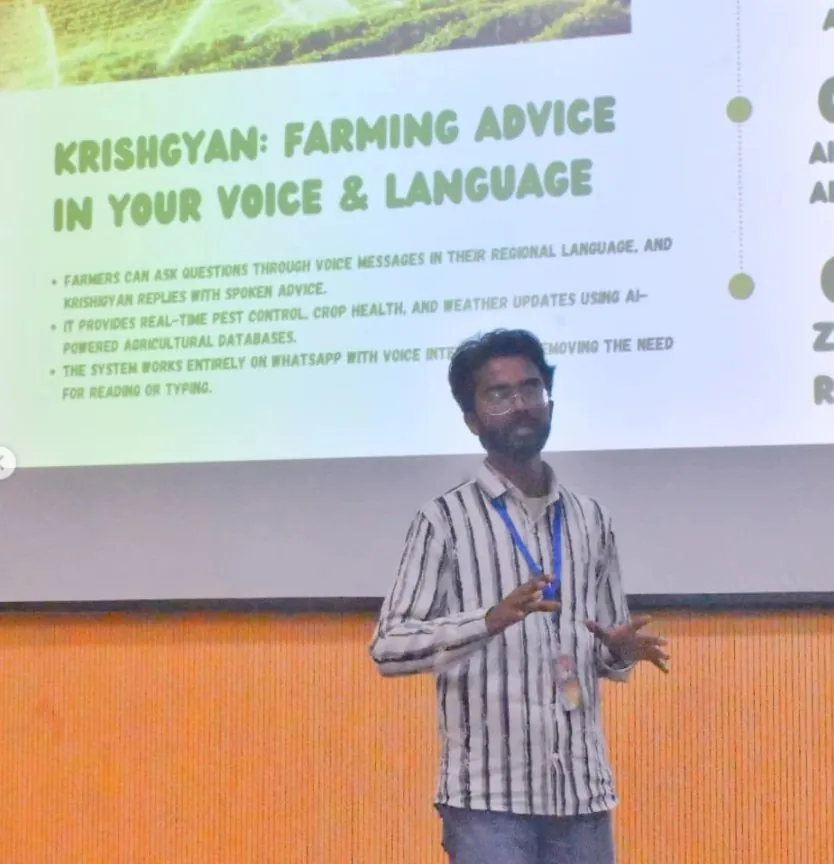
The real value is in shipping under constraints, working in a team with different skills, and explaining your project to judges. They also connect you with mentors, sponsors and peers who later become collaborators. Several of my products began this way: KrishGyan, which delivers farming advice in a farmer's own voice and language over WhatsApp, and Annapurna, a surplus-food coordination app, both started as hackathon builds. Their importance depends on what you do after the event.
Why can hackathons be bad?
Hackathons can be bad when they reward flashy demos over working software, encourage sleepless crunch, or replace sustained learning. Some events favour polished pitches, and many projects are abandoned the moment the event ends.
Also asked as: why hackathons are bad
Other downsides: teams split work so narrowly that members learn little outside their part; judging can be rushed or inconsistent; and constant participation crowds out fundamentals, internships and deep projects. Code written in a rush often has poor structure and security. Reduce these problems by choosing events with real problem statements, sleeping properly, rotating roles within the team and continuing the best projects afterwards. Treat hackathons as one part of growth, not a replacement for steady practice.
Do hackathons require coding?
Most hackathons expect working prototypes, so at least one team member usually codes. But teams also need design, research, product thinking, presentation and domain knowledge, so non-coders can contribute meaningfully.
Some events are explicitly open to no-code tools, design or business tracks, ideathons and policy challenges. Designers create interfaces and flows, domain experts shape the problem and the judges' understanding, and presenters often decide how the project is received. If you cannot code yet, learn the basics of a no-code builder or help with front-end design. Many beginners pick up coding at hackathons by pairing with experienced teammates, which is one of the fastest ways to learn practical development.
Are hackathons for beginners?
Yes. Many hackathons welcome beginners, with workshops, mentors and beginner prizes. Major League Hacking events and campus hackathons often run introductory sessions on Git, APIs and deployment before building starts.
To get started, join with friends or form a team at the event, pick a simple idea you can finish, and use templates or starter kits. Focus on learning and finishing rather than winning. Ask mentors for help early instead of staying stuck for hours. After the event, write a short post about what you built and learned. A first hackathon often builds more confidence than any tutorial, even without a prize, because you see an idea become a working demo.
Are hackathons only for students?
No. Hackathons run for professionals, companies, governments and communities, not just students. Corporate internal hackathons, open-source sprints, civic tech events and online global hackathons on Devpost welcome people of many ages and backgrounds.
Professionals join to explore new technologies, build side projects, network or win prizes. Companies run internal hackathons to test ideas and break silos between teams. Governments use them to crowdsource solutions to public problems, such as the Smart India Hackathon, which mainly involves students but partners with ministries and organisations. Some events are restricted, for example student-only or women-only tracks, so check eligibility rules. Many online hackathons let you join from anywhere, individually or in teams.
Are hackathons only for CS students?
No. Hackathons welcome students from every branch and field. Teams benefit from mechanical, electronics, biology, business, design and humanities students, who bring domain knowledge and perspectives that pure computer science teams lack.
Many winning ideas come from domain problems in agriculture, healthcare, logistics or education, where non-CS teammates understand real users. Hardware hackathons need electronics and mechanical skills, while social impact challenges value research and communication. Non-CS students can also learn enough Python or no-code tools to prototype. KrishGyan, built for farmers, shows how much a deep understanding of users shapes a strong hackathon project. Check each event's tracks, since many offer categories designed for non-programmers.
What are the best hackathons for high school students?
Good options include Hack Club events and community hackathons, high school friendly events listed by Major League Hacking, Technovation Girls, the Congressional App Challenge in the United States, and in India, the ATL Marathon for school innovators.
Many university hackathons also accept high school students, so check eligibility on Devpost and MLH listings. Online hackathons remove travel barriers. For beginners, choose events with workshops and mentors, and aim to finish a simple, working project. School students can also start a club and host a small hackathon, which builds leadership. Participation at this stage builds portfolios for college applications and teaches teamwork early, as long as academics stay balanced.
Are hackathons important for placements?
Hackathons help placements by giving you projects, stories and skills that interviewers value, and some companies hire directly from their own hackathons. They are not a replacement for fundamentals, coding interviews or internships.
In interviews, a hackathon project gives you a concrete example to discuss: the problem, your role, technical choices, trade-offs under time pressure and what you would improve. Wins and finalist positions signal initiative, especially for startups. Company-run hackathons and coding challenges sometimes lead to interview shortcuts or internship offers. Still, recruiters weigh problem solving, core subjects and real experience heavily, so balance hackathons with data structures practice and longer projects that show depth.
Do hackathons look good on a resume?
Yes, when presented with outcomes. Hackathons show initiative, teamwork, speed and the ability to ship. Wins, finalist positions and projects with live demos or code strengthen a resume, especially for early-career roles.
Also asked as: do hackathons look good on resume
A list of event names alone adds little. Recruiters care about what you built, your role and results, such as a first prize, a deployed prototype or users after the event. Projects continued after the hackathon carry more weight than abandoned prototypes. Link to GitHub repositories and demos so reviewers can verify your work. As experience grows, keep only the most significant hackathons on the resume and move the rest to a portfolio page or LinkedIn.
What is the best way to list hackathons and programming competitions on a resume?
Create an Awards and Competitions section, or list major hackathon projects under Projects. For each, include the event, result, year, a one-line project description, your role and the technologies used.
Use a consistent format, for example: First Prize, Changethon 2025, IIT Roorkee, for KrishGyan, which gives farming advice over WhatsApp in the farmer's own voice and language. For programming competitions, give ranks or percentiles with the platform and contest, such as Codeforces rounds or ICPC regionals. Order entries by significance, keep each to one or two lines, and link to code or demos. Mention notable outcomes, such as a pilot or continued development after the event.
Sources

GenAI engineer and AI product builder with 2+ years shipping production-grade AI systems: RAG pipelines, fine-tuned LLMs, hybrid retrieval and multi-modal apps across vision, speech and OCR, architected end to end from ingestion to deployment. Leads engineering for SCULT INDIA's 14-member team, founded the 500+ member TechVerse Enclave community and has mentored 200+ students. Three hackathon first prizes: Changethon 2025 (IIT Roorkee), Product Genesis at Vividhotsava 2025 (CSJMU) and BYTEBATTLE (MeetKats).
Open to GenAI roles, hackathon judging, mentorship sessions and guest talks at colleges. For campus sessions the inviting institution covers the visit end to end: travel (a First AC train ticket for journeys up to five hours, a flight for anything longer), accommodation, meals, and pickup and drop; the honorarium and workshop fees are negotiable on WhatsApp or on the call, and requests are welcome from institutions that can cover the visit this way. Email pranjulrathour41@gmail.com.