Key takeaways
- Agree the goal and audience with the host, then build around three ideas with real examples and interaction.
- Most guest lectures run 45 to 90 minutes; plan content for about 70 percent of the slot.
- Asking to give a guest lecture is appropriate when you offer a specific, student-focused topic.
- Lectures transfer knowledge, seminars invite discussion, and workshops build hands-on skills.
- List talks under Invited Talks on a CV with title, institution, date and audience.
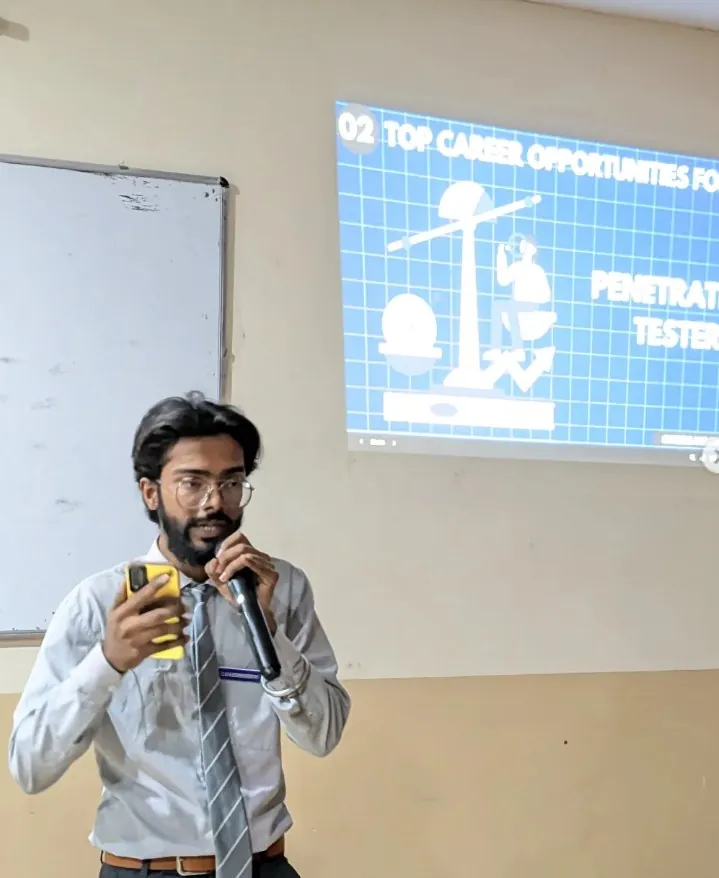
A guest lecture is a one-off session in which an outside expert teaches students about a topic from real experience. To give a good one, agree the goal with the host, know the audience, prepare a clear structure with examples and interaction, and leave students with next steps. I have led 20+ campus sessions, including the VSICS induction for 100+ first-years with a three-year roadmap, so this page covers delivering, asking for and documenting guest lectures.
How do you give a guest lecture?
Clarify the host's goal, audience level and time; build a talk around three key ideas with real examples; add interaction such as questions or a live demo; and end with clear takeaways and resources. Rehearse once with a timer.
Also asked as: how to give a guest lecture
Before the day, ask about room setup, projector connections, microphone and internet, and send slides in advance as PDF and PowerPoint. Arrive early to test everything. Open with a story or question relevant to students, not a long biography. Use slides with few words and large visuals, pause for questions every 15 minutes, and repeat questions so everyone hears them. Finish on time, share your contact or resource links, and thank the organisers publicly.
How do you give a guest lecture in college?
College audiences respond best to practical, relatable content: what the field looks like in real work, skills that matter, mistakes to avoid, and a concrete roadmap. Tailor examples to their year, branch and campus context.
Also asked as: how to give guest lecture in college
For first-years, focus on direction and habits; for final-years, focus on projects, interviews and careers. Live demos work well in technical sessions: in AI talks, a working RAG app or model running live usually holds attention better than theory slides. Leave time for questions, since students often ask about careers and doubts they cannot raise in class. Share a short resource list afterwards so the session leads to action rather than ending when the slides do.
How do you guest lecture at a university?
University guest lectures often fit into a specific course, so align with the professor's syllabus: ask what students have covered, which concepts you should connect to, and whether the content will be assessed. Prepare at a more academic depth than a general talk.
Also asked as: how to guest lecture at a university
Bring industry perspective that textbooks lack: how concepts are applied, current tools, trade-offs and failures. Cite sources for claims and data, since students may use your material in assignments. Some universities require formal invitations, honorarium paperwork or department approval, so respond promptly to administrative requests. Ask for feedback afterwards, and offer slides or notes. A strong first lecture often leads to repeat invitations and collaborations with faculty.
What does guest lecture mean?
A guest lecture is a talk given by an invited speaker who is not regular faculty, usually an industry professional, researcher, alumnus or expert, to bring outside knowledge and experience into a course or event.
Guest lectures can be part of a regular class, a departmental event, an induction programme or a club activity, and they range from formal academic talks to informal career conversations. They benefit students by connecting theory to practice and opening networks. They benefit speakers by building credibility, sharpening communication skills and contributing to education. In India, many colleges invite industry experts for guest lectures as part of curriculum enrichment and accreditation activities.
Is it appropriate to ask to give a guest lecture?
Yes, it is appropriate when you offer genuine value. Write to a relevant faculty member, department head or student club with a short email proposing a specific topic, why it fits their students, your relevant experience, and a few suggested dates.
Also asked as: how to ask to guest lecture? is it appropriate
Keep it brief and focused on the students' benefit, not your promotion. Attach a one-paragraph bio and a session outline, and mention alumni connections or past sessions if you have them. Offer formats such as a 60-minute talk or a hands-on workshop. Follow up once after a week if you hear nothing. Building relationships first, by attending events or helping a student club, makes invitations far more likely than cold requests alone.
How long is a guest lecture usually?
Most guest lectures last 45 to 90 minutes, often matching a class period of about 50 to 60 minutes, with 10 to 20 minutes reserved for questions. Event-style sessions may run longer, up to two hours with breaks.
Also asked as: how long is a guest lecture event usually
Plan content for about 70 percent of the time, since introductions, technical setup and questions take more than expected. For long sessions, change activity every 15 to 20 minutes: a demo, a quick poll, a short exercise or discussion. Confirm the exact slot with organisers, including whether there are other speakers, because overrunning disrupts the schedule and leaves a poor impression. Ending a few minutes early with good questions is better than rushing the last slides.
What is the difference between a guest lecture and a seminar?
A guest lecture is usually one expert presenting to an audience, with questions at the end. A seminar is more interactive and discussion-based: participants contribute, present or debate, often in smaller groups, around a focused topic.
Also asked as: difference between guest lecture and seminar
In universities, a seminar may also mean a research talk followed by detailed discussion, or a course format where students present papers. Seminars can include several speakers and run over a day or more. Guest lectures fit into courses or events as single sessions. Webinars are online versions of either format, and their main difference is delivery: remote participants, chat-based questions and recordings, which require more effort to keep engaged.
What is the difference between a workshop and a guest lecture?
A workshop is hands-on: participants practise skills, build something or solve problems during the session, guided by the facilitator. A guest lecture mainly transfers knowledge and perspective through a talk, with limited practice.
Also asked as: difference between workshop and guest lecture
Workshops need more preparation and logistics: setup instructions sent in advance, software installed, datasets or starter code ready, and helpers for larger groups. They usually last longer, from two hours to full days. Guest lectures suit broad topics, inspiration and career guidance; workshops suit skills such as building a first AI app or using Git. Many technical sessions combine both: a 20-minute explanation followed by guided building, with the instructor circulating to help.
How do you write a guest lecture report?
A guest lecture report records the event for the department or club. Include the title, date, time, venue, speaker name and designation, organiser, audience and number of participants, objectives, a summary of key points, outcomes, feedback and photographs.
Also asked as: how to make guest lecture report
Structure it in short sections: introduction and objectives, about the speaker, session summary with three to five main takeaways, interaction and questions, outcomes for students, and a vote of thanks. Write in past tense and keep it factual, avoiding exaggeration. Attach the attendance sheet, brochure and photos if required for accreditation records. Reports are often needed for NAAC or similar documentation in Indian colleges, so check your institution's format before writing.
How do you put a guest lecture on a CV?
List guest lectures under a section such as Invited Talks, Guest Lectures or Speaking Engagements. Include the talk title, institution or event, department, date, and audience size if notable, in reverse chronological order.
Also asked as: how to put guest lecture on cv
Example entry: "Building Your First AI Project, guest lecture, Department of Computer Applications, ABC College, March 2026, about 120 students." For academic CVs, use a formal format similar to conference presentations. For industry resumes, mention only the most relevant sessions, or summarise them, such as 20+ campus sessions on AI and careers. Link to slides, recordings or event pages where possible, since they let readers verify and see your communication style.
Sources

GenAI engineer and AI product builder with 2+ years shipping production-grade AI systems: RAG pipelines, fine-tuned LLMs, hybrid retrieval and multi-modal apps across vision, speech and OCR, architected end to end from ingestion to deployment. Leads engineering for SCULT INDIA's 14-member team, founded the 500+ member TechVerse Enclave community and has mentored 200+ students. Three hackathon first prizes: Changethon 2025 (IIT Roorkee), Product Genesis at Vividhotsava 2025 (CSJMU) and BYTEBATTLE (MeetKats).
Open to GenAI roles, hackathon judging, mentorship sessions and guest talks at colleges. For campus sessions the inviting institution covers the visit end to end: travel (a First AC train ticket for journeys up to five hours, a flight for anything longer), accommodation, meals, and pickup and drop; the honorarium and workshop fees are negotiable on WhatsApp or on the call, and requests are welcome from institutions that can cover the visit this way. Email pranjulrathour41@gmail.com.