Key takeaways
- Find events on Devfolio, Unstop, Devpost or MLH, form a balanced team, and register early.
- Hackathons build practical skills, portfolio projects and networks, even without winning.
- AI tools are usually allowed, but read the rules and make sure you understand every line you submit.
- Projects and results matter far more than participation certificates.
- Successful hackathons need a clear purpose, reliable logistics, mentors and transparent judging.
To take part in a hackathon, find an event on platforms such as Devfolio, Unstop, Devpost or MLH, form or join a team, register before the deadline, prepare your tools, and build a focused demo during the event. I have competed in 10+ hackathons, winning first prizes at Changethon 2025 at IIT Roorkee and BYTEBATTLE by MeetKats and placing top 3 at an IIT Kanpur hackathon, so this page covers taking part, skills, AI rules, whether hackathons and certificates are worth it, SIH, and running one.
How do you take part in a hackathon?
Find events on Devfolio, Unstop, Devpost, MLH or your college's notices; read the rules, themes and eligibility; form a team of two to four with complementary skills; register before the deadline; and complete any screening round, such as an idea submission.
Also asked as: how to take part in hackathon
Before the event, set up your laptop with the tools you will use, prepare a project template with authentication or a basic frontend, and research the problem statements. During the event, agree on one core feature, divide work clearly, commit code often, and stop adding features a few hours before the deadline to polish the demo. Practise your pitch twice. After the event, publish the project on GitHub and thank organisers and mentors.
What is the use of a hackathon?
Hackathons turn learning into building under real constraints. Participants gain practical skills, teamwork experience, portfolio projects, feedback from experts, networking with sponsors and peers, and sometimes prizes, internships or startup ideas.
Also asked as: what is the use of hackathon
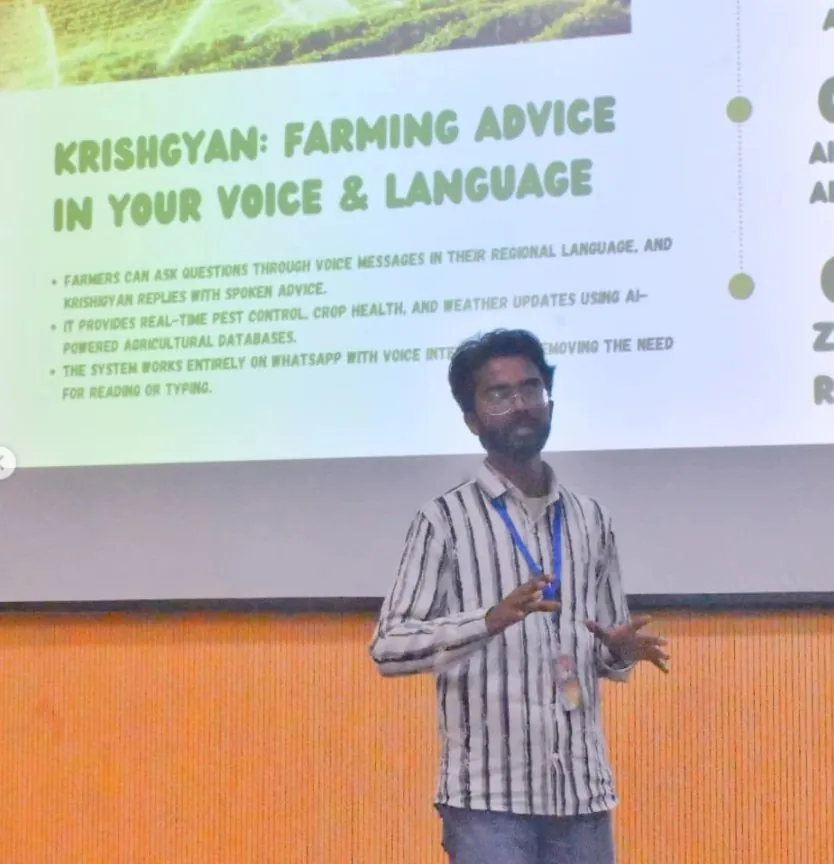
For organisers and sponsors, hackathons generate fresh solutions, test developer tools, find talent and build communities. Governments use them to source ideas for public problems. For students, a single weekend can teach more about scoping, prioritising and shipping than a semester of isolated assignments, because everything must work by a deadline in front of judges. Projects from my own teams, such as KrishGyan and Annapurna, won first prizes at hackathons, which gave them early validation.
What skills do you need for a hackathon?
A strong team covers building, design and pitching: one or two developers comfortable with a stack such as Python, FastAPI, Next.js or Flutter, someone who can design simple interfaces, and someone who can explain the idea clearly to judges.
Also asked as: what skills do i need for hackathon
Useful technical skills: Git and GitHub for collaboration, calling APIs, a database such as PostgreSQL or Firebase, quick deployment with platforms like Vercel or Render, and increasingly AI APIs for language and vision features. Equally important are soft skills: scoping a problem to fit the time, dividing tasks, communicating under pressure and presenting confidently. Beginners can still join; many events welcome first-timers and value learning, so bring curiosity and willingness to help.
How do you learn hackathon skills?
Build small projects end to end before the event: a web app with a database, an API integration and a deployment. Each one teaches the full cycle you will repeat under time pressure at a hackathon.
Also asked as: how to learn hackathon skills
Practise in timed sprints: give yourself a weekend to build and deploy something useful. Learn one stack deeply rather than many superficially, so you are not learning tools during the event. Watch demo videos of past winners on Devpost to see what judges value. Join beginner-friendly hackathons and college events, contribute to a teammate's project, and review what went wrong afterwards. Communities like TechVerse Enclave run sessions where students learn these skills together.
Can you use AI during a hackathon?
Usually yes, unless the rules forbid it. Most modern hackathons allow AI coding assistants and AI APIs, and many have AI tracks. Always read the rules, because some events require all code to be written during the event or restrict generated content.
Also asked as: can i use ai during hackathon
Use AI to speed up boilerplate, debugging, documentation and design ideas, but make sure your team understands every part of the code, because judges ask technical questions. Be transparent: mention the AI tools and APIs you used in your submission. Judges reward original problem framing and working integration more than code volume, so AI is most valuable when it frees time for user research, testing and a polished demo rather than when it generates features you cannot explain.
Can you use ChatGPT in a hackathon?
In most hackathons, yes: ChatGPT and similar assistants are treated like other developer tools. Check the rules for restrictions on pre-written code or generated assets, and disclose significant use if the organisers ask.
Also asked as: can i use chatgpt in hackathon
Good uses include brainstorming features, generating test data, explaining errors, drafting README files and preparing pitch scripts. Risky uses include copying large code blocks you do not understand, using unverified facts in your pitch, and pasting private sponsor data into a public chatbot without permission. If your product itself calls an AI model, design it carefully: validate outputs, handle failures, and show judges how you prevent wrong answers, since reliability impresses more than flashy demos.
Is a hackathon worth it?
Yes, for most students and developers. Even without winning, you get a finished project, practical experience, teammates and feedback. The cost is a weekend of time and energy, which pays back quickly in skills and portfolio material.
Also asked as: is hackathon worth it
Hackathons are less worth it if you only collect participation certificates without building anything meaningful, or if you join so many that coursework and health suffer. Choose events whose themes interest you and whose judges or sponsors you want to meet. Measure value by what you learned and shipped, not by the number of events attended. My own hackathon projects, including KrishGyan, became some of the strongest items in my portfolio.
Is a hackathon certificate worth it?
A participation certificate alone carries little weight with recruiters. Winner, finalist or special mention certificates from reputed events carry more, especially when linked to a project people can see and try.
Also asked as: is hackathon certificate worth it
Put the project first on your resume: what you built, the tech stack, your role and the result, such as first prize or top 3 out of a stated number of teams. Link the GitHub repository and a demo video. Certificates help as supporting evidence, for example in college applications or internal records, but interviewers will ask about the work, not the paper. A strong project from an unknown event beats a certificate from a famous one with nothing to show.
Is Smart India Hackathon worth it?
Yes, for students who want to solve real problems from ministries, public organisations and industry. Smart India Hackathon offers national visibility, mentoring, government and industry exposure, and for winners, recognition and prizes that look strong on a resume.
It is demanding: internal college selection, proposal screening and a long grand finale require serious preparation. Choose a problem statement your team understands and can prototype credibly, and research the organisation that posed it. Even if you are not selected for the finale, preparing a proposal teaches problem analysis and documentation skills. Treat it as one of several events, alongside community and college hackathons that offer more frequent practice.
How do you run a successful hackathon?
Start with a clear purpose and audience, secure a venue or online platform, sponsors and judges, publish themes and rules early, and plan the schedule, food, internet, mentors and judging criteria in detail. Success comes from preparation and communication.
Also asked as: how to run a successful hackathon
Key practices: recruit volunteers with defined roles; run a pre-event session on themes and team formation; keep Wi-Fi, power and food reliable for in-person events; schedule mentor rounds; publish transparent judging rubrics; and keep demos to strict time slots. Make beginners welcome with workshops and starter kits. Afterwards, share results, photos and feedback forms quickly, and publish winning projects. Participants return to events where they feel supported and judged fairly, which matters more than prize size.
Sources

GenAI engineer and AI product builder with 2+ years shipping production-grade AI systems: RAG pipelines, fine-tuned LLMs, hybrid retrieval and multi-modal apps across vision, speech and OCR, architected end to end from ingestion to deployment. Leads engineering for SCULT INDIA's 14-member team, founded the 500+ member TechVerse Enclave community and has mentored 200+ students. Three hackathon first prizes: Changethon 2025 (IIT Roorkee), Product Genesis at Vividhotsava 2025 (CSJMU) and BYTEBATTLE (MeetKats).
Open to GenAI roles, hackathon judging, mentorship sessions and guest talks at colleges. For campus sessions the inviting institution covers the visit end to end: travel (a First AC train ticket for journeys up to five hours, a flight for anything longer), accommodation, meals, and pickup and drop; the honorarium and workshop fees are negotiable on WhatsApp or on the call, and requests are welcome from institutions that can cover the visit this way. Email pranjulrathour41@gmail.com.