Key takeaways
- Mentor engineers by helping them think: ask questions, review real work, and give specific, timely feedback.
- Juniors need clear tasks, fast feedback and permission to ask; avoid taking the keyboard.
- Seniors grow into mentors by explaining their reasoning, delegating meaningful work and making others visible.
- A mentor advises you; a sponsor uses their influence to put you forward for opportunities.
- Engineers improve at public speaking by teaching small groups, structuring talks around one idea, and practising demos.
To mentor software engineers well, help them think rather than giving answers: review their real work, ask questions that expose gaps, give specific and timely feedback, and gradually hand them harder problems. I lead engineering for a 14-member team at SCULT INDIA and have mentored 200+ students since 2023, so this page shares practical approaches for mentoring juniors and peers, how senior engineers grow into good mentors, the difference between a mentor and a sponsor, public speaking for engineers, and mentoring examples.
How do you mentor software engineers?
Focus on how they think and work, not only on the code. Review real work regularly, ask questions before giving answers, explain the reasoning behind your suggestions, and agree on goals for their growth, such as owning a feature or improving testing.
Also asked as: how to mentor software engineers · mentor examples · mentor examples sentence
Practices that work:
- Weekly or fortnightly one-to-ones with an agenda the mentee brings.
- Code reviews that explain why, with links to examples or documentation.
- Pairing sessions where the mentee drives and you navigate.
- Gradually larger tasks, with support at first and independence later.
- Honest feedback delivered privately and promptly.
Ask what they want to learn, not only what the project needs; motivation follows ownership.
How do you mentor junior software engineers?
Give juniors well-scoped tasks with clear acceptance criteria, quick feedback loops, a safe space to ask questions, and exposure to how the whole system fits together. Resist the urge to take the keyboard and fix things yourself.
Also asked as: how to mentor junior software engineers
What helps juniors most:
- A documented setup and a buddy for the first weeks.
- Small tickets that ship to production early, for confidence.
- A rule like "try for 30 minutes, then ask, and show what you tried".
- Code reviews that teach patterns, not just point out mistakes.
- Regular reflection: what went well, what to try next.
In my team, the fastest growth came from juniors shipping small real features early and owning them, rather than long training periods.
How do you mentor a software engineer one to one?
Structure one-to-ones around the mentee's goals and current work: review progress, unblock problems, discuss one growth topic, and agree on next steps. Keep notes so you can track progress over months.
Also asked as: how to mentor software engineer · how to be a senior software engineer mentor
A simple agenda:
- Wins and blockers since last time.
- One piece of work to review together: a pull request, design or bug.
- Growth topic: testing, system design, communication or career.
- Next steps: one or two concrete actions.
Ask open questions such as "what options did you consider?" and "what would you do differently?". Share your own mistakes; it makes it easier for mentees to admit theirs. End each session with the mentee summarising the takeaways.
What does being a good mentor look like for senior engineers?
For senior engineers, good mentoring means multiplying the team: sharing context and reasoning, delegating meaningful work, reviewing generously, and making others visible, rather than being the person who solves every hard problem.
Also asked as: being a good mentor: guide for senior engineers
Habits of senior engineers who mentor well:
- They explain trade-offs out loud during design discussions.
- They give stretch work with a safety net, not only routine tickets.
- They write things down: decision records, runbooks, onboarding notes.
- They credit others publicly in demos and reviews.
- They ask for feedback on their own mentoring.
Mentoring is part of seniority: the measure is how much the team can do without you.
How do you become a senior software engineer who mentors well?
Start small: mentor one junior on one project, run a short internal session on something you know well, and review code with teaching in mind. Ask your mentees and manager for feedback, and improve your approach deliberately.
Skills to build:
- Explaining: break complex systems into simple pieces and analogies.
- Listening: understand what the mentee is really stuck on.
- Patience: let people struggle productively before stepping in.
- Structure: goals, regular check-ins and notes.
- Judgement: know when to teach and when to just unblock.
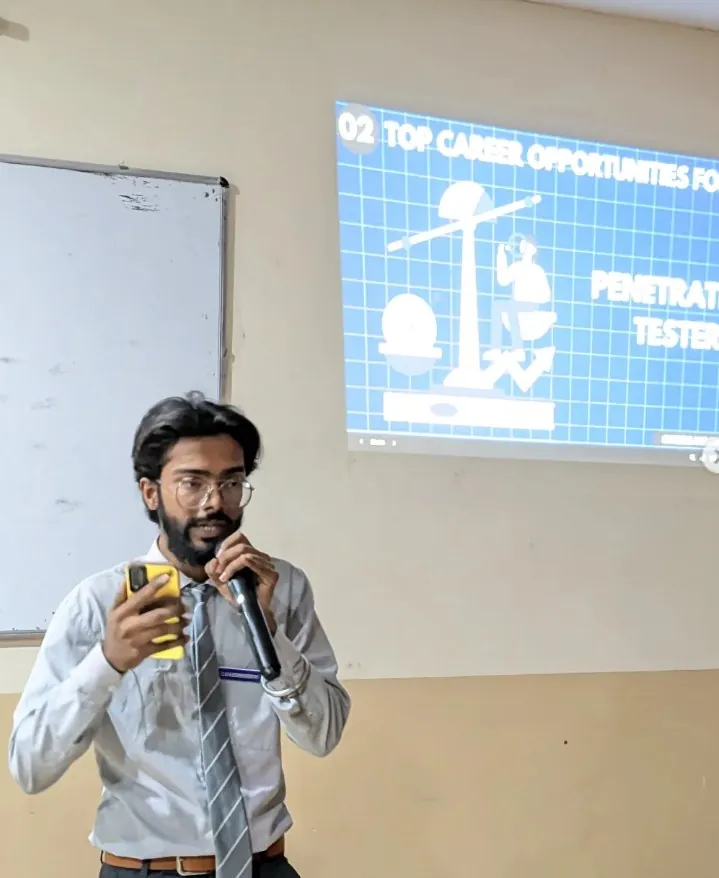
Teaching at hackathons, communities and college sessions is excellent practice; I have run more than 20 campus sessions, and explaining to a room sharpens how you explain to one person.
What is the difference between a mentor and a sponsor?
A mentor gives you advice, feedback and guidance. A sponsor actively uses their influence and reputation to advance your career: recommending you for projects, promotions, speaking slots or roles, often in rooms you are not in.
Also asked as: mentor vs sponsor
Both matter. Mentors help you grow skills and make decisions; sponsors open doors. Many talented engineers have mentors but no sponsor, and their careers stall because decision-makers do not know their work. Sponsors usually emerge from people who have seen you deliver, so do visible, reliable work, share it in demos and write-ups, and let senior people know your goals.
Why do you need a career sponsor as well as a mentor?
Because advice alone does not create opportunities. A sponsor puts your name forward for stretch assignments, promotions and visible roles, which accelerates growth in ways mentoring cannot, especially in larger organisations.
Also asked as: career sponsor vs mentor
How to earn sponsorship:
- Deliver reliably on work that matters to the team or business.
- Make your work visible through demos, documents and clear updates.
- Tell your manager and senior colleagues what opportunities you want.
- Help others; generous engineers attract advocates.
- Follow through when someone vouches for you, so they will do it again.
As you become senior, sponsor others too: recommend juniors for chances to present, lead or own projects.
How can software engineers get better at public speaking?
Start with small, low-stakes talks, such as a team demo or a meetup lightning talk, build each talk around one clear idea, use live demos or concrete examples, and practise aloud several times. Confidence comes from repetition.
Also asked as: a guide to public speaking for software engineers
A structure that works for technical talks:
- Hook: a real problem the audience recognises.
- One idea: the insight or technique.
- Demo or example: show it working.
- Lessons and pitfalls: what went wrong and what you learned.
- Takeaway: one thing to try tomorrow.
Record a rehearsal and watch it once. Speaking at college sessions, communities and hackathon stages, as I do, is also one of the best ways for engineers to build visibility and sponsors.
What are some examples of mentoring?
Examples include a senior developer reviewing a junior's pull requests weekly and explaining patterns, an alumnus helping a student prepare for internship interviews, a team lead pairing with a new hire on their first feature, and a community organiser guiding a first-time hackathon team.
Other forms:
- Peer mentoring: two engineers at similar levels learning from each other.
- Group mentoring: one mentor with a small cohort.
- Reverse mentoring: a junior teaching a senior new tools, such as AI coding assistants.
- Project-based mentoring: guidance through one specific project from idea to launch.
The common thread is regular contact around real work and goals.
What are some example sentences using "mentor"?
"Mentor" works as a noun and a verb. As a noun: "My mentor reviewed my resume before the placement season." As a verb: "She mentored three junior developers through their first year."
More examples:
- "He became my mentor after judging our hackathon project."
- "I mentor first-year students on building their first web app."
- "Our team assigns every new hire a mentor for the first three months."
- "Being mentored by an experienced engineer helped me learn system design faster."
- "Can you mentor me on preparing for technical interviews?"
The related word "mentee" means the person being mentored, and "mentorship" or "mentoring" describes the relationship or activity.
Sources

GenAI engineer and AI product builder with 2+ years shipping production-grade AI systems: RAG pipelines, fine-tuned LLMs, hybrid retrieval and multi-modal apps across vision, speech and OCR, architected end to end from ingestion to deployment. Leads engineering for SCULT INDIA's 14-member team, founded the 500+ member TechVerse Enclave community and has mentored 200+ students. Three hackathon first prizes: Changethon 2025 (IIT Roorkee), Product Genesis at Vividhotsava 2025 (CSJMU) and BYTEBATTLE (MeetKats).
Open to GenAI roles, hackathon judging, mentorship sessions and guest talks at colleges. For campus sessions the inviting institution covers the visit end to end: travel (a First AC train ticket for journeys up to five hours, a flight for anything longer), accommodation, meals, and pickup and drop; the honorarium and workshop fees are negotiable on WhatsApp or on the call, and requests are welcome from institutions that can cover the visit this way. Email pranjulrathour41@gmail.com.