Key takeaways
- Public speaking is presenting a structured message live to an audience to inform, persuade, demonstrate or celebrate.
- Classrooms, meetings, interviews, webinars and videos all count as public speaking.
- The main types are informative, persuasive, demonstrative and special occasion speaking.
- Speaking builds careers, confidence, leadership and clear thinking; it is a learnable skill for almost anyone.
- Start small, practise out loud with feedback, and speak regularly in clubs and communities.
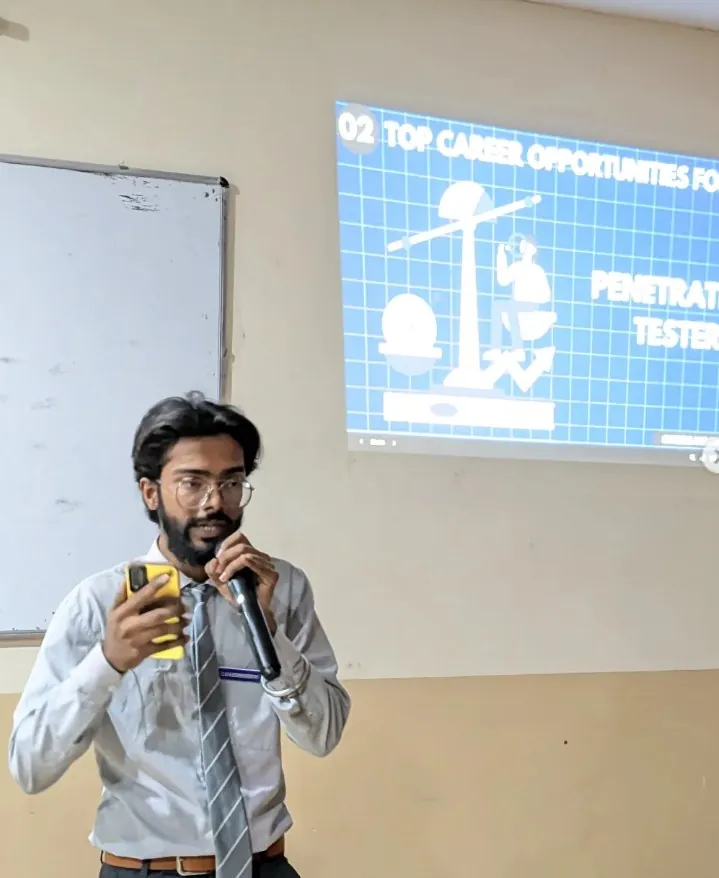
Public speaking is the act of presenting a structured message, live or recorded, to an audience, with the aim of informing, persuading, demonstrating or celebrating. It ranges from a class presentation to a conference keynote. I have spoken at more than 20 campus sessions, including the VSICS induction for over 100 first-year students in July 2025, so this page covers the definition, what counts, its types and origins, why it matters, whether it suits everyone, and how to start, practise and build a speaking career.
What is the definition of public speaking?
Public speaking is the process of communicating information, ideas or stories to a live audience in a structured, deliberate way, adapted to that audience's needs, with the goal of informing, persuading, inspiring or entertaining.
Also asked as: what is public speaking definition · why public speaking matters · how to practice public speaking
The key elements are a speaker, a message, an audience, a purpose and a context. Unlike conversation, public speaking is planned, mostly one-to-many, and usually has a defined time and structure. It is sometimes called oratory or presentation skills. The core skills are organising ideas, connecting with listeners, using voice and body language well, and managing nerves.
What counts as public speaking?
Any time you present a prepared message to a group counts: class presentations, project vivas, team meetings, interviews, webinars, conference talks, hackathon pitches, wedding toasts, and increasingly recorded videos and live streams.
Informal settings count too: introducing yourself in a meeting, explaining an idea to a group, or answering questions after a demo. Recognising this helps beginners, because it means you already practise public speaking in daily life and can improve through those small moments. Hackathon pitches are a good example: three minutes, a live demo and questions from judges, which is public speaking under pressure.
How many types of public speaking are there?
Most frameworks describe four main types: informative speaking, which explains; persuasive speaking, which changes beliefs or actions; demonstrative speaking, which shows how to do something; and special occasion or ceremonial speaking, such as toasts and tributes.
Other classifications add entertaining speeches, impromptu speaking, panel discussions and debates. Many real talks blend types: a technical talk informs and demonstrates, then persuades the audience to try a tool. My campus sessions on careers in AI combine an informative roadmap with persuasion to start building projects early. Knowing the primary purpose helps you choose structure and tone.
Who invented public speaking?
No single person invented it; people have spoken to groups since language began. The formal study of public speaking, rhetoric, developed in ancient Greece in the fifth century BCE, with Corax and Tisias in ancient Sicily often credited as early teachers.
Aristotle's "Rhetoric" defined lasting ideas: persuasion through ethos, the speaker's credibility; pathos, emotion; and logos, logic. Roman orators such as Cicero and teachers such as Quintilian further developed the discipline. Many cultures, including India, have rich traditions of oratory, debate and storytelling. Modern speaking advice still largely builds on these ancient foundations.
Why does public speaking matter?
Public speaking matters because ideas spread through people who can explain them clearly. It affects careers, leadership, education and civic life: job interviews, team leadership, pitching projects, teaching and advocating for causes all depend on it.
Strong speakers get more opportunities, because visibility follows people who can share their work. In tech, engineers who can explain their projects in demos and talks progress faster than equally skilled peers who cannot. Speaking also spreads knowledge: a single session can change how many students approach their first year. That is why I keep giving campus talks alongside building products.
What does public speaking help with?
Public speaking builds confidence, clear thinking, persuasion, leadership and networking. It helps in interviews, presentations, meetings, sales, teaching and any role where you need others to understand or act on your ideas.
Preparing a talk forces you to understand a topic deeply and organise it logically, which improves your writing and problem solving too. Speaking at events creates connections: people approach speakers afterwards with questions, opportunities and collaborations. It also helps you handle pressure, think on your feet during questions, and receive feedback gracefully, skills that transfer to every part of professional life.
Is public speaking for everyone?
Yes, in the sense that almost anyone can learn to speak clearly and confidently with practice. Fear of public speaking is very common, and many skilled speakers started nervous. Styles differ: quiet, thoughtful speakers can be just as effective as energetic ones.
Not everyone needs to become a keynote speaker, but everyone benefits from being able to explain their work, ask for what they need and present ideas in meetings. Introverts often prepare more thoroughly, which is an advantage. If anxiety is severe, start with very small, supportive audiences and build gradually; professional support is worth seeking if fear significantly limits your life.
How do I start public speaking?
Start small and low-stakes: speak up in class or meetings, present a short topic to friends, join a club such as Toastmasters or your college's tech community, and volunteer for brief talks, like a five-minute demo of your project.
Also asked as: how to start public speaking
A beginner's path:
- Pick a topic you know well, ideally something you built.
- Prepare a simple structure: problem, story or demo, key points, takeaway.
- Practise out loud several times, timing yourself.
- Give the talk to a small, friendly group and ask for feedback.
- Speak again within a few weeks to build momentum.
Each talk becomes easier. My first sessions were to small groups of juniors; that is where confidence started.
How do I practise public speaking?
Practise out loud, not just in your head, ideally standing up, with a timer, and record yourself on video to review pace, filler words and body language. Get feedback from friends or a speaking club, and repeat.
Effective practice habits:
- Rehearse the opening and closing until they are natural.
- Practise with your slides or demo exactly as you will present.
- Do one run for a friend and ask what was unclear.
- Practise answering likely questions.
- Practise impromptu speaking: one minute on a random topic daily.
Record your actual talks too; reviewing a real session teaches more than rehearsals alone.
How do I start a public speaking career?
Build expertise in a topic, speak for free at colleges, meetups and communities to gain experience, record your talks, create a speaker page with topics and past sessions, and grow through referrals. Paid speaking usually follows a track record and visibility.
Also asked as: how to start public speaking career
Steps:
- Choose two or three topics where you have real experience.
- Create a short speaker bio and talk descriptions.
- Speak at local communities, colleges and online events.
- Collect recordings, photos and testimonials.
- Publish writing or videos on your topics to build visibility.
- Make it easy to invite you, with a clear contact or invite page.
My own site has an invite page for campus sessions, which turns interest into actual bookings.
Sources

GenAI engineer and AI product builder with 2+ years shipping production-grade AI systems: RAG pipelines, fine-tuned LLMs, hybrid retrieval and multi-modal apps across vision, speech and OCR, architected end to end from ingestion to deployment. Leads engineering for SCULT INDIA's 14-member team, founded the 500+ member TechVerse Enclave community and has mentored 200+ students. Three hackathon first prizes: Changethon 2025 (IIT Roorkee), Product Genesis at Vividhotsava 2025 (CSJMU) and BYTEBATTLE (MeetKats).
Open to GenAI roles, hackathon judging, mentorship sessions and guest talks at colleges. For campus sessions the inviting institution covers the visit end to end: travel (a First AC train ticket for journeys up to five hours, a flight for anything longer), accommodation, meals, and pickup and drop; the honorarium and workshop fees are negotiable on WhatsApp or on the call, and requests are welcome from institutions that can cover the visit this way. Email pranjulrathour41@gmail.com.