Key takeaways
- A pitch deck exists to win the next step, such as a meeting, prize or investment.
- Include problem, solution, why now, market, product, traction, model, competition, team and ask.
- Aim for 10 to 15 slides, with shorter five to eight slide decks for hackathons.
- Canva, PowerPoint and Google Slides all work, and clarity matters more than the tool.
- A pitch bible describes a creative series, while a pitch deck sells a business.
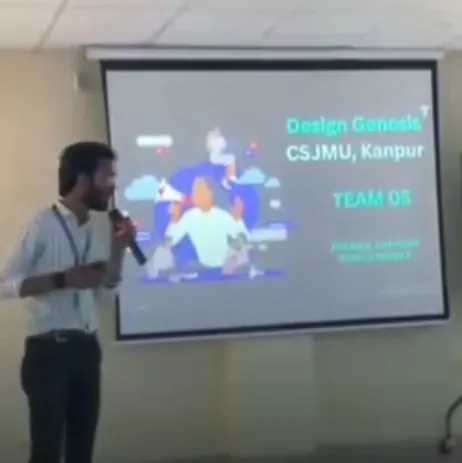
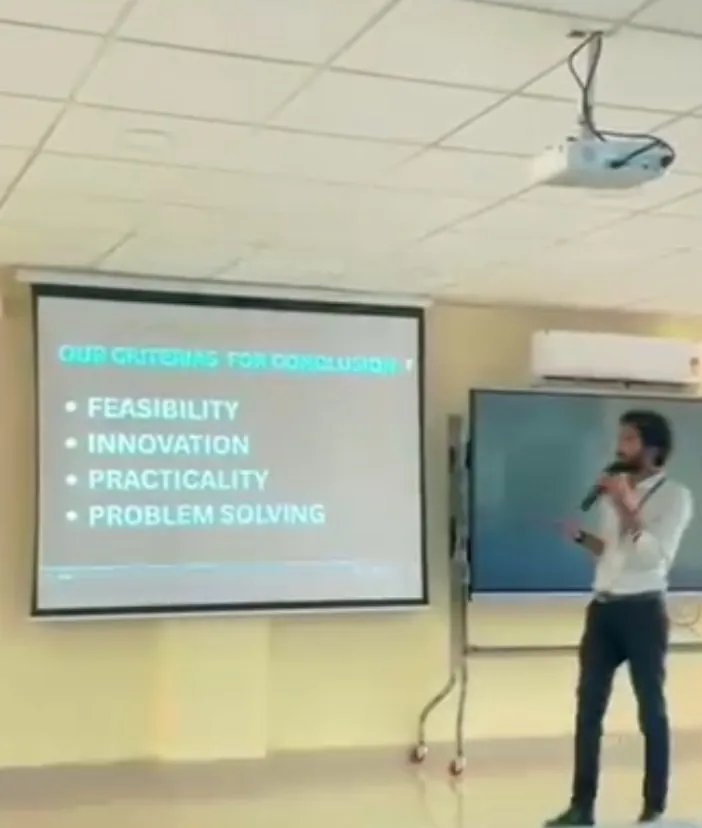
A pitch deck is a short presentation that explains a startup or project to investors, judges or partners: the problem, solution, market, traction, team and ask. At hackathons, it often decides results as much as the code. I won first prizes at Changethon 2025 with KrishGyan, Product Genesis at Vividhotsava 2025 with BrandHive and BYTEBATTLE with Annapurna, so this page covers a deck's purpose, contents, length, Canva, startup decks, timing, PPTs and pitch bibles.
What is the purpose of a pitch deck?
A pitch deck's purpose is to win the next step: a meeting, an investment, a prize or a partnership. It tells a clear story of the problem, your solution, why now, and why your team can win, in a few minutes.
It is not meant to explain everything. A good deck creates enough interest and confidence that the audience wants to learn more. Investors use it to judge market size, traction and team; hackathon judges use it to judge impact, feasibility and execution. Decks also clarify your own thinking, since reducing a venture to a handful of slides exposes weak assumptions. Tailor each deck to its audience and the specific decision you want them to make.
What does pitch deck mean in business?
In business, a pitch deck is a brief slide presentation used to pitch a company, product or idea, usually to investors when fundraising, but also to customers, partners, accelerators or competition judges.
The word deck comes from a deck of slides. Startups typically maintain two versions: a presentation deck with minimal text and strong visuals for live pitches, and a send-ahead deck with more detail that readers can understand without a speaker. Established companies use similar decks for sales, partnerships and internal proposals. In India, startup schemes, incubators and accelerators often ask for pitch decks with applications, so having a polished one ready saves time.
How do you make a pitch deck for a startup?
Start with your story, not slides: write one sentence describing what you do and for whom, then outline the problem, solution, market, product, traction, business model, competition, team and ask. Then design simple slides for each point.
Also asked as: how to make pitch deck for startup
Use a proven structure such as Sequoia's or Y Combinator's guidance, keeping one idea per slide with large text and real visuals, such as product screenshots and charts. Lead with your strongest proof, whether traction, a pilot or a demo. Practise the spoken pitch alongside the slides, since they work together. Get feedback from mentors and founders, then iterate. For hackathons, show the working demo early, as judges value proof that the product actually works.
What should be included in a pitch deck?
Core slides include the title and one-line pitch, problem, solution, why now, market size, product or demo, traction, business model, competition, go-to-market plan, team, and the ask, such as the funding sought and how it will be used.
Also asked as: what should be included in pitch deck
Adjust emphasis by stage: early decks rely on problem insight, team and early validation, while later decks need metrics such as revenue growth and retention. Include contact details on the last slide. Keep financial projections brief, with detailed models in an appendix. For hackathons, replace funding slides with impact, technical architecture and next steps. Every slide should answer a question the audience will have; cut anything that does not move the story forward.
How many slides does a pitch deck have?
Most pitch decks have 10 to 15 slides. Guy Kawasaki's popular 10/20/30 rule suggests 10 slides, 20 minutes and no font smaller than 30 points, and many investors prefer concise decks they can scan quickly.
Hackathon decks are often shorter, five to eight slides, because pitches last only a few minutes. Send-ahead decks for investors may run slightly longer, with an appendix covering financial details, technical depth or customer case studies. Fewer, stronger slides almost always beat more slides. If you need many slides to explain the idea, the story probably needs simplifying. Test by presenting to someone unfamiliar with your project and noting where they get confused.
How long should an investor pitch deck presentation be?
Plan for about 10 to 20 minutes of presenting, leaving time for questions, though many first meetings are shorter. Demo days and competitions often allow only two to five minutes, so prepare short and long versions.
Also asked as: how long should investor pitch deck be
Investors often decide within the first few minutes whether they are interested, so lead with the problem, solution and strongest proof. Time each section while rehearsing, and cut content rather than speaking faster. Prepare a one-minute version for networking and a three-minute version for demo days. At hackathons, judges often ask questions immediately after short pitches, so anticipate likely questions about feasibility, users and next steps, and keep backup slides ready.
How long does it take to make a pitch deck?
A first draft can take one to three days if you already understand your business, and refining it through feedback usually takes a few weeks. Hackathon decks are often built in one or two hours near the end of the event.
Also asked as: how long does a pitch deck take to make
Most time goes into thinking, not design: sharpening the problem statement, gathering traction data, sizing the market and choosing the strongest story. Templates speed up design, letting you focus on content. Expect multiple rounds of feedback from mentors, advisers and practice audiences. Each fundraising round needs updates, so keep a master deck you revise regularly. At hackathons, assign one teammate to the deck while others finish the demo, then rehearse together.
Can you make a pitch deck on Canva?
Yes. Canva offers many free and premium pitch deck templates, easy editing, team collaboration, presenter mode and exports to PDF and PowerPoint, making it a popular choice for students, hackathon teams and early startups.
Choose a clean template, then replace placeholder content with your own story, data and product screenshots; avoid cluttered layouts with tiny text. Keep fonts and colours consistent with your brand. Canva's charts work for simple metrics, though complex financials may be easier in spreadsheets, then pasted as images. Export a PDF for sending, since it displays consistently, and test the presentation on the actual screen or projector you will use. Google Slides and PowerPoint remain good alternatives.
What is the difference between a pitch deck and a PPT?
PPT refers to a PowerPoint file or slide presentation in general, while a pitch deck is a specific presentation designed to persuade investors, judges or partners. A pitch deck can be a PPT file or built in Canva, Keynote or Google Slides.
Also asked as: difference between pitch deck and ppt
The difference is purpose and structure. A general presentation might teach, report or train, often with dense text. A pitch deck follows a persuasive storyline, problem, solution, proof and ask, with minimal text and strong visuals. College presentations often read like reports, so students preparing for hackathons or incubators should rewrite them into pitch format: fewer words, clearer claims and evidence on every slide.
What is the difference between a pitch deck and a pitch bible?
A pitch deck pitches a business to investors or judges. A pitch bible, or series bible, pitches a creative project, such as a television or animated series, describing its world, characters, tone, story arcs and episode ideas.
Also asked as: difference between pitch deck and bible
Pitch bibles are used in film, television, animation and games to sell a concept to studios or networks and to keep writers consistent once production starts. They are often longer and highly visual, with character art and sample storylines. Pitch decks focus on markets, traction and returns. Some creative startups need both: a bible for the creative product and a pitch deck for the business that will produce and distribute it.
Sources

GenAI engineer and AI product builder with 2+ years shipping production-grade AI systems: RAG pipelines, fine-tuned LLMs, hybrid retrieval and multi-modal apps across vision, speech and OCR, architected end to end from ingestion to deployment. Leads engineering for SCULT INDIA's 14-member team, founded the 500+ member TechVerse Enclave community and has mentored 200+ students. Three hackathon first prizes: Changethon 2025 (IIT Roorkee), Product Genesis at Vividhotsava 2025 (CSJMU) and BYTEBATTLE (MeetKats).
Open to GenAI roles, hackathon judging, mentorship sessions and guest talks at colleges. For campus sessions the inviting institution covers the visit end to end: travel (a First AC train ticket for journeys up to five hours, a flight for anything longer), accommodation, meals, and pickup and drop; the honorarium and workshop fees are negotiable on WhatsApp or on the call, and requests are welcome from institutions that can cover the visit this way. Email pranjulrathour41@gmail.com.