Key takeaways
- TCS CodeVita is a competitive programming contest, not a hackathon, usually run once a year.
- TCS NQT is a hiring assessment, while CodeVita rewards advanced algorithmic skill.
- Smart India Hackathon has run most years since 2017, with finales around December in recent editions.
- A college SPOC registers the institute and nominates SIH teams, which cannot be solo.
- Many other hackathons allow solo entrants, but teams usually build more.
TCS CodeVita is not a hackathon: it is a global competitive programming contest where individuals solve algorithmic problems under time limits, while hackathons are team events where you build a product. I have competed in 10+ hackathons and won three first prizes, so this page covers CodeVita and how often it runs, NQT versus CodeVita, hackathons versus competitive programming, Smart India Hackathon timing, SPOC registration and team rules, competing alone, and my own record.
Is TCS CodeVita a hackathon?
No. TCS CodeVita is a competitive programming contest run by Tata Consultancy Services since 2012. Participants solve algorithmic problems individually under time limits, ranked by correctness and speed, rather than building products in teams.
It is one of the largest programming contests in the world and has been recognised by Guinness World Records for participation. Rounds typically include a practice MockVita, qualifying rounds and a grand finale for top coders. Strong performers may receive interview opportunities with TCS. Hackathons, by contrast, judge working prototypes, teamwork and presentations. Both build valuable skills, and many students do both: CodeVita for algorithms, hackathons for building and pitching.
How many times is TCS CodeVita conducted in a year?
TCS CodeVita usually runs one season per year, numbered by season, with several rounds spread over a few months, including practice rounds called MockVita, qualifying rounds and a grand finale for the top performers.
Also asked as: how many times tcs codevita conducted in a year
Registration typically opens months before the first round, and dates vary each season, so follow the official CodeVita page on the TCS website and announcements on TCS's social channels. Check eligibility rules, such as degree year and age limits, which can change. Practise with past problems, which emphasise algorithms, mathematics and efficient implementation in languages like C++, Java or Python. Results are announced on the official portal after each round.
What is the difference between TCS NQT and TCS CodeVita?
TCS NQT, the National Qualifier Test, is a hiring assessment with aptitude, reasoning and coding sections, used to shortlist freshers for TCS roles. CodeVita is a competitive programming contest focused on difficult algorithmic problems.
Also asked as: tcs nqt vs tcs codevita
NQT scores determine eligibility for roles such as Ninja, Digital and Prime, depending on performance, and some other companies also accept NQT scores. CodeVita rewards top coders with recognition, prizes and interview opportunities, often for higher-tier roles. NQT preparation covers quantitative aptitude, verbal ability and basic coding; CodeVita preparation needs advanced data structures and algorithms. Students aiming for TCS can attempt both, since they test different strengths, and both look good on a fresher's resume.
Hackathon vs competitive programming: what is the difference?
Competitive programming tests individual speed and accuracy in solving well-defined algorithmic problems with automatic judging. Hackathons test a team's ability to build a working product for an open-ended problem in limited time, judged by people.
Competitive programming builds problem-solving and data structure skills that help in coding interviews. Hackathons build product thinking, full-stack development, teamwork, design and presentation skills that help in real jobs and startups. Platforms differ too: Codeforces, CodeChef and CodeVita for contests; Devfolio, Devpost and SIH for hackathons. Students benefit from both: contests sharpen fundamentals, while hackathons turn those fundamentals into products. Choose based on your goals, and avoid neglecting either completely.
Is Smart India Hackathon conducted every year?
Smart India Hackathon has been held most years since its launch in 2017 by the Ministry of Education, then the Ministry of Human Resource Development, with AICTE, in software and hardware editions, and a junior edition for school students in some years.
Each edition follows a similar cycle: problem statements are released by ministries, departments and industry; colleges run internal hackathons to select teams; idea submissions are screened; and finalists build prototypes at nodal centres during a grand finale. Because schedules vary, check the official SIH website and your college's SPOC for current dates. Participating in multiple years is common, and experience from earlier editions helps teams prepare stronger proposals.
When will Smart India Hackathon 2026 start?
Exact dates for Smart India Hackathon 2026 are announced on the official SIH website. In recent editions, problem statements and registrations opened around the middle of the year, internal college hackathons followed, and grand finales took place around December.
Use that pattern to prepare early: form a balanced team, study past problem statements, build skills in your chosen track, and stay in touch with your college's SPOC, who handles institute registration and internal selection. Follow official SIH social channels and AICTE announcements for dates. Avoid relying on unofficial websites for schedules, since dates change. Starting preparation two to three months before registration gives your team time to research problems properly.
What is SPOC registration in Smart India Hackathon?
SPOC means Single Point of Contact. Each participating college nominates a SPOC, usually a faculty member, who registers the institute on the SIH portal, coordinates the internal hackathon, and nominates selected teams for the national rounds.
Students cannot usually register teams directly without their institute's SPOC. If your college is not registered, approach the training and placement office or innovation cell early and request that they nominate a SPOC. The SPOC also communicates deadlines, verifies student details and submits idea presentations. Good communication with your SPOC matters, since missed internal deadlines can stop a strong team from progressing. Check the official SIH guidelines each year, since procedures can change.
Can you participate in Smart India Hackathon alone?
No. Smart India Hackathon requires teams, typically six students including at least one female member, from the same institute, often with mentors. Solo participation is not allowed in the main SIH editions.
Also asked as: can i participate in smart india hackathon alone
If you lack a team, ask classmates in your college's coding club, innovation cell or SPOC network, since many students look for teammates during internal hackathon season. Build a balanced team: developers, a designer, someone strong in research and presentation, and members who understand the problem domain. Team composition rules can change, so read the latest guidelines on the official website. Strong teamwork often matters as much as technical skill in SIH evaluations.
Can you participate in a hackathon alone?
Often yes. Many hackathons allow solo participants, and most offer team formation sessions or channels so individuals can find teammates. Some, such as Smart India Hackathon, require fixed team sizes, so check the rules.
Also asked as: can i participate in hackathon alone
Going solo gives full control and fast decisions but limits how much you can build, and judges may expect less polish. Joining a team of strangers is common and teaches collaboration; introduce your skills clearly and ask what others want to build. If you compete alone, scope tightly, use templates and AI tools wisely, and focus on a polished core demo. Online hackathons are especially friendly to solo builders.
How many times have you won a hackathon?
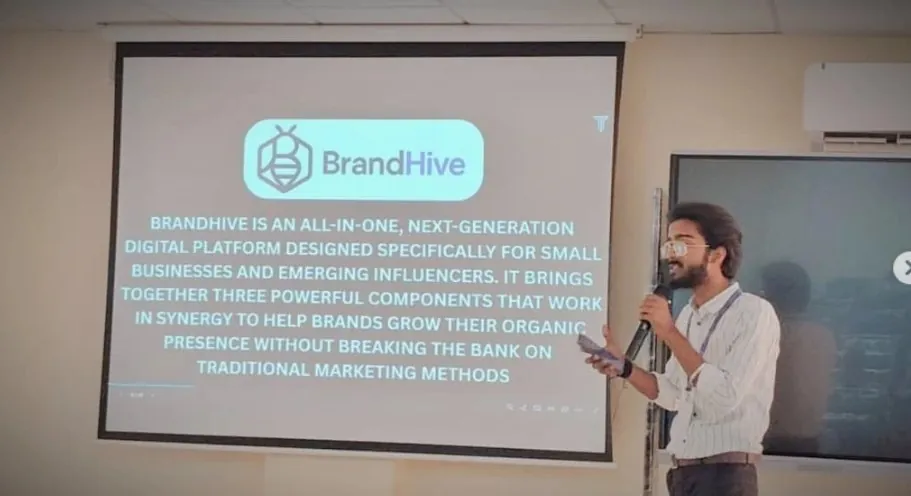
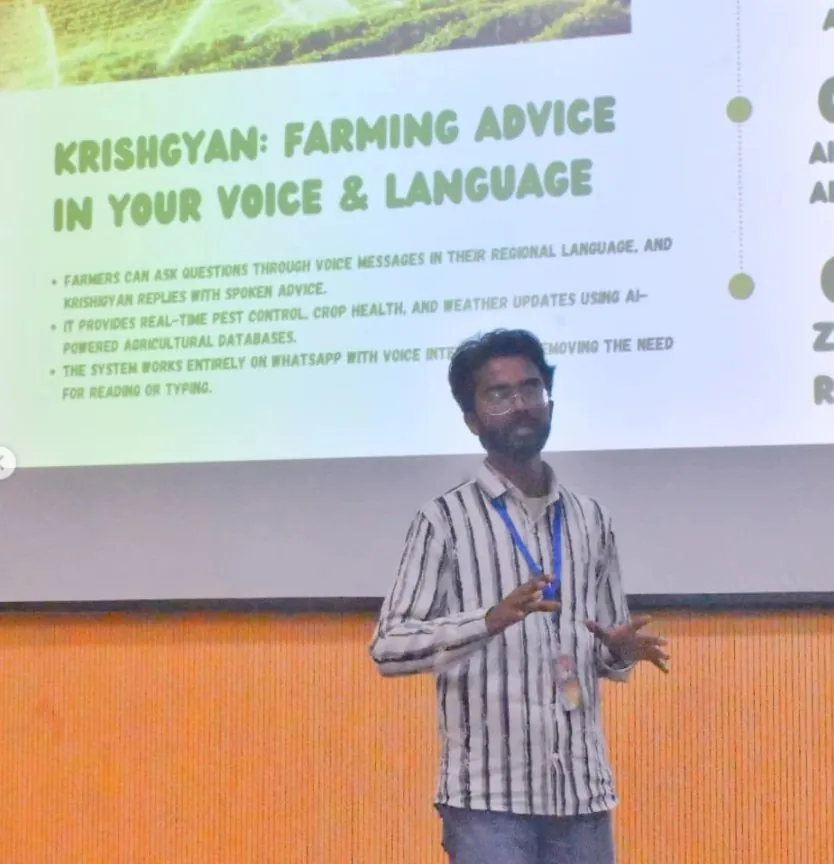
I have won first prize three times: Changethon 2025 at IIT Roorkee with KrishGyan, Product Genesis at Vividhotsava 2025, CSJMU, with BrandHive, and BYTEBATTLE by MeetKats with Annapurna. I also placed in the top 3 at an IIT Kanpur hackathon.
Also asked as: how many times have you won a hackathon? (as in top prize
Across 10+ hackathons, the projects that won shared focused problems and working demos rather than long feature lists. KrishGyan gives farmers advice in their own voice and language over WhatsApp, and Annapurna coordinates surplus food, both clear user problems with live demos. If you are counting your own wins for a resume, list top prizes and finalist positions with the event and year, and link the projects so readers can see what earned them.
Sources

GenAI engineer and AI product builder with 2+ years shipping production-grade AI systems: RAG pipelines, fine-tuned LLMs, hybrid retrieval and multi-modal apps across vision, speech and OCR, architected end to end from ingestion to deployment. Leads engineering for SCULT INDIA's 14-member team, founded the 500+ member TechVerse Enclave community and has mentored 200+ students. Three hackathon first prizes: Changethon 2025 (IIT Roorkee), Product Genesis at Vividhotsava 2025 (CSJMU) and BYTEBATTLE (MeetKats).
Open to GenAI roles, hackathon judging, mentorship sessions and guest talks at colleges. For campus sessions the inviting institution covers the visit end to end: travel (a First AC train ticket for journeys up to five hours, a flight for anything longer), accommodation, meals, and pickup and drop; the honorarium and workshop fees are negotiable on WhatsApp or on the call, and requests are welcome from institutions that can cover the visit this way. Email pranjulrathour41@gmail.com.